

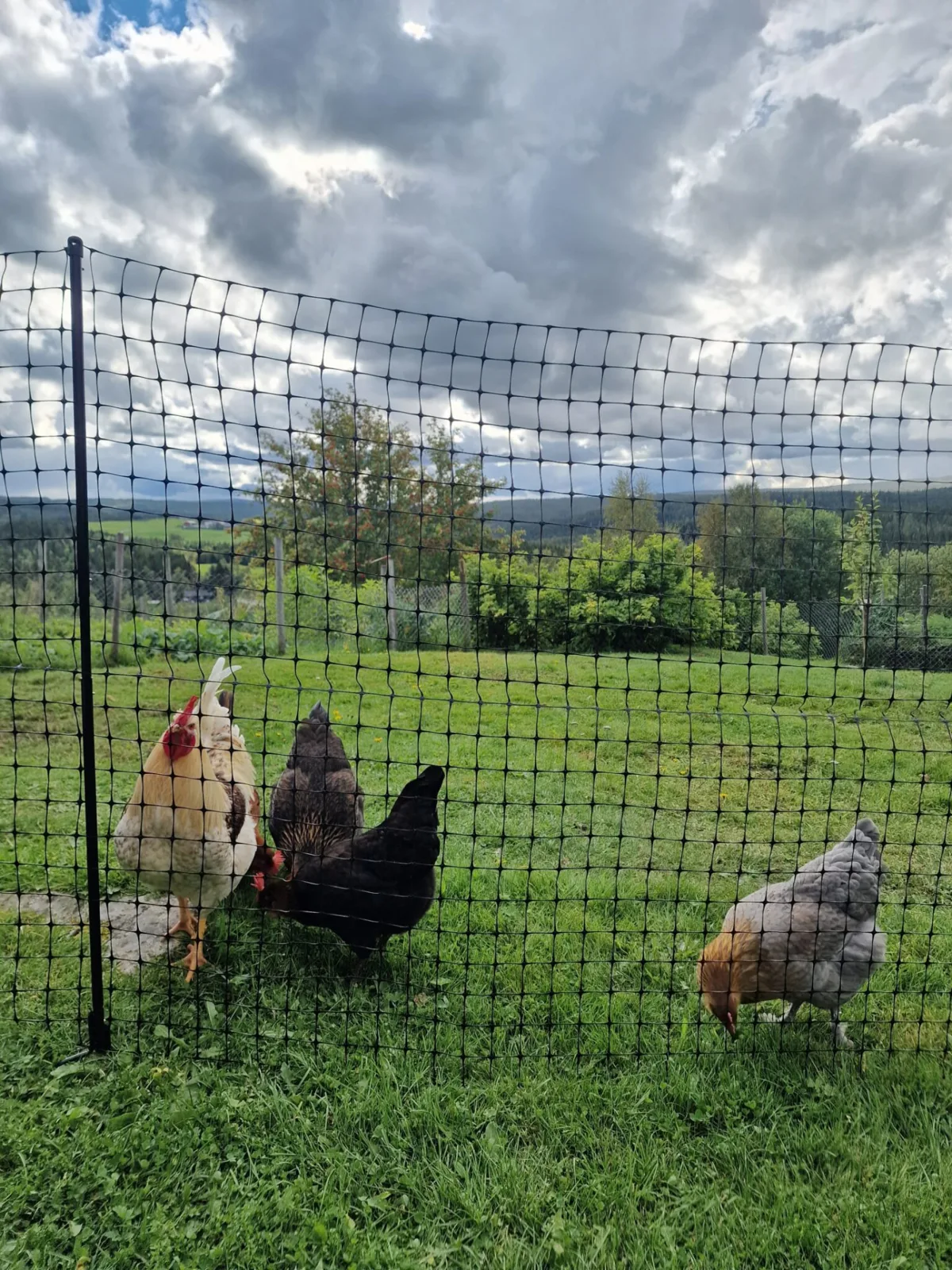
It was mainly the grey hen and the brown hen that convinced me we needed a new chicken fence. They got over the old netting again and again. Sometimes I found them on the front steps, often right in the flower pots. Other times they headed straight for the neighbour's, who also keeps hens, roosters, geese and ducks.
I could see we needed a taller fence. At the same time, I wanted a more flexible fence that I could move around and take down completely in winter. I also missed being able to get in to the hens through a gate.
The choice fell on Omlet Chicken Fencing. We have now put up 54 metres around an area of roughly 172 m², with flat ground, slopes, dips, bushes and buildings.
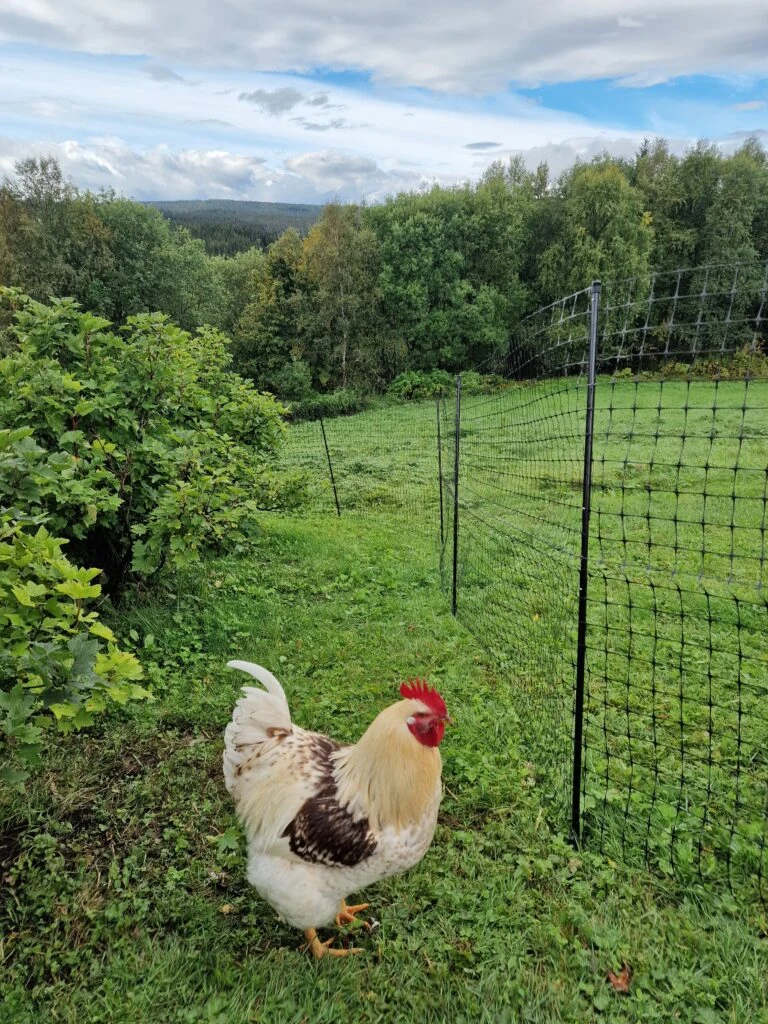
After a few days of use, my first impression was very good: all the hens stayed inside, the fence remained taut after both rain and wind, and it became easier for us because we could walk in through gates instead of climbing over the netting. After a few weeks, the picture became more nuanced – the hens mostly stay inside, but a determined hen can still get over. More on that further down.
The fence has only been in use for a few weeks, so this article is based on my experience of assembly and early use. I will have to come back to a verdict on durability after a couple of seasons.
From escape route to a bigger chicken run
We let the hens roam freely when they first arrived. That was lovely until they discovered the rest of the garden, the vegetable garden, the flower pots and the animals next door. The old fence was about 90 cm high and consisted of galvanised chicken wire on wooden posts. When the escapes started, we extended parts of it with berry netting.
The solution sort of worked, but it really did not look good. It had no gate either. If we needed to get to the carport, the woodpile or the hot compost, we had to walk round or climb over. Parts of the fence are visible from the living room window, so appearance did matter a bit. Flapping blue berry netting is not pretty to look at.
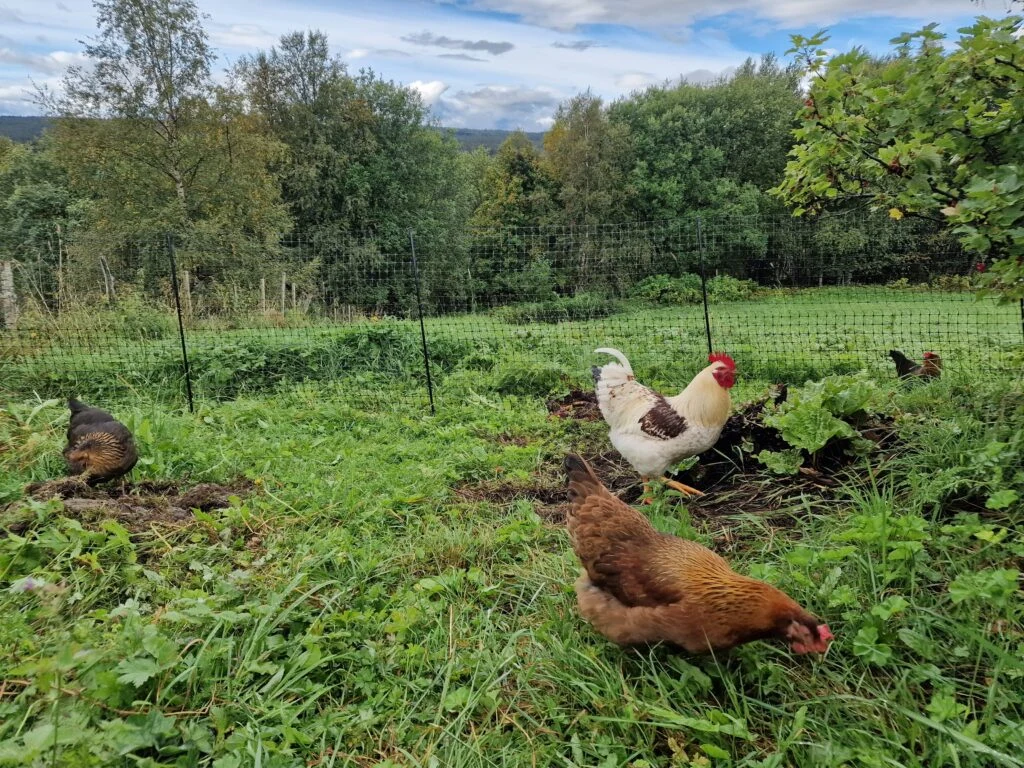
With the new fence, the hens' area grew from roughly 111 to 172 m². They now have lawn, eight redcurrant bushes, two apple trees, a dust bath and shelter under the carport. When we removed the old netting, they immediately went out and started exploring the extra space they had been given.
Short answer: Is Omlet Chicken Fencing worth it?
For my needs, the answer so far is yes. The Omlet fence looks good, is flexible enough to follow the uneven terrain and is easy to adjust when you want to change the area a little. It costs more than ordinary chicken wire and wooden posts, but I am also paying for a taller fence that can be adapted, moved and fitted with gates.
Does Omlet Chicken Fencing keep chickens in?
Omlet Chicken Fencing has kept the rooster inside so far. He is too big and heavy, and not particularly athletic. The hens mostly stay inside, but they can get over if they really want to. One of the darker hens in particular takes a proper leap, flaps a little and clears it quite easily. It happens less often than with the old fence, but the Omlet fence does not contain them with certainty.
The flock consists of four hens and one rooster, all around five to six months old. The rooster can neither fly nor jump particularly high.
How tall is the fence, and how big is the mesh?
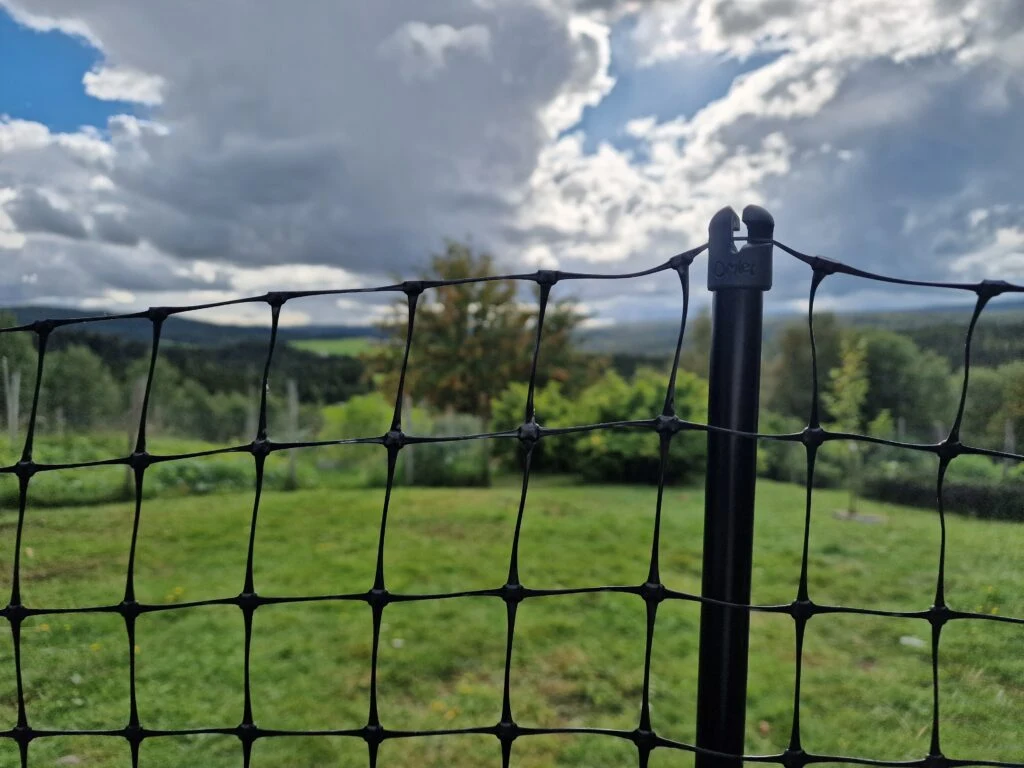
Omlet Chicken Fencing is 1.25 metres tall, and the mesh opening is 5 cm. I bought one 12-metre set and one 42-metre set. Together they form a movable mesh fence that separates the chicken garden from the rest of the property.
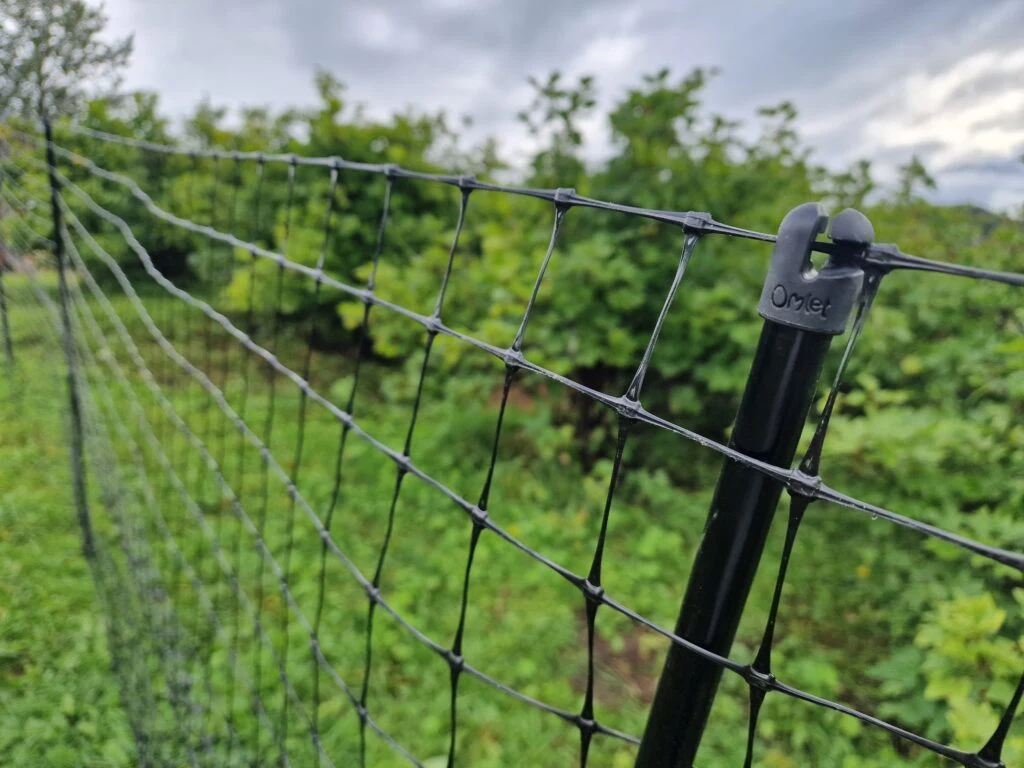
The netting is black plastic, and the posts are black-painted metal. When I saw "Made in China" on the boxes and the plastic netting, I was at first a little unsure how sturdy it would be. The ground spikes, wall fixings and other parts made a better impression once we had unpacked them. The ground spikes and wall fixings in particular feel solid.
The finished fence looks tidy and blends into the garden far better than the old mix of chicken wire and berry netting.
I bought five extra posts and used three of them where the ground was most uneven. Each fence set came with one gate. I also bought a third gate, but for now I am using two, one in each fence.
Putting up the Omlet fence
How long does it take?
It took a while to sort the parts the first time. They are not marked with the same numbers or IDs as in the instructions, and the gate posts look similar to the ordinary fence posts. I recommend laying everything out and finding the gate parts before you start assembling.
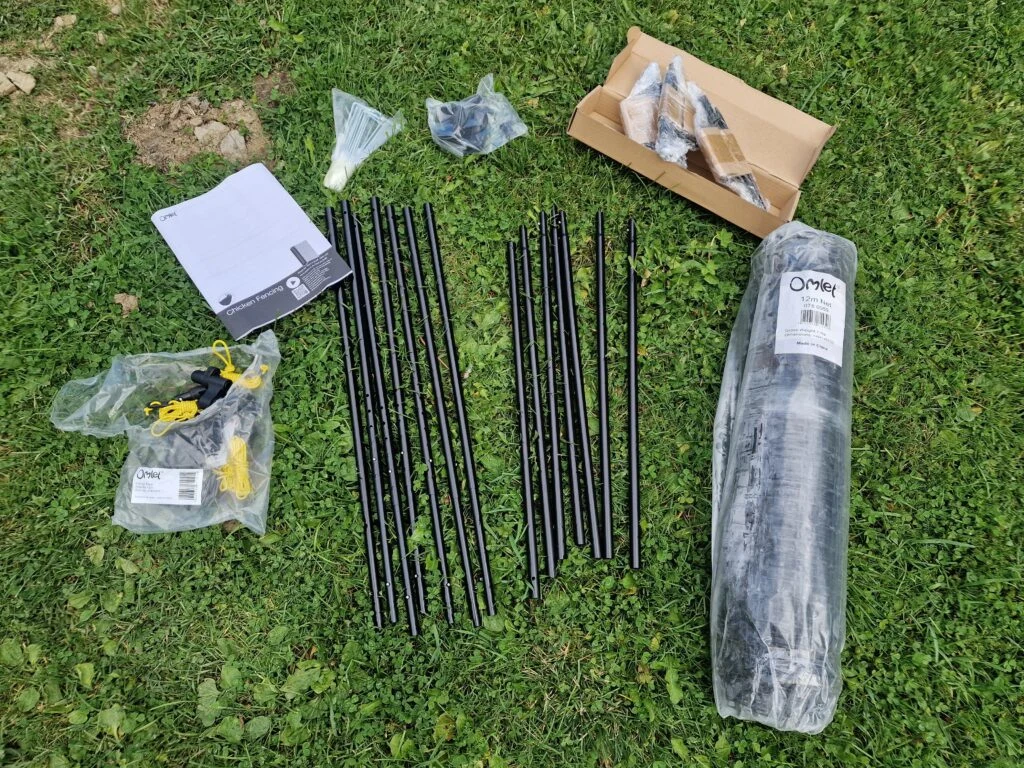
We spent 1 hour and 15 minutes in total on the 12-metre fence. The actual setting up took about 20 minutes. The rest of the time went on unpacking, planning, sorting and assembling the parts.
The 42-metre fence took about 1 hour and 30 minutes in total. We spent the first 45 minutes unpacking, planning and preparing. Putting up the fence itself took about 45 minutes.
The short fence ran straight across fairly flat ground, from one wall to another. The long one had to go up and down slopes, over uneven ground and around the redcurrant bushes. Even so, we worked faster when we got to the long fence, because by then we had understood the system.
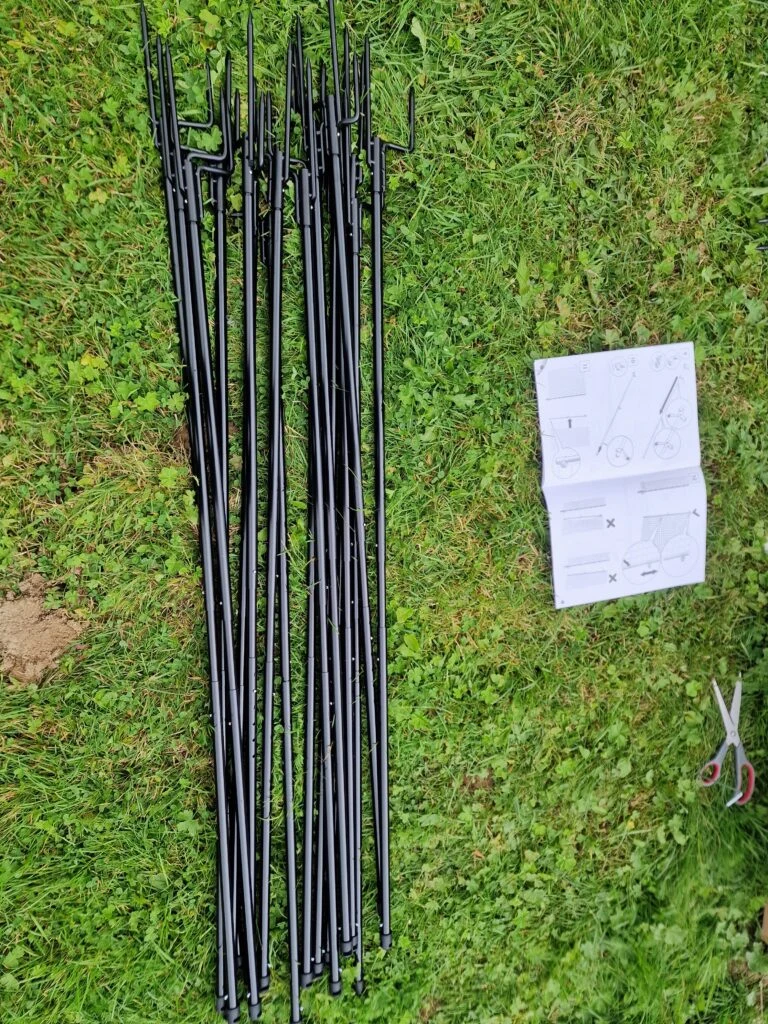
There were two of us. I think one person could put the fence up alone, especially a short length, but a helper is useful when a lot of netting has to be unfolded, spread out and tensioned.
Does the netting tangle?
No, the netting did not tangle. It was a bit fiddly to unfold and looked rather crumpled at first. Once we threaded it onto the posts and tensioned it, it straightened out nicely. This matches Omlet's product description well.
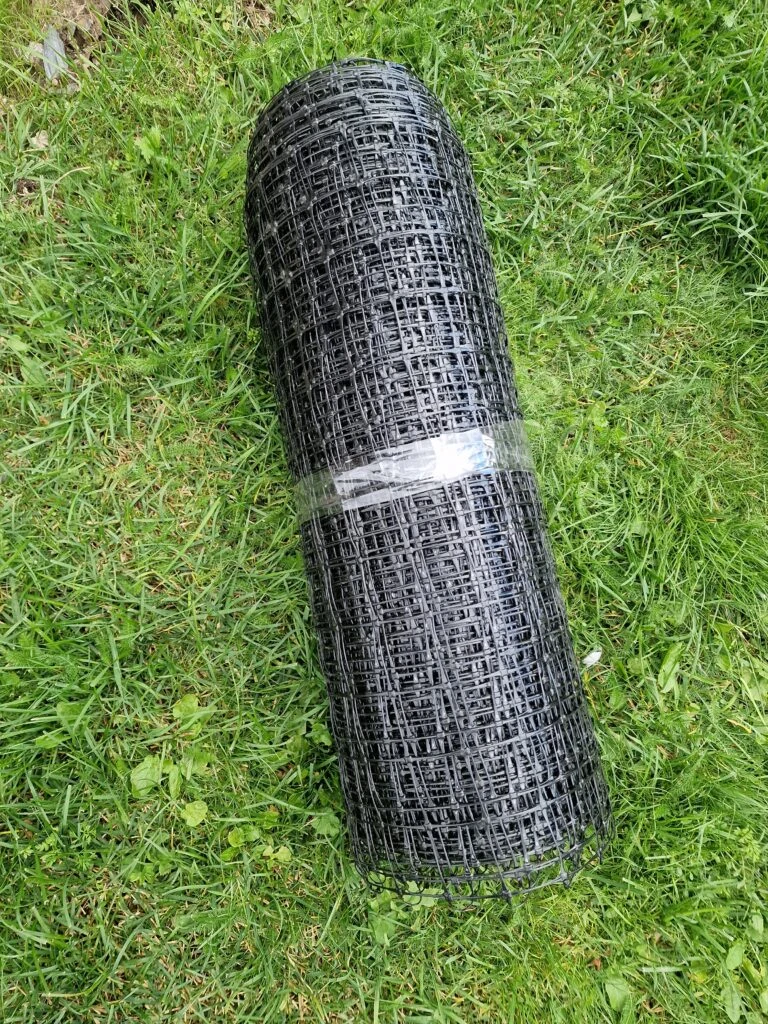
Does it work on uneven ground?
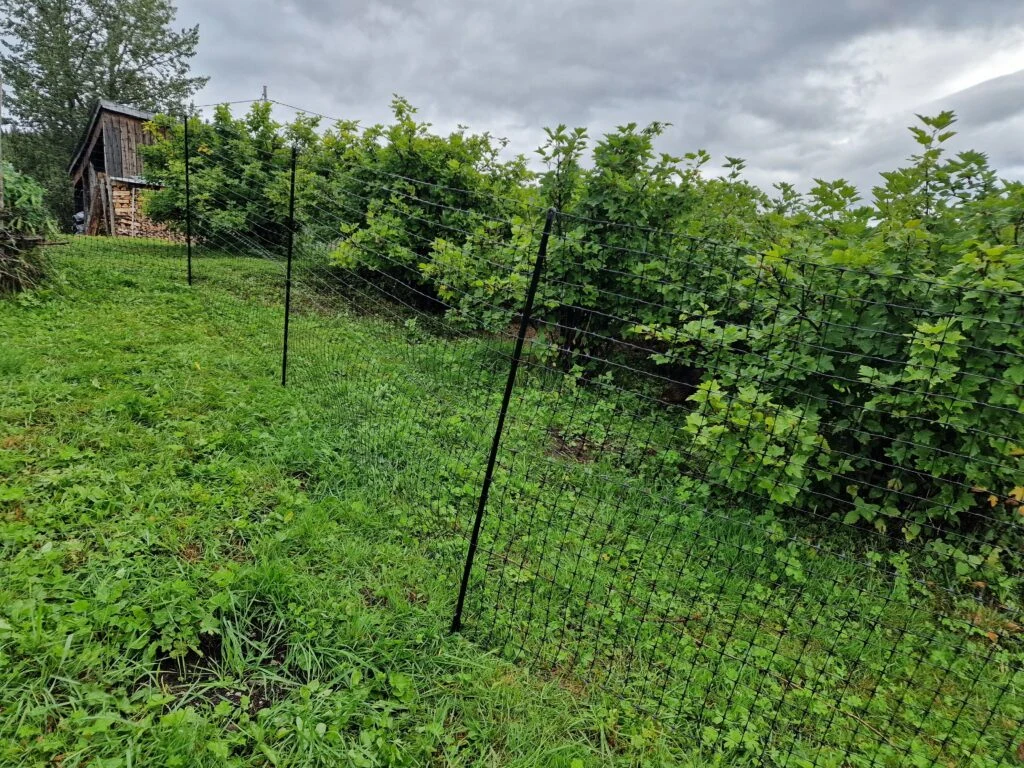
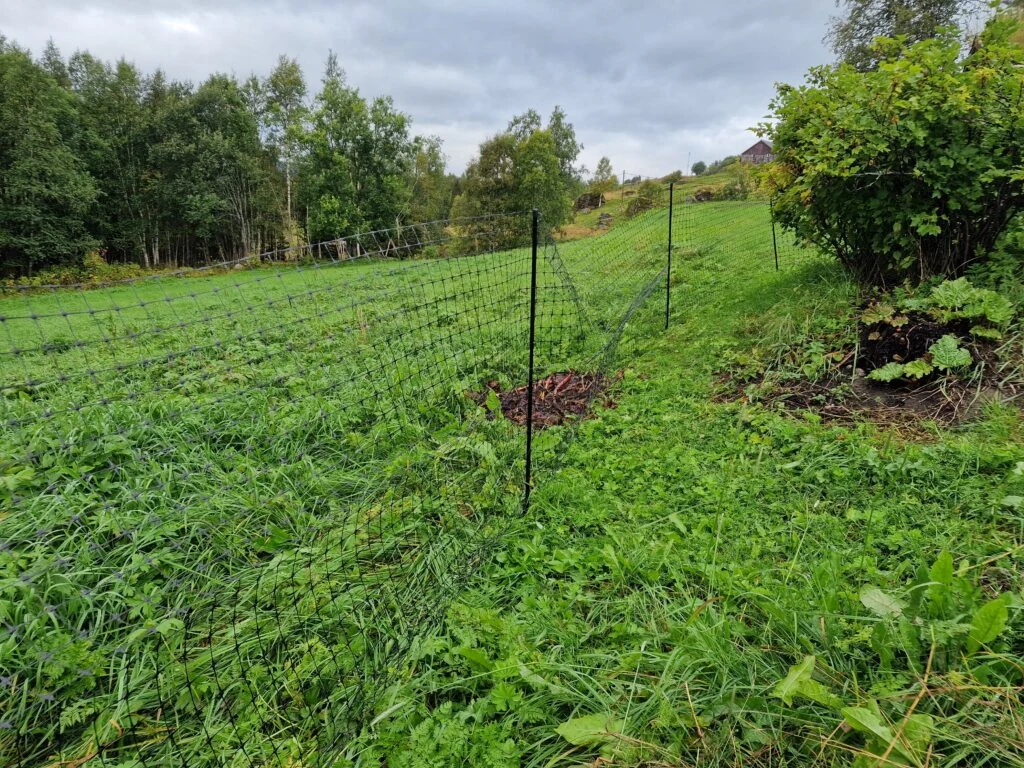
Yes, it does. With a little adapting and adjusting, it works fine on uneven ground. The 42-metre fence goes both uphill and downhill, and the ground has several dips and bumps. I expected it to be difficult to get the netting even along the ground.
The solution was trial and error. A post can be pulled straight up, moved and pushed back in within seconds. I moved several posts as I went, reduced the spacing in some places and used three extra posts where I needed more control over the shape. Otherwise the posts are spaced roughly 2.4 metres apart.
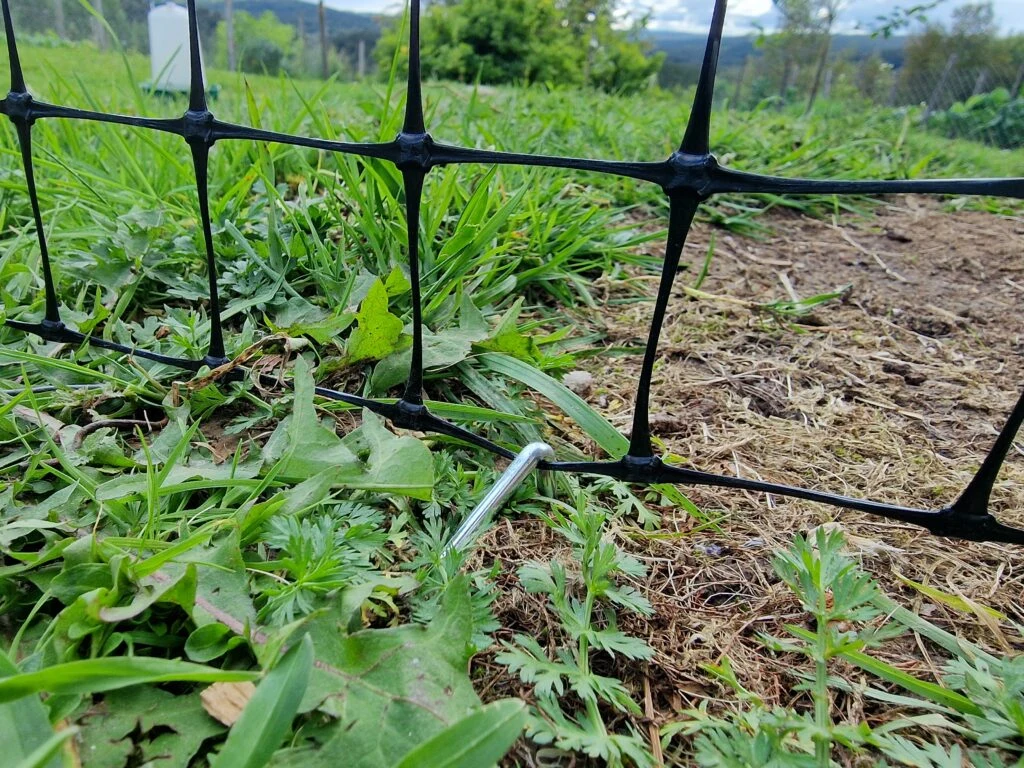
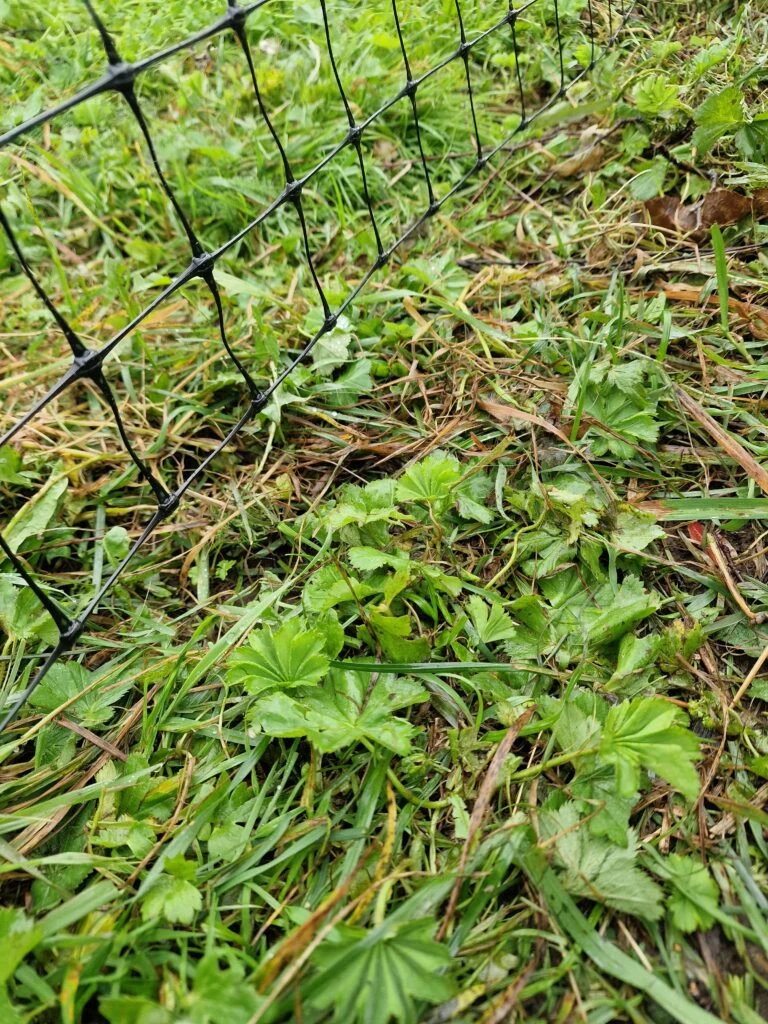
Along the ground, I used pegs to pull the netting down. Plenty are included. I used a good number and still have lots left.
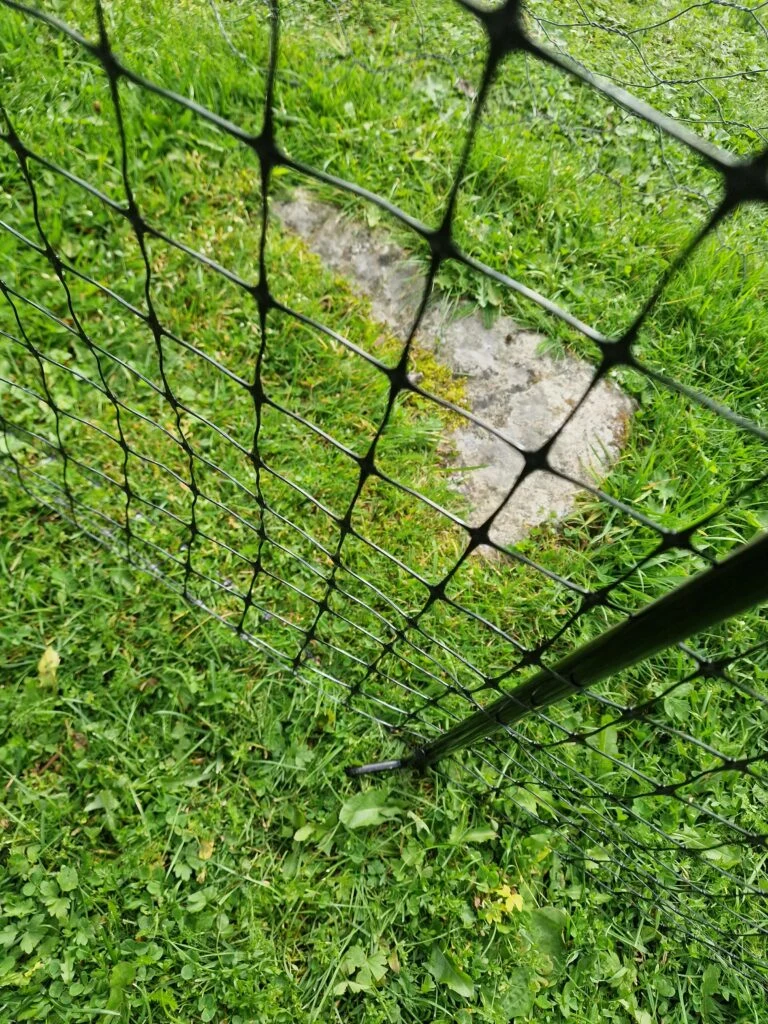
At the corners, a guy line is fixed at an angle, much like on a tent. The pegs are large and sturdy.
When a ground spike hit a stone, we simply moved the post a little and tried again.
How I used the wall fixings and gates
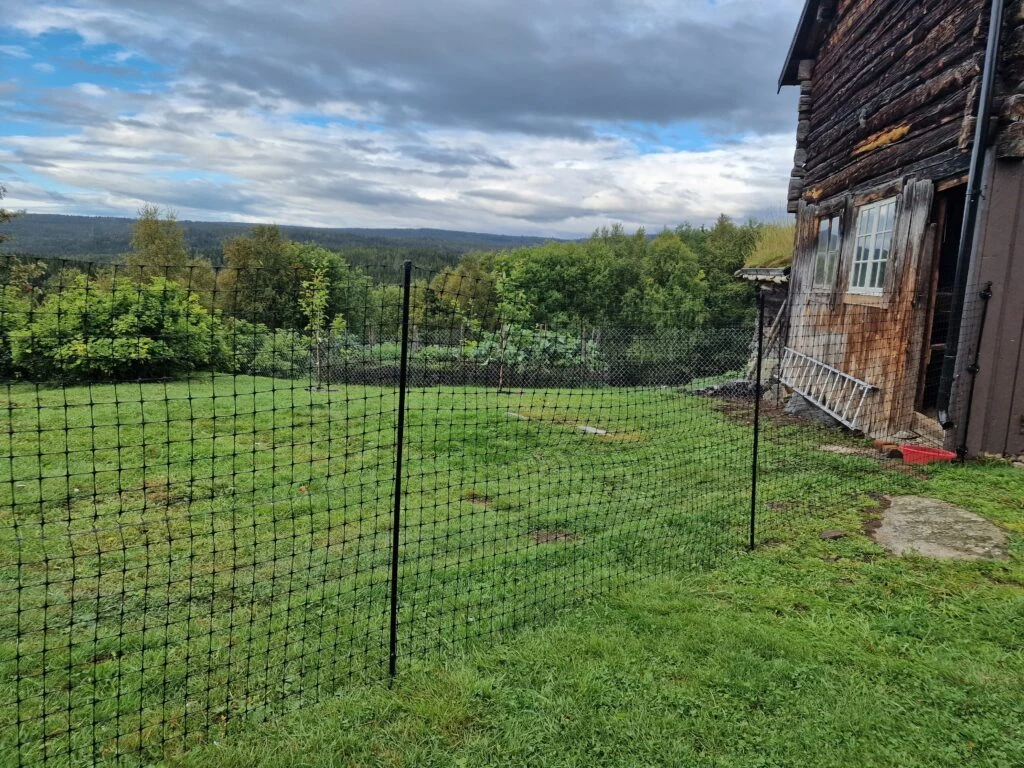
The 12-metre fence runs from the barn to the carport and is fixed to a wall at both ends. The 42-metre fence starts at the barn wall and ends against another fence. The wall fixings were easy to understand: three brackets are screwed in at the right spacing, and the first fence post clips into them.
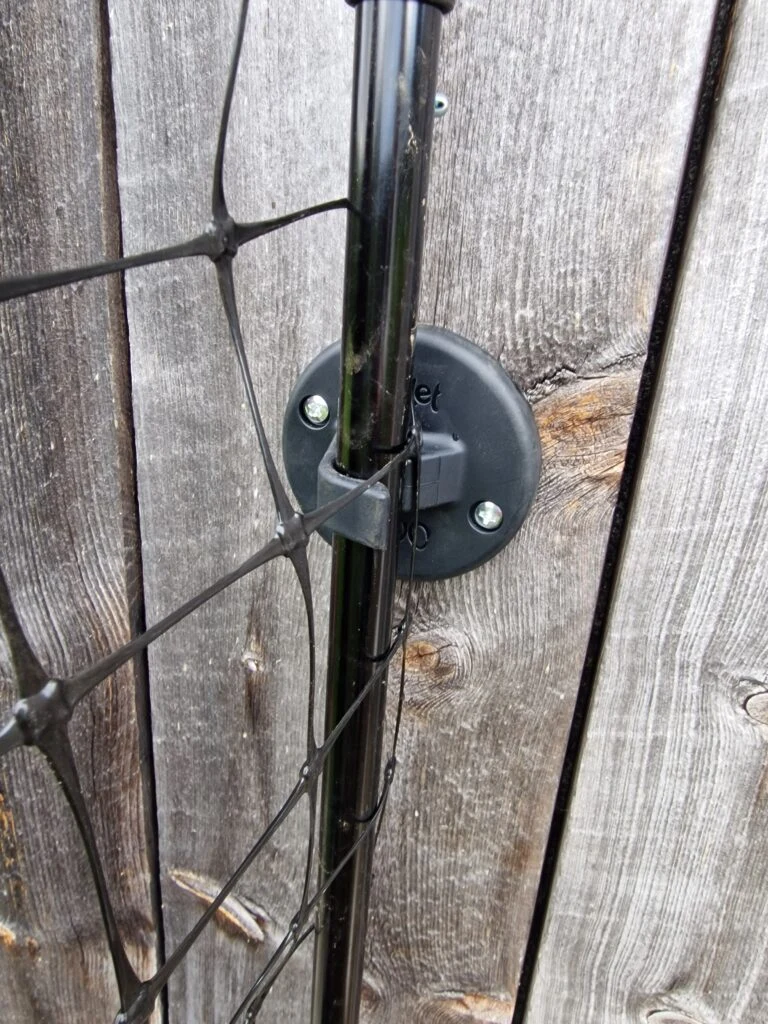
We thought the screws supplied seemed a bit short, but they have held fine so far, and I have seen no sign yet that their length is causing a problem.
I placed both gates against a wall. That suits the way we move around, and I did not have to cut the netting. If a gate is to sit in the middle of the fence, the netting has to be cut and two posts set side by side. By keeping the netting intact, I can later use both fences at full length if I change the layout.
The gate is secured in three places: at the top, in the middle and at the bottom. The clips are tight, which I appreciate because the gate should not be able to open by accident. In practice I use both hands. That means I cannot open the gate while holding a bucket, but the opening and closing itself works as it should.
How does the fence hold up in wind and rain?
It has both rained and been windy since we put it up. I have walked round and checked the whole fence. No pegs have lifted, the posts are standing where we put them, and the netting is still taut. I have not needed to re-tension or straighten anything.
This is experience from a few days of normal late-summer weather. The fence will be taken down before winter because we can get a lot of snow, and because its position would be in the way of snow clearing. So I will not be using this setup as a winter test.
Is Omlet Chicken Fencing easy to move?
The individual posts are very easy to move. I tested that thoroughly while adjusting the line of the long fence. The whole fence is designed to be moved and reshaped, but I have not yet taken down and moved the entire fence.
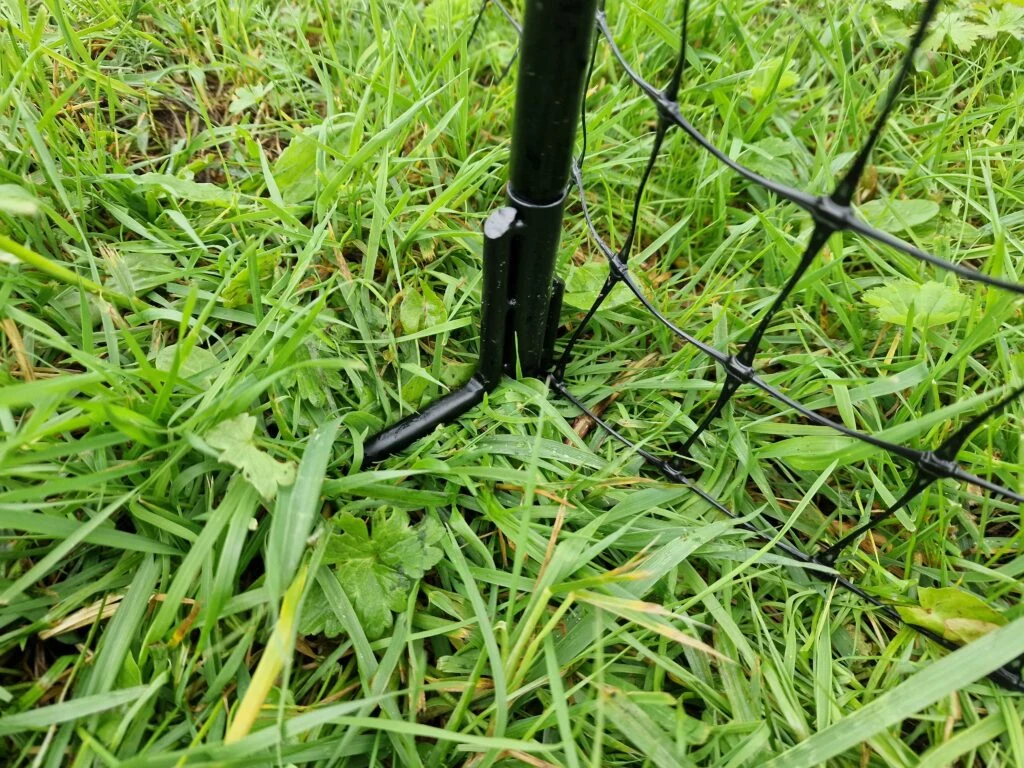
Even so, the flexibility is already valuable. I could change the post positions during assembly without starting again, and I have kept the netting uncut so the lengths can be used differently later.
Is this a predator-proof chicken fence?
No. Omlet Chicken Fencing is a movable boundary fence for chickens. It is not a predator-proof fence, and the netting cannot be electrified.
I let the hens out during the day when we are at home and can keep an eye on them. At night and when we are away, the flock is inside the henhouse.
I would not use this as the only protection against foxes, badgers or other predators.
What did the Omlet fence cost delivered to Norway?
I bought the fence while there was a 10 per cent discount. The 12-metre fence cost £125.10, and the 42-metre fence cost £332.10. So I paid £457.20 for the two fences. The regular combined price was £508.
Omlet does not ship directly to Norway, so I used a service called ForwardVia, which gives you your own UK address to send the goods to. Omlet sent the parcels to ForwardVia the day after I ordered, ForwardVia handed them over to DHL the day after that, and the goods arrived at my door eight days after I placed the order. Delivery felt very fast, despite the many steps.
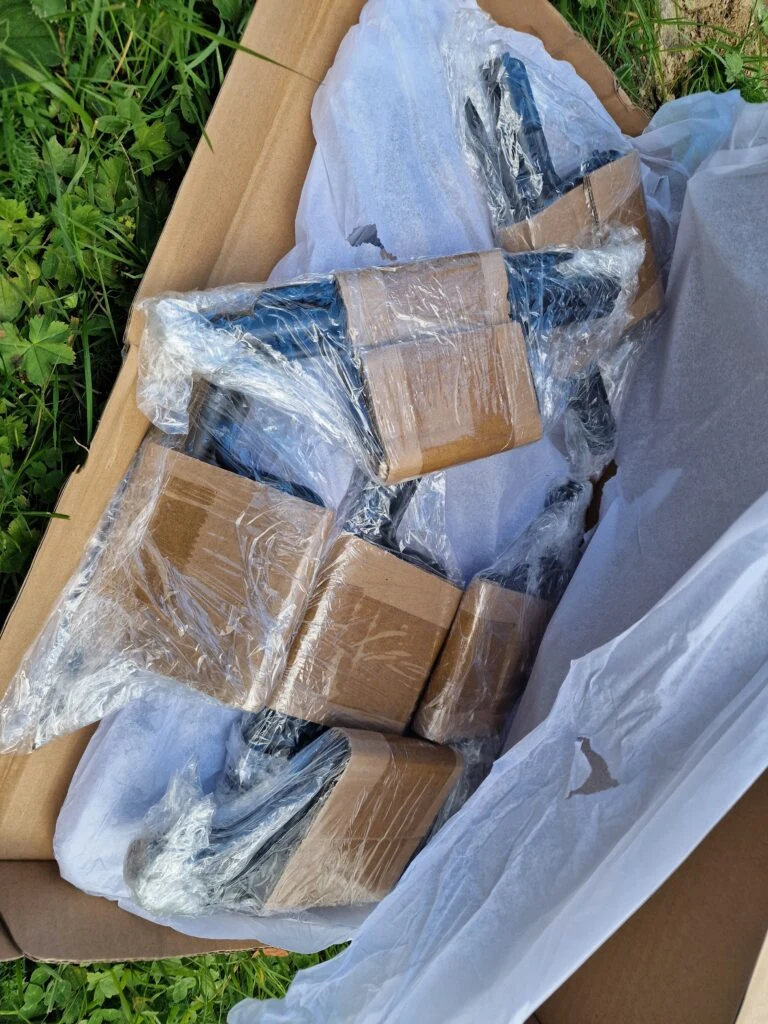
Shipping and import via ForwardVia cost £200 for two chicken fences split across five parcels. All in all, the price gets a bit steep with expensive shipping to Norway. This is not a budget option.
Who is Omlet Chicken Fencing suitable for?
I think the fence suits chicken keepers best who want to create a large, flexible outdoor area without building a permanent fence. It is particularly interesting when the fence line has to follow lawn, slopes, bushes or buildings, and when it is useful to be able to change the area later.
It is also a good choice if you need gates in specific places. For us, the gates have made a bigger difference to everyday life than I had expected. We can get to the carport, the firewood and the compost without detours or climbing.
If you mainly need protection against predators, you will have to choose a different type of solution. If your hens are very keen fliers, you should also weigh the height against your breed and your individual birds. My hens mostly stay inside, but as mentioned, one of them still gets over. If you need to guarantee that your hens remain contained, you should not rely on this fence alone.
Pros and cons after the first weeks
What I like
- The combination of height and flexibility – I got a neat line even on uneven ground
- The gates have made getting in and out easier than our previous solution.
- The netting did not tangle, and it straightened out once we tensioned it
- More than enough pegs were included, and three extra posts covered the trickiest stretches
- The black fence looks neat and tidy from the living room window
What could be better
- The parts could be better labelled – the gate posts look like ordinary fence posts
- The gate needs two hands to open
- It is not escape-proof for a determined, athletic hen
- It is not predator-proof, and the netting cannot be electrified
- I do not yet know how the plastic netting will cope with several seasons of sun, cold, taking down and storage
Would I buy Omlet Chicken Fencing again?
Based on the assembly and the first few weeks, I would still choose the same solution again. The fence has given the hens 61 m² more space, escapes happen less often than with the old fence, and the area is easier for us to use. The black mesh fence also looks neat and tidy from the living room window. At the same time, I now know that the fence is not escape-proof.
Conclusion
Omlet Chicken Fencing has given the hens a bigger area and me a flexible solution that can change along with the garden. It looks good, the gates simplify everyday life, and escapes happen less often than with the old fence – but an athletic hen can still get over, and it offers no protection against predators. For my needs it has been worth it so far, but I would not rely on it alone if keeping every hen contained were essential.
About affiliate links
I bought Omlet Chicken Fencing myself and paid the full purchase cost. I am an Omlet affiliate. If you buy through one of my links, I may earn a commission at no extra cost to you. Omlet has not approved or influenced this review.
If you live nearby and would like to take a look at the fence, just let me know and we can arrange a time.