
Oyster shell is one of the things many wonder about when they start keeping quail. Do they need it? When should you start giving it oyster shell for quail? And how? Are there alternative sources of calcium?
Do quail need oyster shell?
Yes. Adult quail hens need oyster shell.
Oyster shell consists of small shell fragments that are rich in calcium. Calcium is essential for forming eggshells. Without enough calcium, the shells become thin or fragile.
You may end up with shell-less eggs, which are completely soft, or egg laying may stop altogether since the hen is missing vital nutrients.
Read: Not getting eggs from your hens? When do they start and why do they stop?.
Calcium is not only for egg laying. It is also important for strengthening the skeleton and for the body to function properly.
Other sources of calcium
Oyster shell is the most common and simplest calcium source for laying hens.
But there are more options:
Oyster shells is often used in chicken keeping and serves the same purpose as regular shell grit. The pieces are usually too coarse for quail, so I recommend crushing them into smaller bits.
Crushed eggshells can be given back as a calcium source. It's best to rinse, dry and crush them well, both for hygiene reasons and to prevent quail from developing a taste for eating their own eggs.
Layer feed often contains extra calcium. This can be practical if you only keep hens for egg production, but it should not be given to males or chicks. Too much calcium can harm them.
Read How to choose the right feed for quail.
When to start giving oyster shell to quail?
Start offering oyster shell when the hens are approaching moulting age.
I never give it to newly hatched chicks, or during the first few weeks. The chicks can be harmed by excessive amounts of calcium.
As they approach breeding age, they need more calcium than is available in chicken feed. That's why it's important to give them calcium supplements, for example in the form of oyster shell.
How to give oyster shell to quail
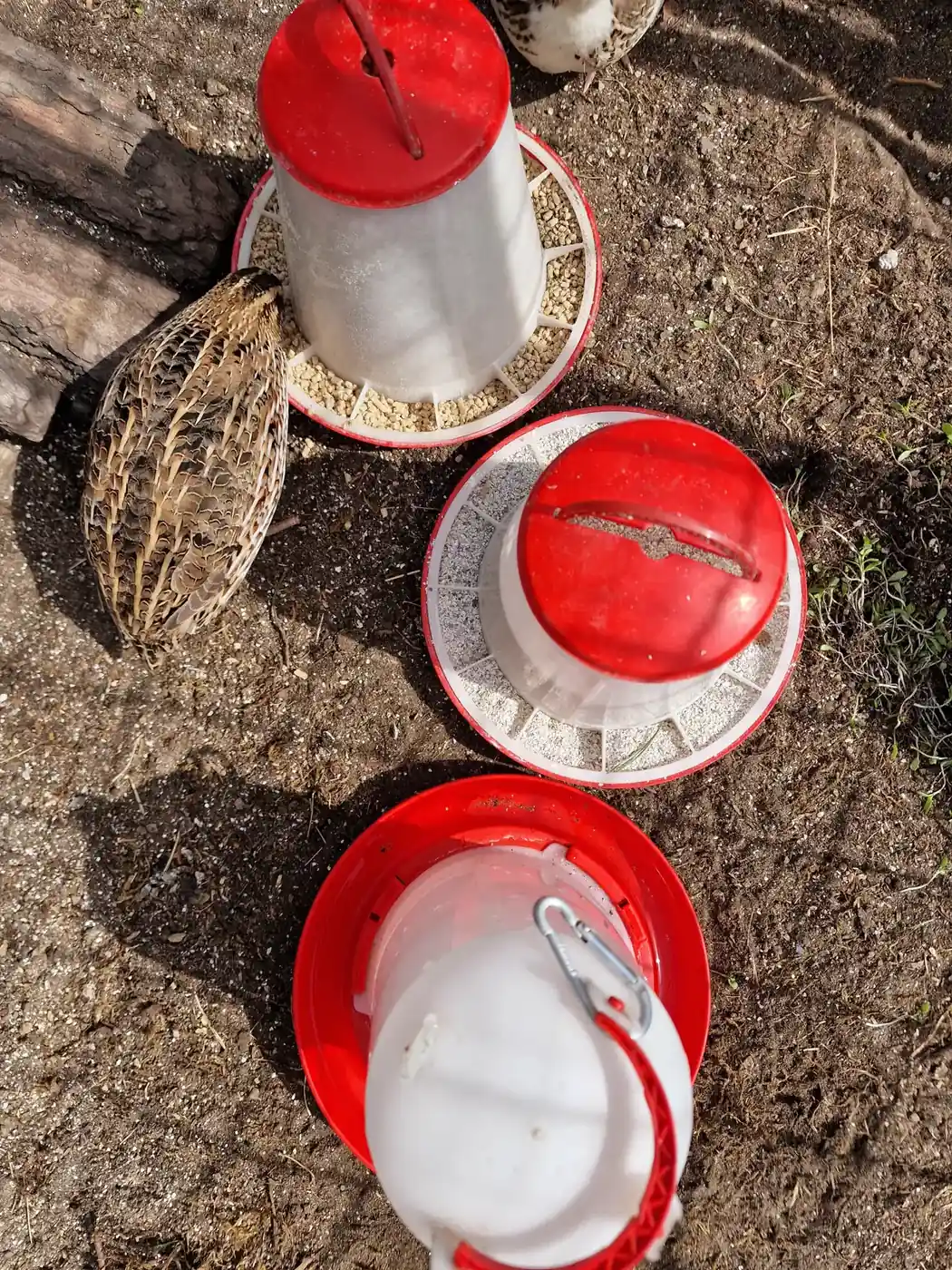
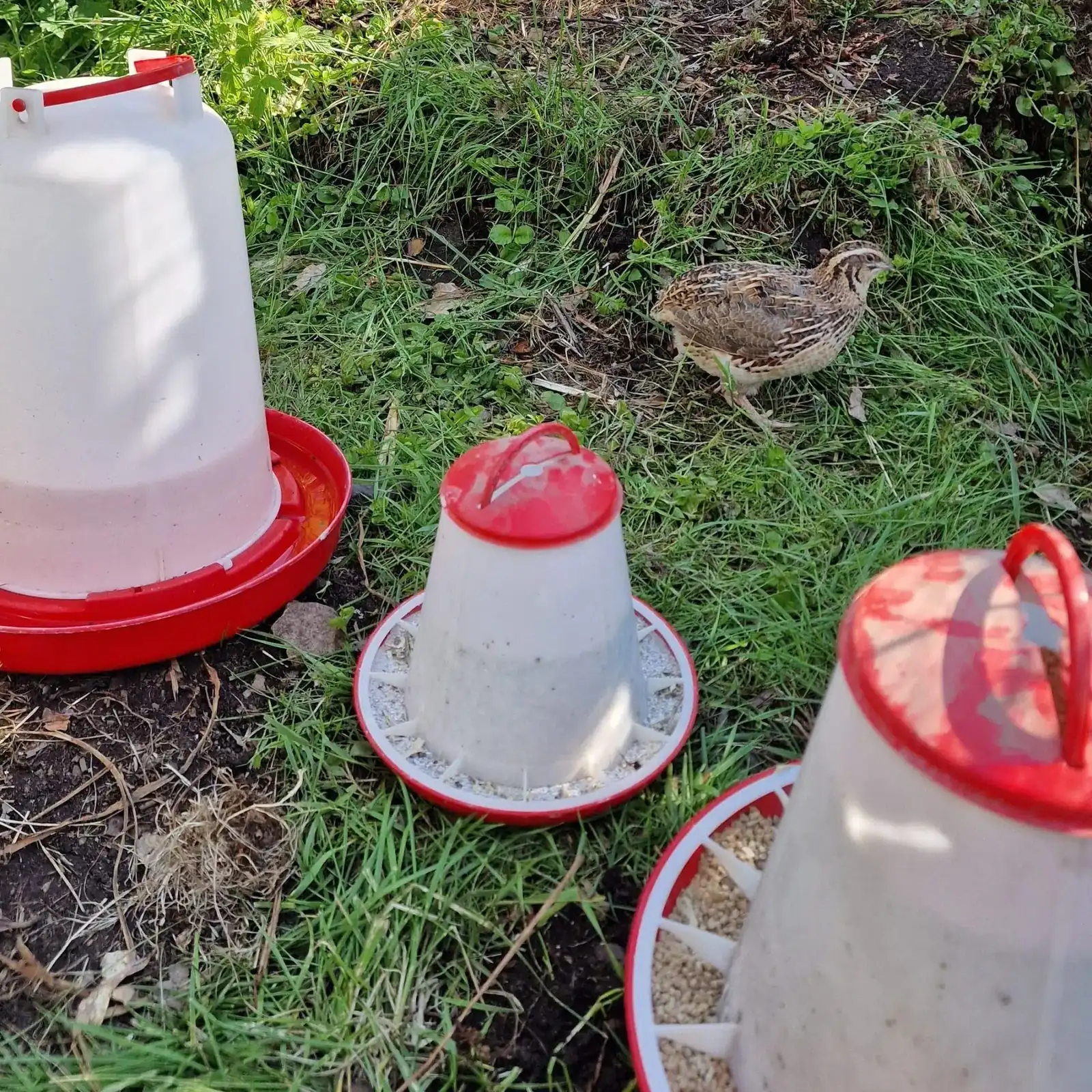
The simplest and safest way is to provide a small separate feeder with oyster shell. That way, the quail can pick at it whenever they feel the need.
They know their bodies well when it comes to this.
Coarse oyster shell is what's normally recommended for poultry, but I always use fine oyster shell for my quail.
Quails are a lot smaller than chickens, and the coarse oyster shell often contains larger pieces that quail prefer to avoid. Using the fine oyster shell has worked well for me, the egg quality is excellent and the quails can easily eat it.
Sometimes I sprinkle a scoop into the dust bath, and they seem to enjoy that. But I still recommend offering oyster shell in a separate container.
The dust bath should not consist solely of oyster shell, as it produces too much dust.
Read more about what I recommend for the dust bath here: Dust bath for quails: a necessity for healthy feathers.
I don't mix oyster shell into the feed, and I don't use feed made specifically for laying hens, such as Fryd Egg, because I also need to take the roosters into account.
For simplicity, I give the same feed to hens and roosters, and serve oyster shell on the side.
See also: How to choose the right feed for quail.
Practical tips for storage
Oyster shell should always be stored dry. If it gets damp, bacteria and odors can develop.
Keep a bucket or sack indoors and refill the feeder with small amounts.
It's better to refill often than to leave large amounts outside where they can be exposed to moisture.
What happens if quail don't get oyster shell?
A lack of calcium can result in thin-shelled eggs, so-called soft-shelled eggs, or egg laying may stop completely.
When calcium needs are high and there is no access to oyster shell, quail may draw calcium from their own body reserves. Over time this can weaken the skeleton.
That's why oyster shell is considered a basic part of feeding adult laying quail.
It's just as important to avoid too much calcium for those who don't need it. Excess calcium over time can damage the kidneys of roosters and chicks.
Summary
Oyster shell for quail is primarily about calcium. It leads to stronger eggs and better bone health.
Provide it in a separate container once they are old enough, and let the quail regulate their intake themselves.
Good luck! 🥚