

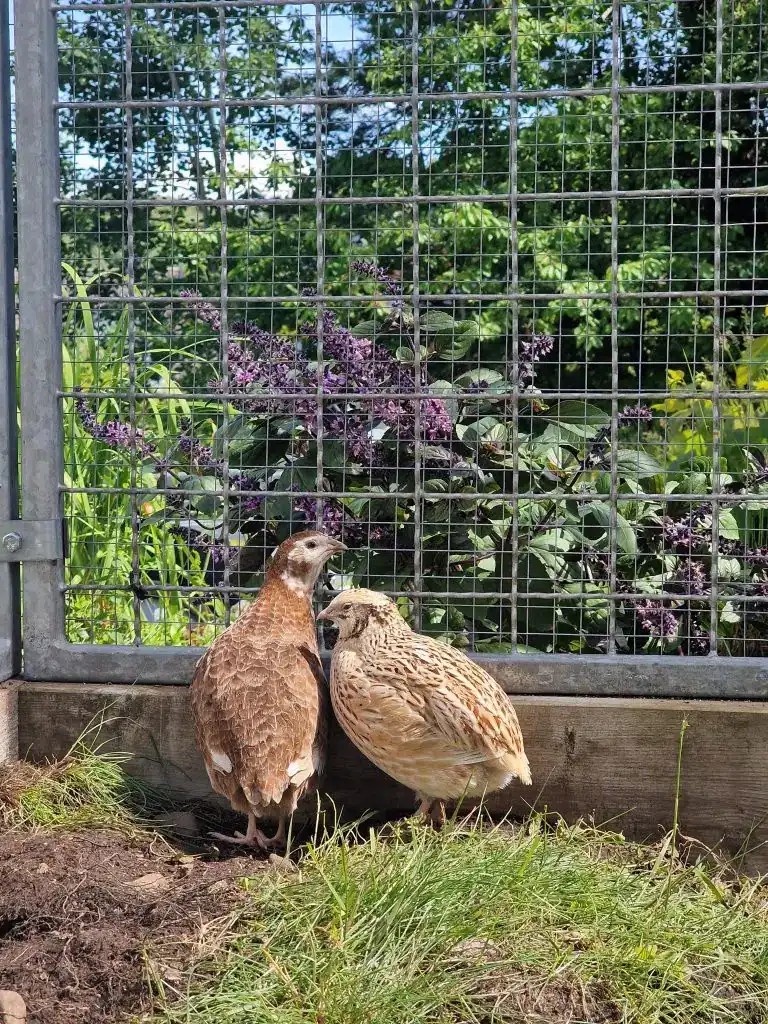
I recommend that everyone who is thinking about getting started with quail learns the basics first. Good planning makes the beginning both easier and more enjoyable.
It is tempting to buy on impulse, but trust me: a couple of rounds of planning first will save both you and the quails unnecessary stress.
Like all animals, quails have some basic needs when it comes to space, feed, temperature and care. You should also be aware that there are many different quail species.
For me, it started with ten hatching eggs and a pile of questions I could not find clear answers to. You can read more about this on the about The Quail Coop page.
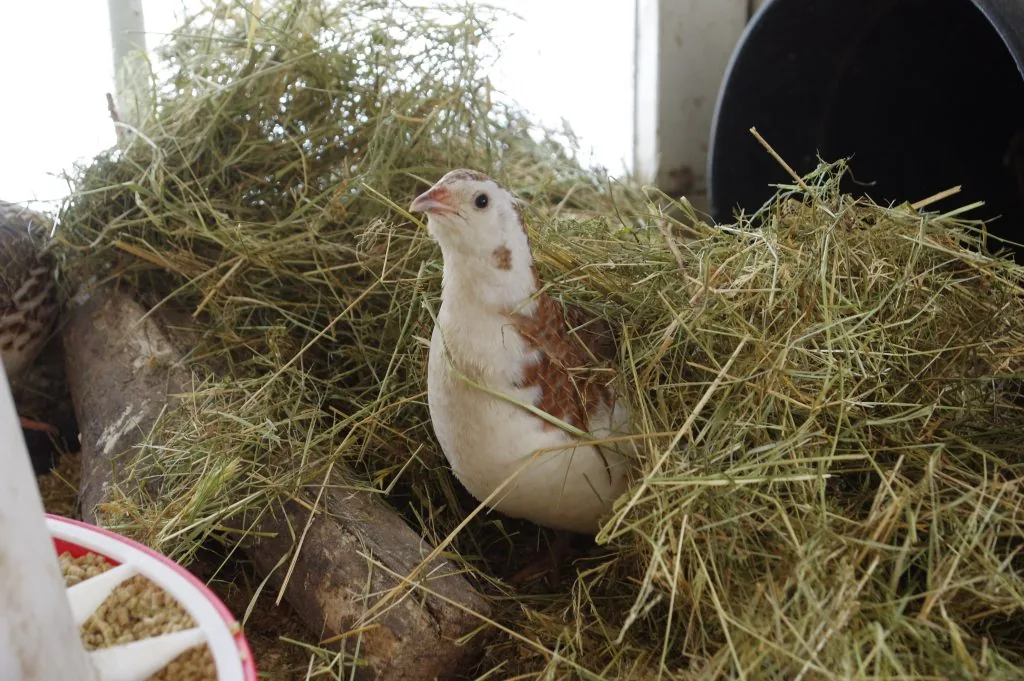
Which quail is suitable for beginners?
There are many quail species, but Japanese quail is the most common in hobby keeping and the one I recommend for people with no previous experience of quails. They have a calm temperament, lay plenty of eggs regularly, are easiest to find and are easiest to handle. It is also the species I started with myself.
Where should they live?
Quails can be kept both indoors and outdoors, but either way they need predator-proof housing and enough space to move around.
How much space do quails need?
I believe that the more space we can give them to express natural behaviour, the better. That is why I prefer a large outdoor quail run with plenty to explore, enough hiding places and a variety of shrubs and grass.
The Norwegian Veterinary Institute has prepared a report that discusses space requirements for quails. It recommends at least 0.125 m² of floor space per adult quail. That equals about eight adult quails per square metre. These recommendations are for Japanese quail.
Read the report here: Keeping ducks, geese and quails – natural needs and other factors important for animal welfare.
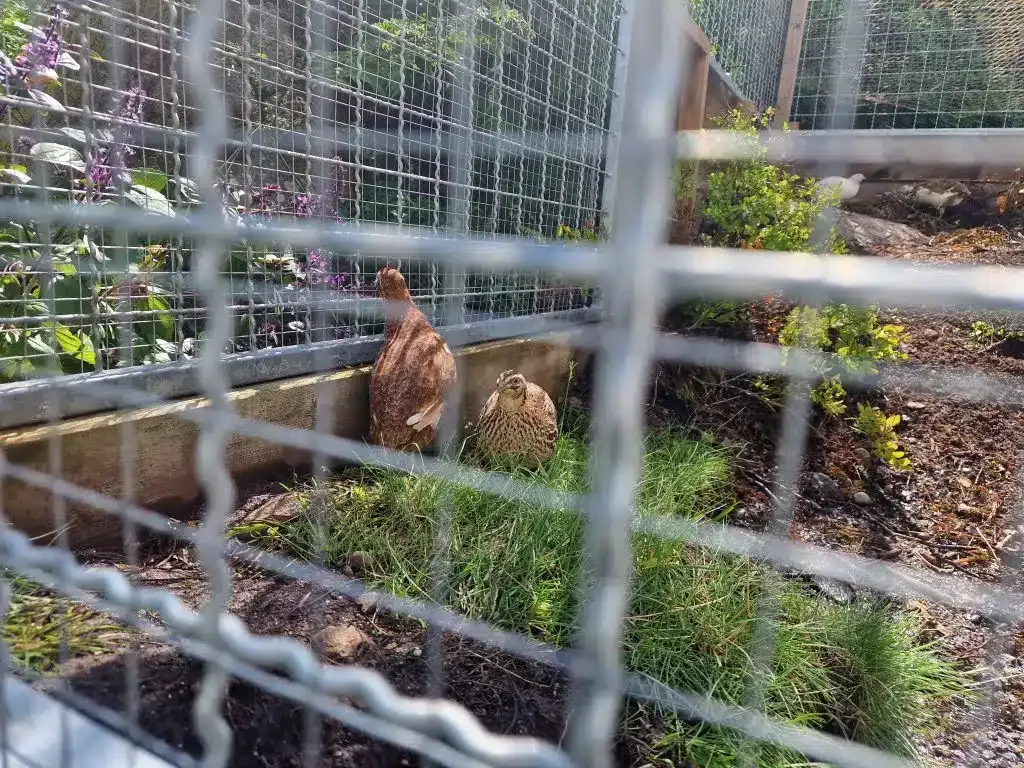
Keeping quails outdoors
When you build an outdoor enclosure for quails, the goal is not only to keep the quails in, but to stop predators getting in. Think about which predators could be a potential threat where you live: rats, stoats, badgers, the neighbour's cat and so on.
An outdoor enclosure should have mesh of around 10 mm, and preferably mesh buried into the ground to prevent predators digging in. Alternatively, you can place plenty of large stones along the whole edge and lay mesh flat on the ground around the entire run.
You can also keep the enclosure raised on posts instead of directly on the ground.
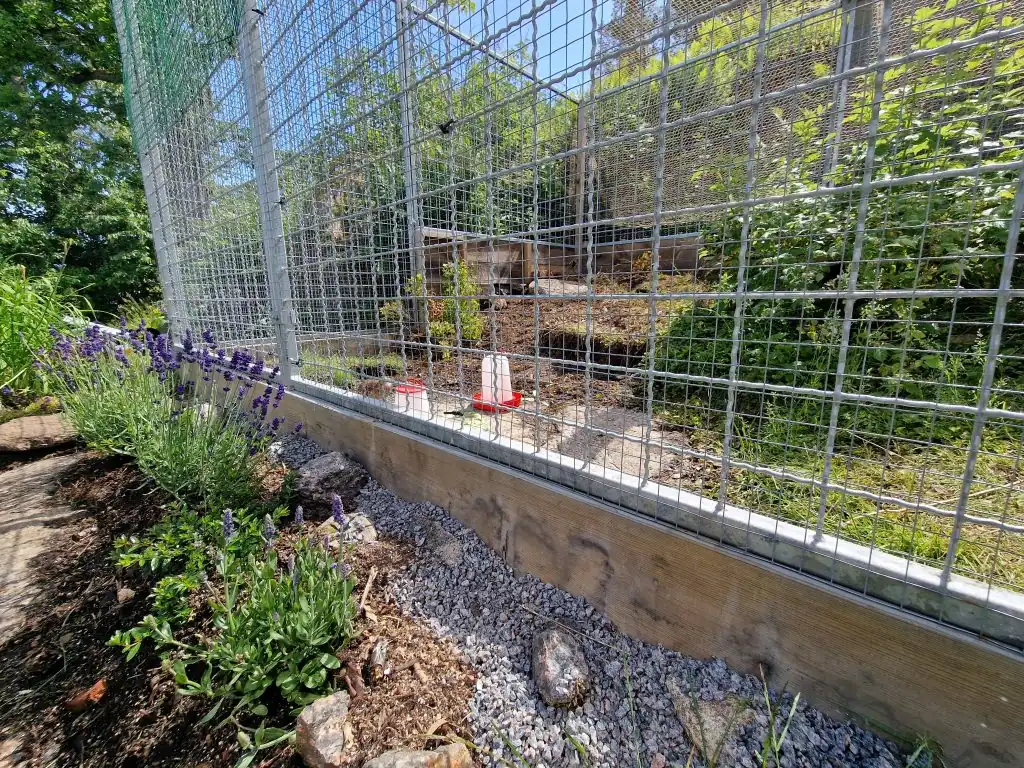
After an unpleasant encounter with a badger during our first summer with quails, we chose to buy dog-run panels. It may be a little “overkill”, but some predators are much stronger than we think.
Because the mesh on the sides of dog-run panels is quite large, we cable-tied smaller mesh to the outside to stop the quails getting out and to stop smaller predators getting in.
Shelter from weather and wind
Quails should also be able to get under cover to stay dry, and not least have somewhere the feed can stay dry.
Make sure they can shelter from wind, rain and sun. Even though they love sun and warmth, too much of a good thing can become a problem. Give them the option of withdrawing.
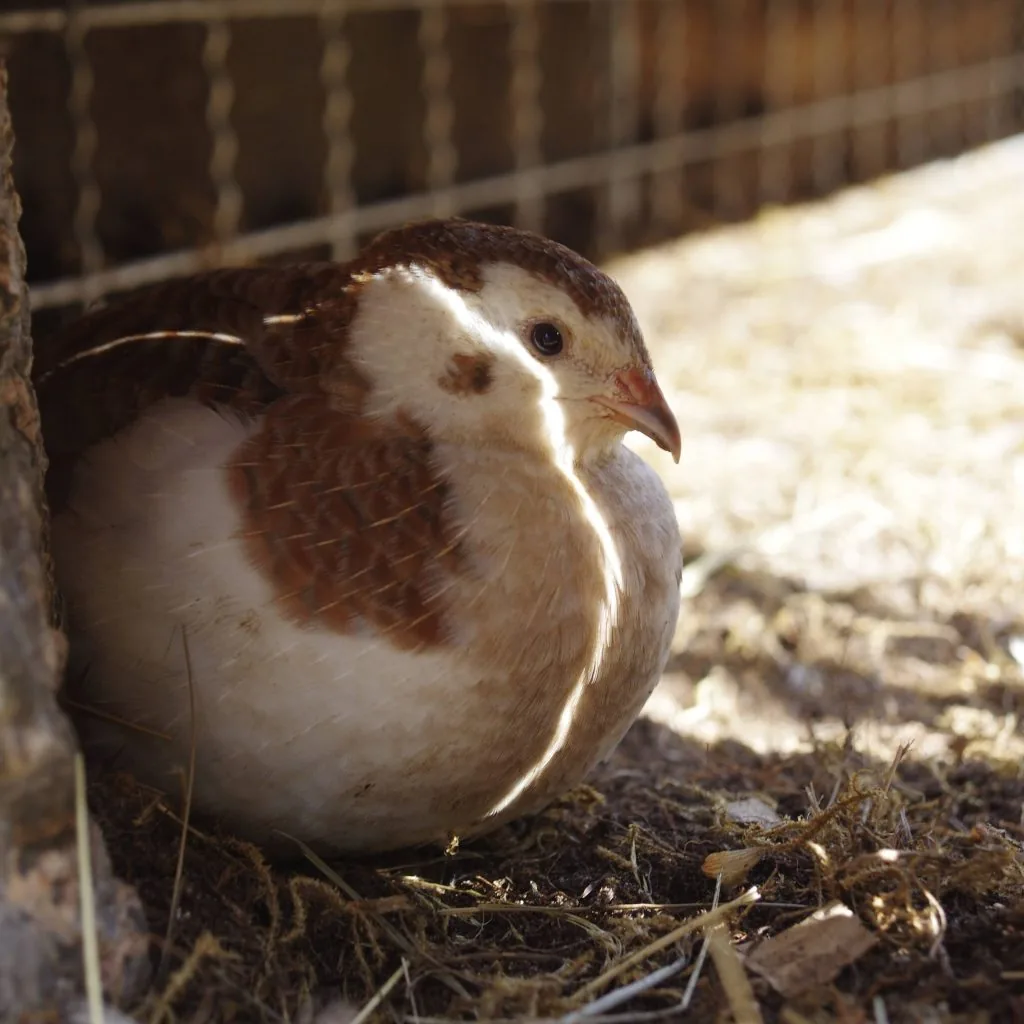
Keeping quails indoors
By indoors, I mean in a garage, barn room, annex or similar. I do not recommend keeping quails inside the house in living areas.
Quails create dust, a lot of dust, and they depend on a dust bath, which also creates a lot of dust. You do not want that in your living room.
Because they produce quite a bit of dust, indoor housing needs good ventilation, but it should not be draughty.
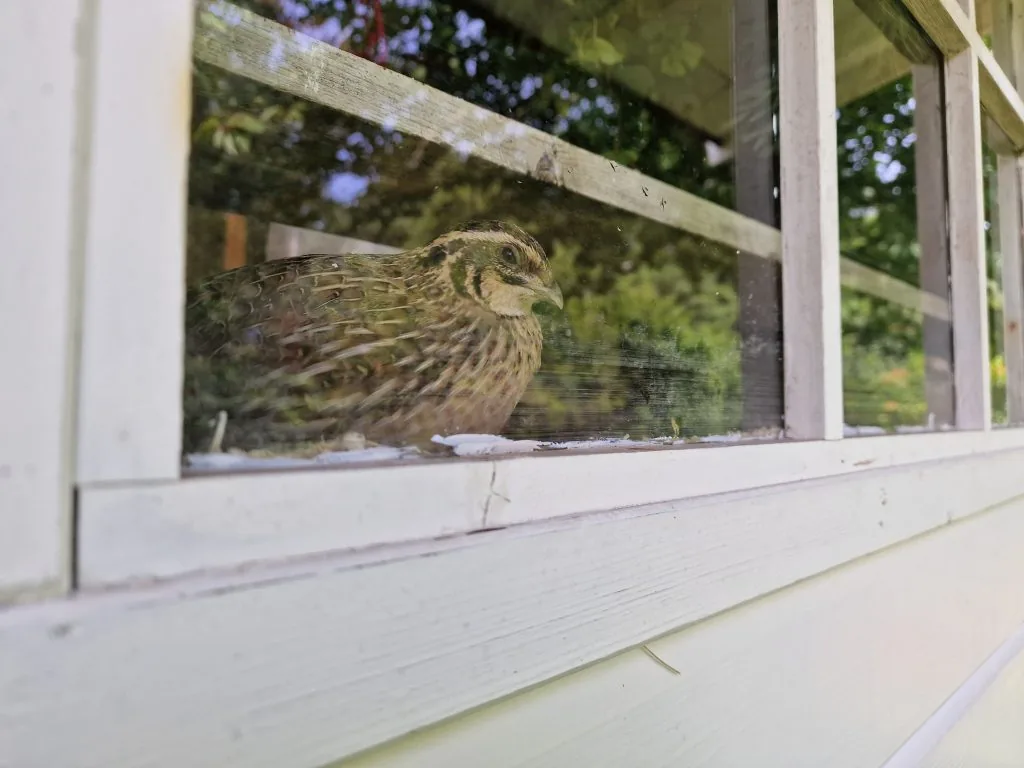
It is also helpful if their room has windows. This gives them access to natural light and a more natural daily rhythm.
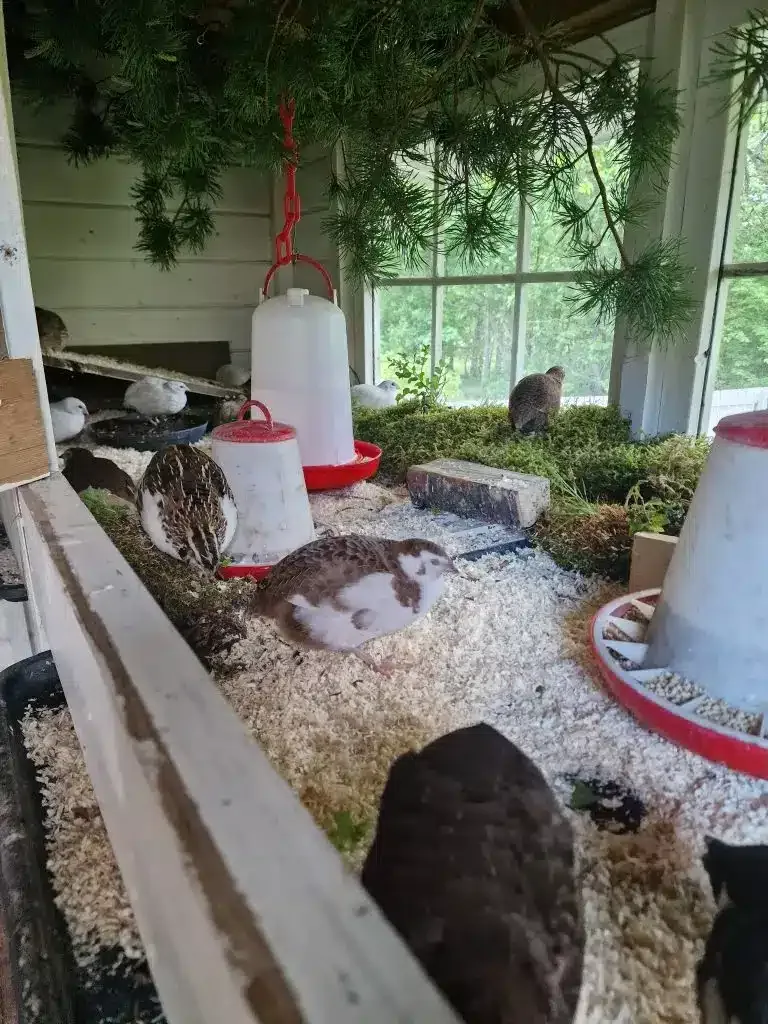
No matter where quails live, they need good hiding places to feel safe. Read more in Furnishings: tips for good hiding places for quails.
Comfort temperature for quails
I have often read that “quails can tolerate a lot” and “quails are hardy”. But we should not forget that comfort temperature matters too. And perhaps there is a reason why the one quail species that lives wild in Norway is migratory, and leaves when winter arrives.
Japanese quail stop laying eggs when they are not thriving. Studies show that the ideal temperature for maintaining egg production is between 15–28 °C. You may also want to read Quails not laying eggs: when do they start, and why do they stop?.
The colder it is, the more passive they become.
Keeping the temperature up gives them the opportunity to express natural behaviour, stay active and eat regularly. Quails need to stay active, just like we humans do.
I have kept quails in an annex that stayed around 0 to -5 °C during the coldest part of winter. I had a heat lamp near the water to stop it freezing solid.
The quails were very passive through the winter and stayed still a lot. Some sought out the area near the heat lamp, while others stayed at the opposite end of the enclosure, far from the heat source.
Now I have a room in the garage that stays between 12 and 15 °C through winter, and the quails seem much happier. They are more active and eat better, and I find it more pleasant to go in and look after them.
How to get started
Are you going to buy live birds, or do you want to start with hatching eggs? I started with hatching eggs, and later I have also tried buying live birds.
After trying both, I have realised that I prefer hatching them myself. Here are the advantages and disadvantages as I see them:
Starting with live quails
This is the quickest way to get started. You can buy adult birds that are already laying eggs, or young birds that will soon be ready to start.
Advantages
- You get eggs almost immediately.
- You need a little less equipment at the start, because you avoid needing an incubator and brooder.
- If you buy from a responsible breeder, you get healthy, sound birds.
Challenges
- You depend on finding a breeder with healthy, well-handled birds.
- Transport can be stressful for the quails.
- You have less opportunity to tame the quails from when they are small.

Tip: Always ask whether you can see the birds in the environment they live in before you buy. Ask how old the quails are, and ask about the parent birds: were the parents hatched by the breeder, and are the parents unrelated?
Starting with hatching eggs
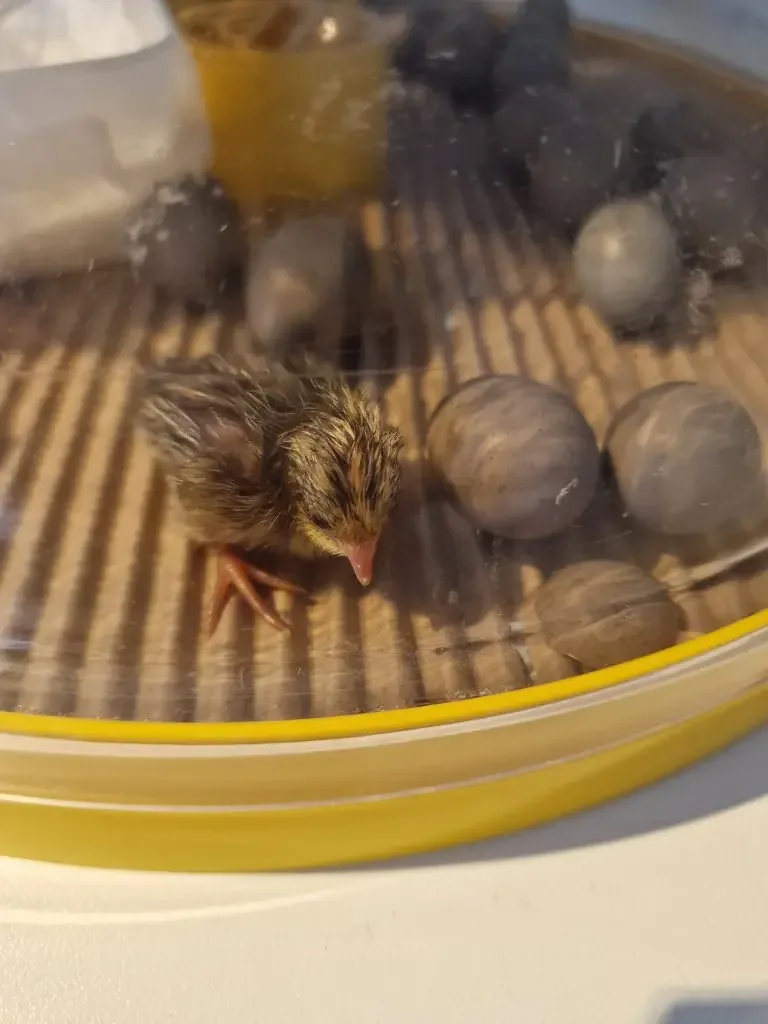
I started with hatching eggs. This is for anyone who wants to experience the whole process from day one. You get to follow the chicks from hatching and can get them used to handling early.
Advantages
- It is exciting and educational to follow the hatching process.
- It gives you a better chance of building a tame flock.
Challenges
- It requires equipment such as an incubator and heat lamp or brooder plate, though equipment can sometimes be rented.
- It requires more knowledge about using the equipment and managing the incubation process.
- It requires more follow-up during the first weeks, including teaching them to eat and drink.
If you want to try hatching them yourself, I have gathered everything you need to know here: Incubating quail: everything you need to know.
Tip: Choose hatching eggs from breeders nearby that you can collect yourself, or from someone who can guarantee they pack well and send early in the week for the fastest possible postal delivery.
Costs and time
Getting started with quails does not require a huge investment, but you should be prepared for some start-up costs such as
- Cages and fencing.
- A heat lamp or heating pipe for winter.
- Feed, drinkers and feeders.
- Bedding such as straw, wood shavings, beech chips or pellets.
- An incubator and brooder if you want to hatch eggs yourself.
You also need to allow for ongoing costs for feed, oyster shell, bedding, electricity for light and heating.
See also Oyster shell for quail: an important source of calcium.
A flock of 10 adult quails eats around 1–1.5 kg of feed per week.
You may also want to read How to choose the right feed for quails.
You need to set aside time for daily checks, feeding, changing water and cleaning. Quails must be checked at least once a day to make sure they have enough feed and water, and to check that everyone is healthy and uninjured. These are general welfare requirements for poultry here in Norway.
If you are going away for a few days, you should ask a friend or neighbour to check in on your quails.
Which rules apply?
In Norway, you are required to notify the Norwegian Food Safety Authority if you keep quails as a hobby, even if you only have a few birds for your own use.
- Quail are considered poultry under Norwegian animal health regulations.
- Everyone who keeps poultry, including hobby keepers, must register in the Norwegian Food Safety Authority's livestock register.
- This applies regardless of the number of animals and whether you operate commercially or not.
- The rules are the same as for other hobby poultry, such as chickens, ducks and geese.
The purpose is to make it possible to trace and limit infection during disease outbreaks, such as avian influenza.
See: Do I have to register my birds? (Mattilsynet.no).
Common mistakes to avoid
- Do not buy quails or hatching eggs before you have equipment or basic knowledge.
- Do not buy more quails than you have room for.
- Do not buy a quail species that is too demanding; see Quail species.
- Do not take predator-proofing lightly.
- Do not use the wrong type of feed. Quails need plenty of protein. See How to choose the right feed for quails.
Summary
Getting started with quails is rewarding, but it does require some preparation. Plan carefully before you buy, start with Japanese quail, which is relatively easy to handle, and give them safe, good living conditions.
Good luck! ❤️