

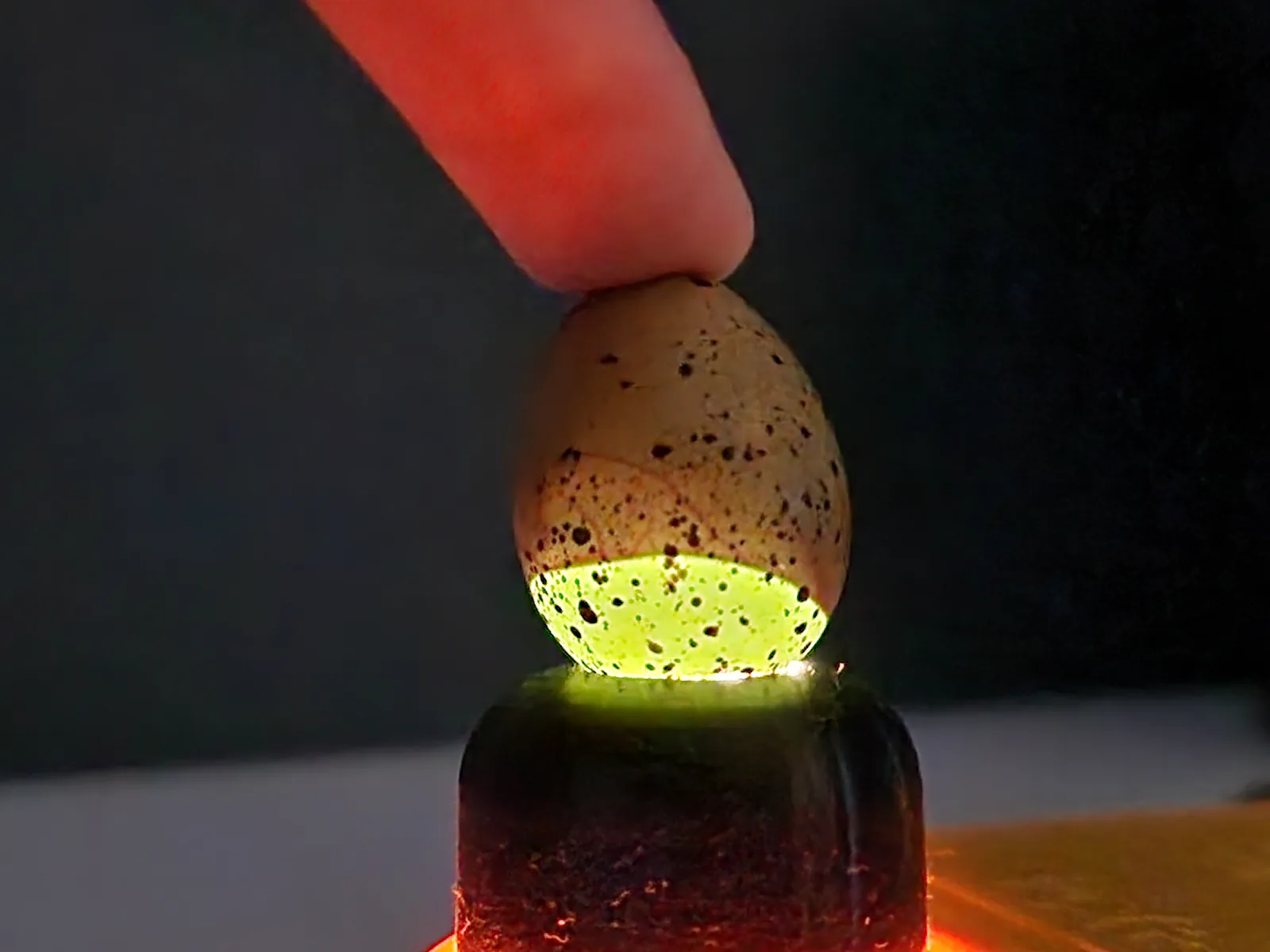
What is quail egg candling?
When you candle an egg, you hold a bright lamp against the eggshell in a dark room. The light allows you to see through the shell and get a glimpse of what's happening inside the egg.
You don't have to candle the eggs, but I would recommend that you do. It's very exciting, and not to mention useful.
Among other things, it helps you detect cracks and damage before you put eggs in the incubator. In the picture below, you can see damage in the egg that wasn't visible to the naked eye before I illuminated it.
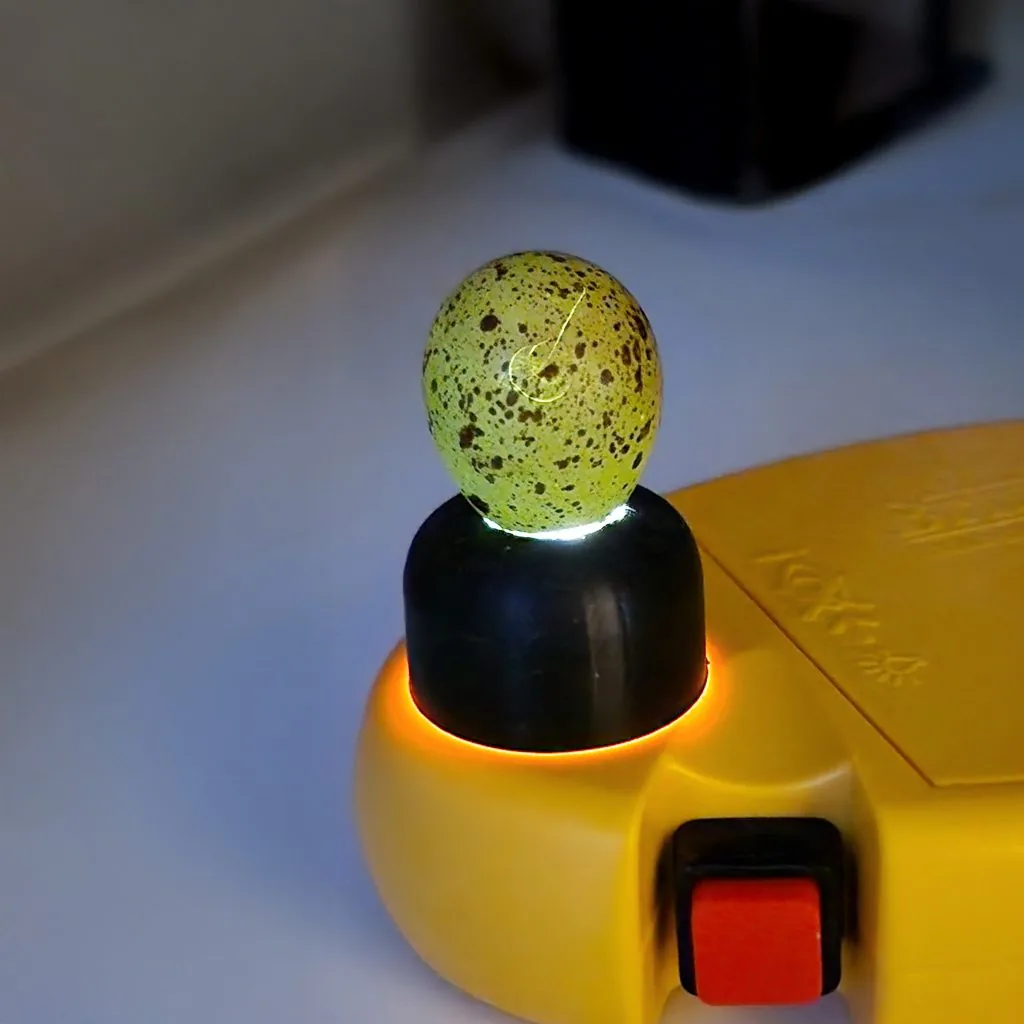
You can check whether the chicks are developing properly along the way.
This gives you the opportunity to retrieve non-developing eggs before they go bad and potentially ruin the others.
When to candle the eggs?
Do not candle the eggs too often. Every time you open the incubator, you lose both heat and moisture.
Here are some tips on when to candle your eggs and what to look for:
- Day 0 (before incubation)
Check that the shell is intact, without cracks or stains. - Day 5-7
First safe time to see development. You should be able to see blood vessels and a small shadow. - Just before lockdown (three days before expected hatching)
Last time you can check. After this, the incubator should be kept closed.
Tips for candling eggs
Quail eggs can be challenging to candle because the shell is often dark and patterned. Here are some tips that can help:
- Light eggs are easier
White and light-coloured eggs are easiest to see through. If you want to breed, you can therefore consider choosing breeds that lay lighter eggs. - Illuminate in a dark room
The less ambient light, the easier it is to see through the shell. - Turn the egg
Sometimes you see the development better from a different angle.
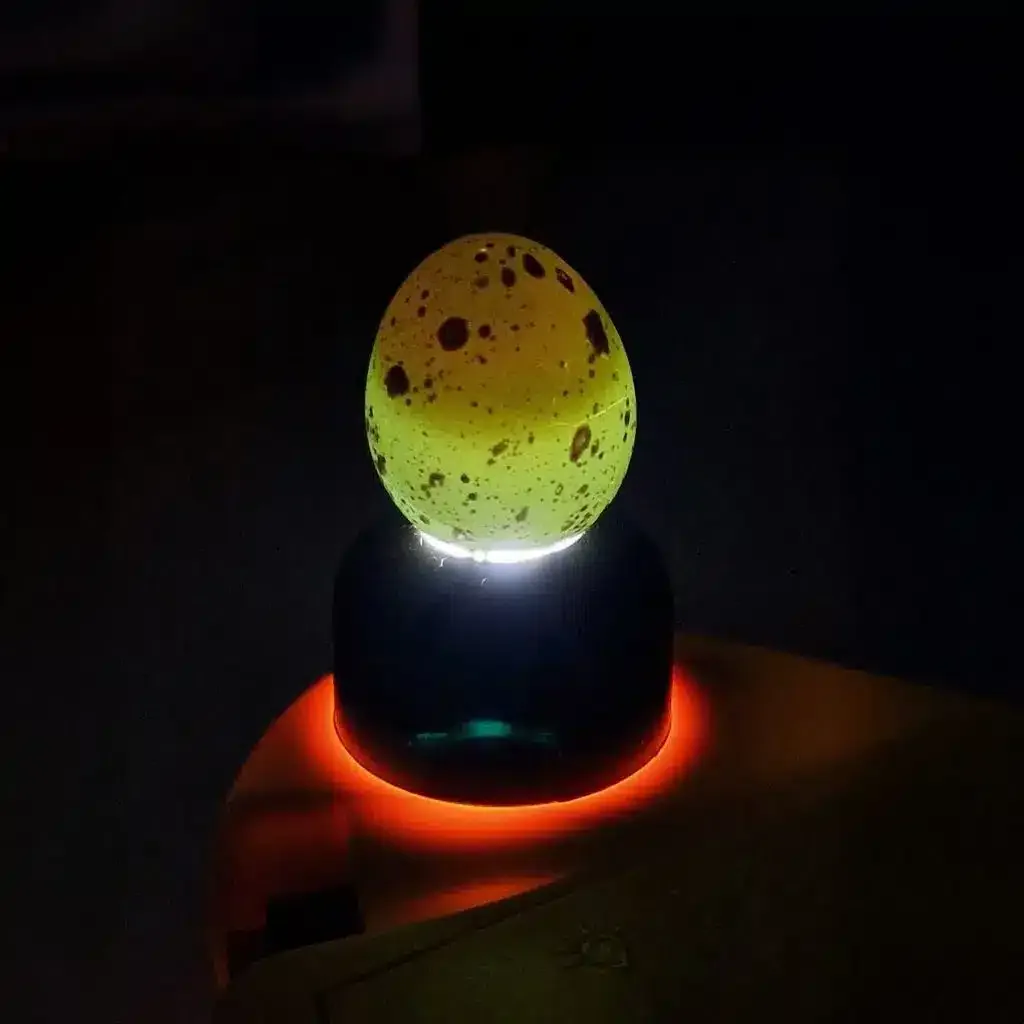
Recommended equipment for candling quail eggs
Egg candling is harmless to the egg if done correctly. Candling with LED lights is not harmful.
Avoid using strong halogen or incandescent lamps. These lamps emit a lot of heat and, if held against the egg for too long, can damage the embryo.
If you're using a light that emits heat, be quick and check that the egg doesn't get hot. It's the heat that can be dangerous, not the light itself.
My product recommendation
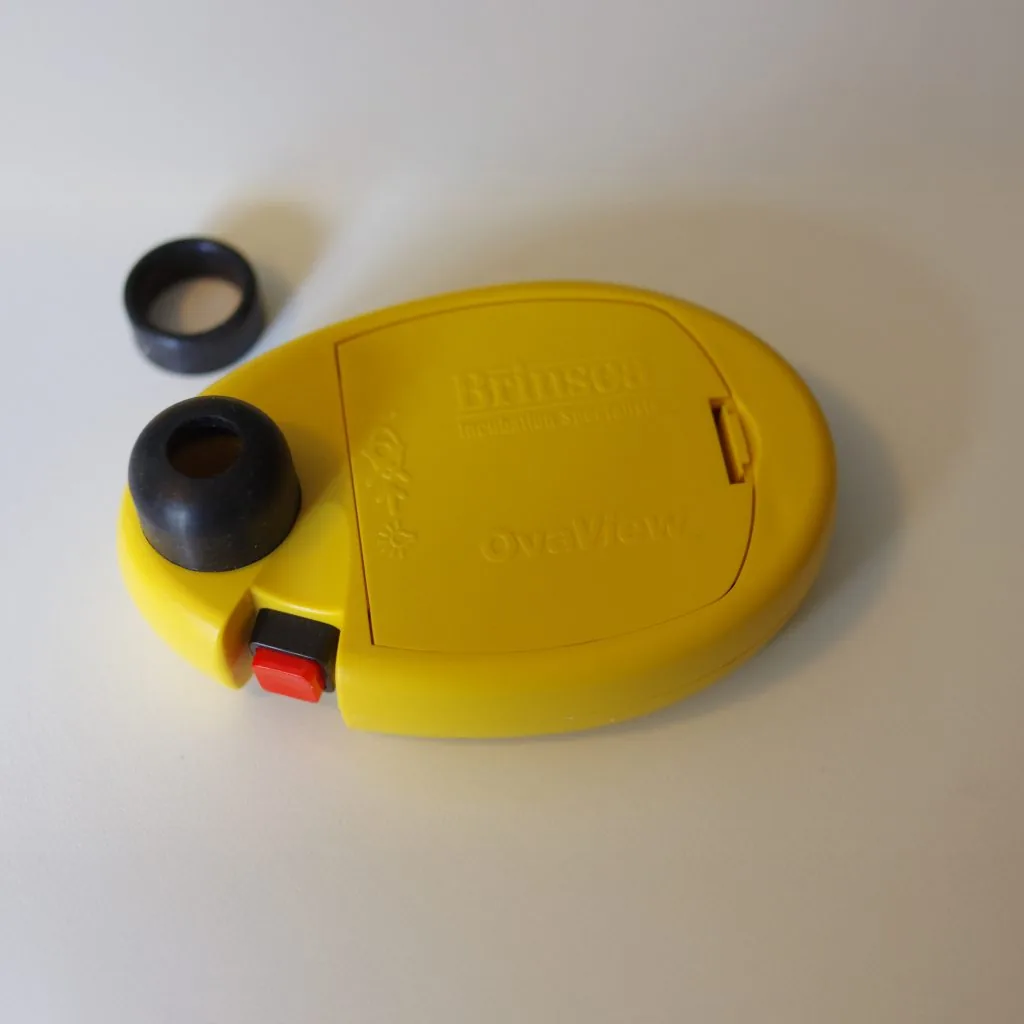
If you want a simple lamp that works well on quail eggs, I can recommend Brinsea OvaView High Intensity egg candler.
Brinsea is a well-known manufacturer of incubators and accessories, and this model provides bright enough light to see through even darker eggs.
There is also a standard version of OvaView, but it is too dim for dark quail eggs.
If you're going to candle eggs as a regular part of incubation, I recommend the High Intensity version. It costs a little more, but does the job.

Tip! If you buy equipment like an incubator or an egg candler, you might consider renting them out during periods when you're not using them yourself, to cover some of the costs.
Summary
In short, candling is an easy way to follow the development of the quail eggs. Light 2-3 times during the incubation period, use a strong enough lamp, and sort out eggs that do not develop.
This gives you better control over incubation and a better indication of how many eggs will hatch.
For a detailed description of the entire hatching process, read the article Quail incubation: step by step.
Good luck! 💡