

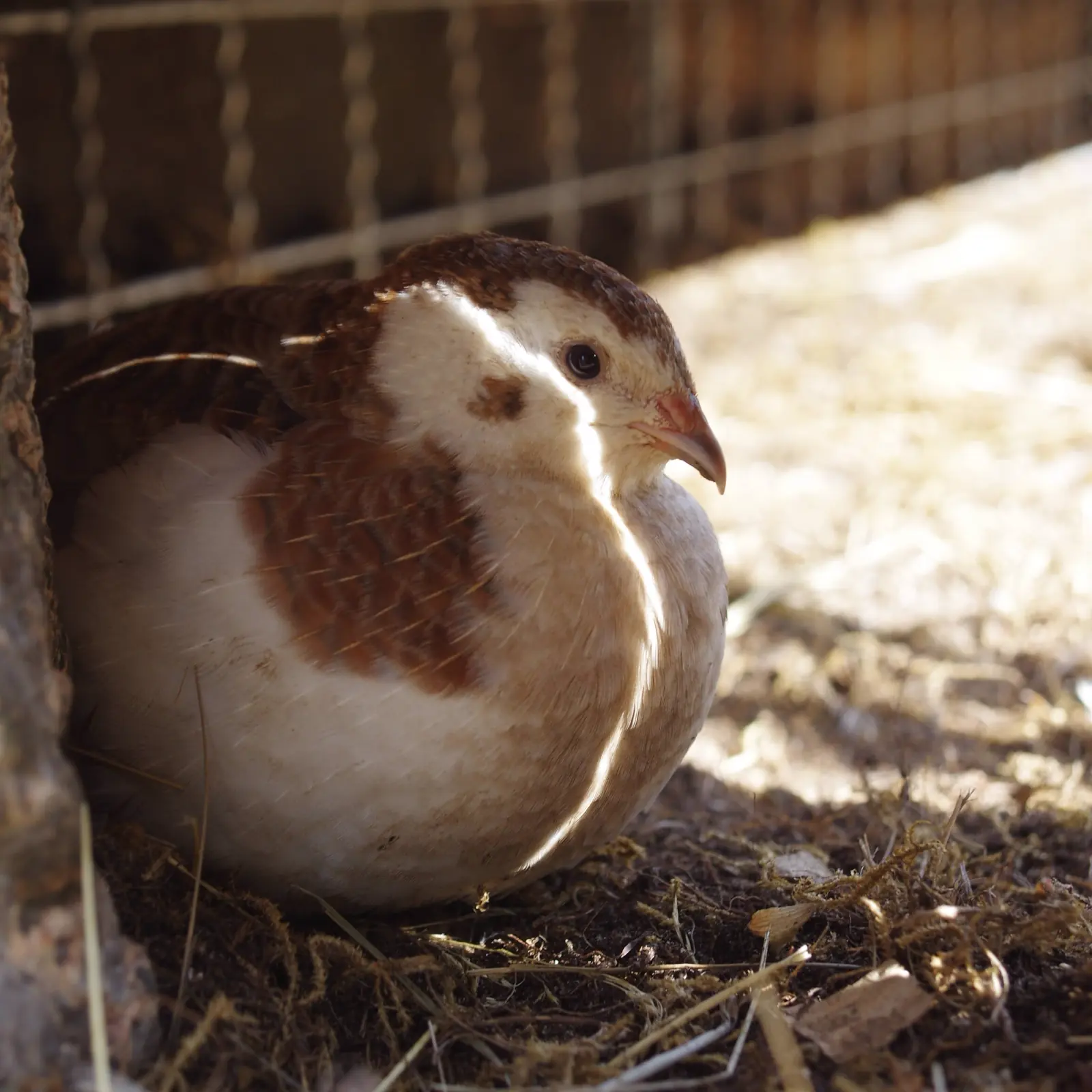
There are probably different opinions about what the right temperature for quails is. I've observed a lot, tried a few different things myself, read up on things, and thus formed some opinions about what I think is right.
In Norway, we have great contrasts throughout the year, and we have to take slightly different considerations in different parts of the country.
When we started with quails, we lived in southern Norway. We took the entire quail flock with us when we moved further up north.
The winter here can be long, snowy and cold, while in southern Norway the winter was shorter, milder and wetter.
The climate difference is huge and we have to take different considerations here than we did there. In addition, some quail species are perhaps a little more heat-loving than others.
How cold can quail tolerate?
Quails are not naturally adapted to cold winter climates. Adult quail can handle lower temperatures if the environment is dry and draft-free, but that doesn't mean they are comfortable in the cold.
I've read several times that "quails can take a lot" and "quails are hardy". But we shouldn't forget that there's such a thing as comfort temperature too.
This is perhaps one reason why the one species of quail that lives in the wild in Norway is a migratory bird, and runs away when winter arrives.
Different species, different needs?
The Common quail is a migratory bird and avoids winter in Norway completely.
Blue-breasted quail is considered subtropical, and is more heat-loving than for example Japanese quail and Northern Bobwhite.
I have a flock of Blue-breasted quails together with a bunch of older Japanese quail hens. The little ones crawl up and under the big ones when the temperature drops.
The big ones don't seem to mind at all. It almost looks like it triggers their motherly instincts.
Do quails need heat in winter?
Yes, quails thrive when it's warm. Keeping the temperature up allows them to engage in natural behaviours, stay active and eat regularly. The colder it is, the more passive they become.
You need to decide whether you want to heat the whole room, or give them a limited heat source in an area of the room.
The most important thing is to avoid large temperature fluctuations, high humidity, and condensation. Make sure the environment is dry and draft-free.
Quail chicks are a different story. They need a lot of warmth in the first few weeks and are completely dependent on heat sources such as a heat lamp or heating plate, unless they go with their own mother.
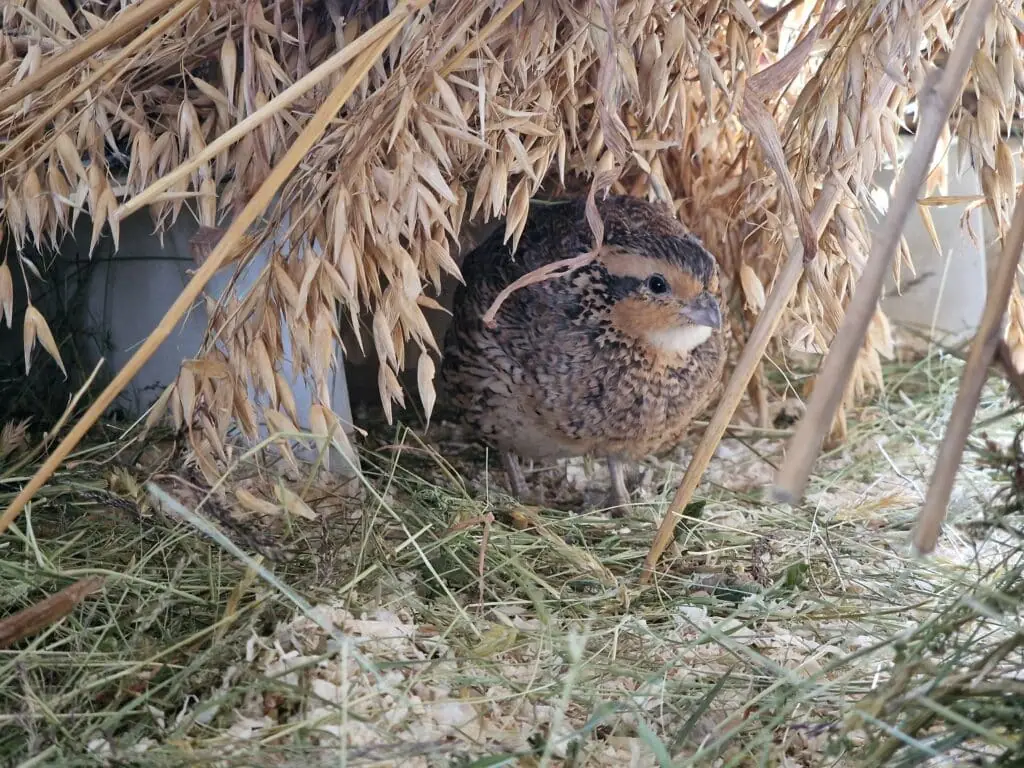
What is the right temperature for quails?
The ideal temperature for maintaining egg production in Japanese quail is between 18–23 °C. So if you want eggs through the winter, the temperature should not be too low. Blue-breasted quail is considered subtropical and should have stable room temperature or access to heat sources.
I keep the quails in an insulated room in the garage during the winter months.
I aim to keep the room temperature up to 15 degrees.
Firstly, it's more pleasant to visit the quails; instead of quick visits, I can spend a lot of time with them even in winter.
It's also easier to keep it dry and clean in an insulated room with heating.
What heating equipment is suitable for quail?
What kind of heating equipment works best for quail depends on your setup. Do you have a small insulated house outside, or a larger insulated room in a garage or barn? How cold does the winter get where you live? You need to decide whether you want to heat the entire room, or provide a heated area inside the enclosure.
Here are a few safe choices that I have experience with:
Heating tube
Heat tubes are often used in boats, but can also be used in chicken and quail enclosures.
Look for one with an adjustable thermostat. This gives you better control of the temperature.
Heating tubes are available in several sizes and wattages, so just choose the size and wattage that suits the room you want to heat.
Livestock heat lamp
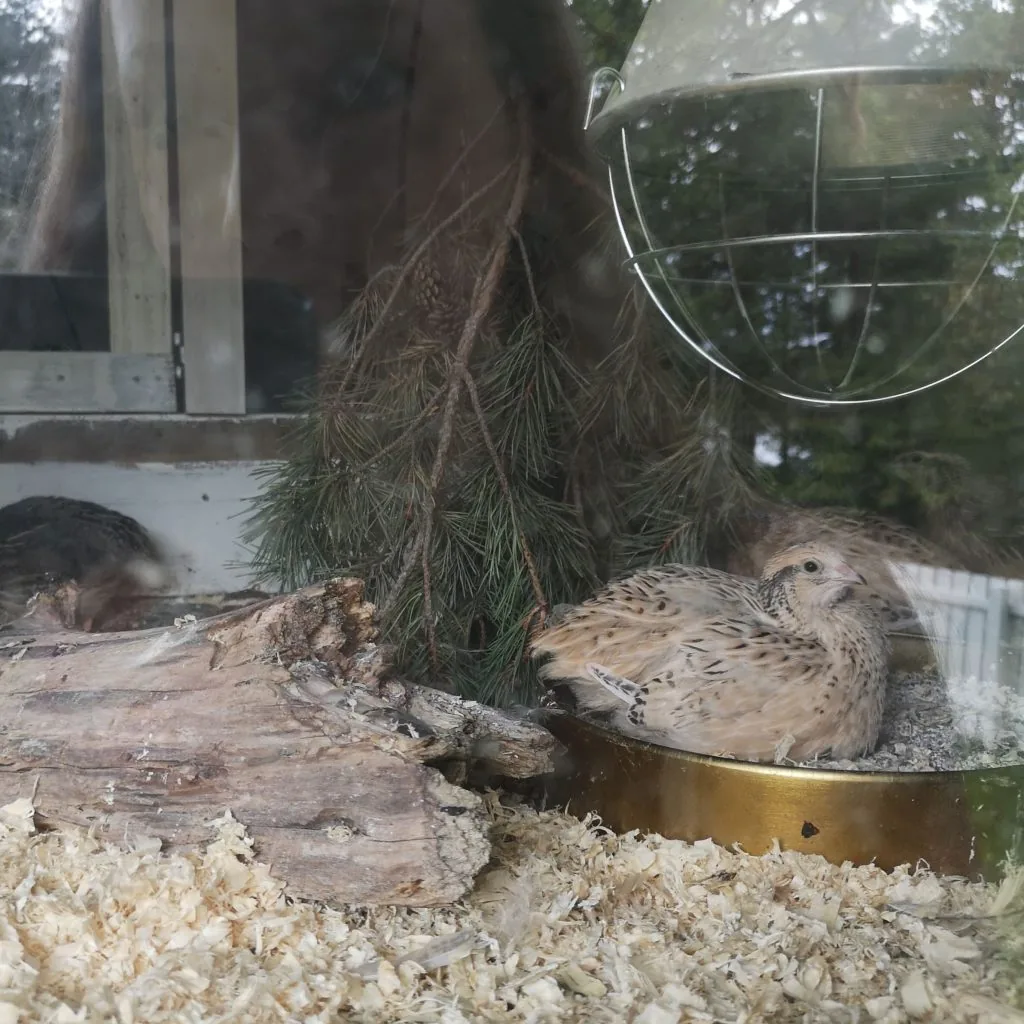
Before I installed heat tubes, I used a livestock heat lamp with a ceramic bulb. They only heat the area under the lamp and are not used to heat entire rooms.
Livestock heat lamps are designed for livestock farming and are considered safe when they are securely fastened, have the safety grid on and are kept clean of dust.
They must be hung at a safe distance from bedding and quail, but still close enough to provide warmth. Use your hand and feel what it feels like underneath.
You can usually install ceramic bulb or infrared bulb in the heat lamps.
I use a ceramic bulb. It provides stable heat without light. This is completely safe when the lamp is securely fixed at the right distance, the safety grid is on and it is kept clean of dust.
What you should definitely not use as heat sources
Quails create a lot of dust. They emit feathers and shavings that can be flammable. Therefore, you should avoid heat sources such as:
- Heating elements with exposed glowing wire.
- Construction dryers
- Gas stoves with exposed glowing heating plates.
- Heating equipment with low IP class (poor moisture and dust protection).
- Loose heat sources that can tip over and pose a fire hazard or injure the quails.
How to ventilate without creating draughts?
Ensure some ventilation in the room to avoid moisture, but place the vents in such a way that the air moves over the quails and not directly on them.
Without proper ventilation, it can lead to moisture and condensation which again can lead to bacteria and sickness.
How hot can quails tolerate?
When the sun is blazing and the temperature is approaching 30°C in summer, we have to be careful.
Quail chicks should be kept at 30-35°C for the first few weeks, but for adult quails too high temperatures can lead to heat stress.
They eat less, become more passive and lay fewer eggs when it is very hot over time.
The quails must have access to fresh, clean water at all times, and they must be able to seek shade.
Quails don't need water to bath in. While some birds bathe in water, quails bathe in sand and soil instead.

Summary
There are many considerations to take into account here in Norway where we have high contrasts in temperature depending on the season and where in the country you live. In winter, we can experience -30°C (-22°F), while in summer it can reach +30°C (86°F).
Although quails can tolerate the cold to a certain extent, this does not mean that they thrive in the cold.
Good ventilation is important all year round, but avoid draughts, make sure it's dry and use safe heat sources.
Best of luck! ❤️