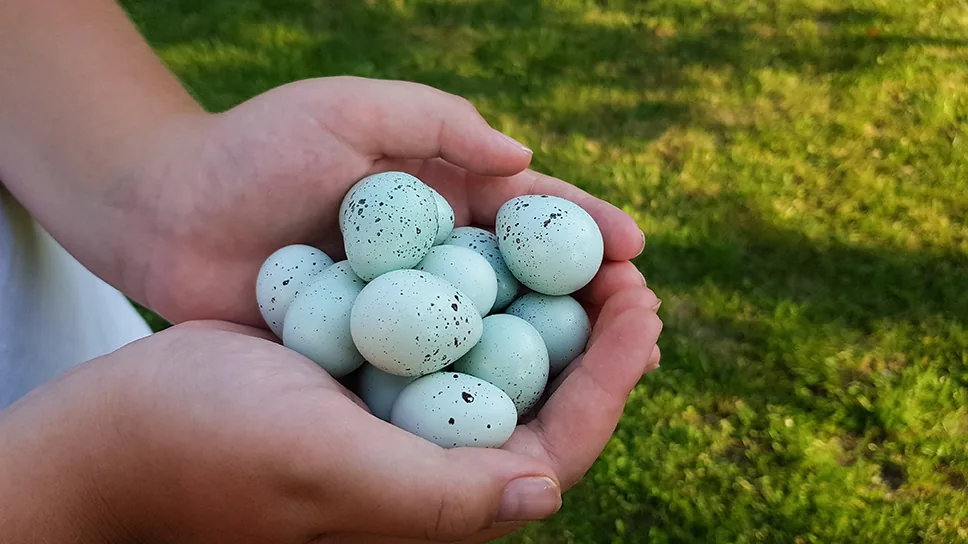
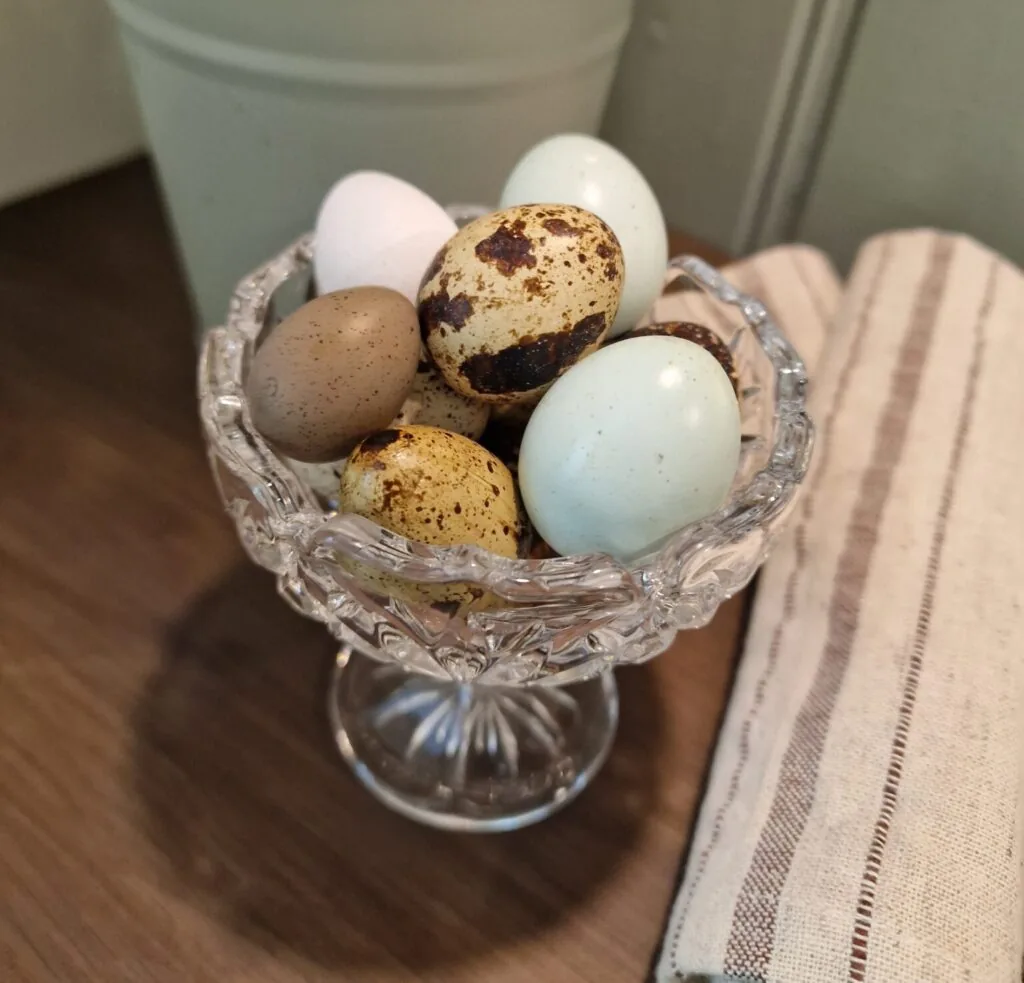
The lovely celadon colour fascinates a lot of people. A small quail egg with a blue-green tone stands out straight away.
Then comes the part that causes the most confusion
- Celadon-blue hatching eggs do not always give you Celadon layers in the next generation. The colour of the eggshell first and foremost tells you something about the hen that laid the egg.
- The Celadon quail is not a breed of its own. It is a Japanese quail that carries the Celadon genes (ce/ce).
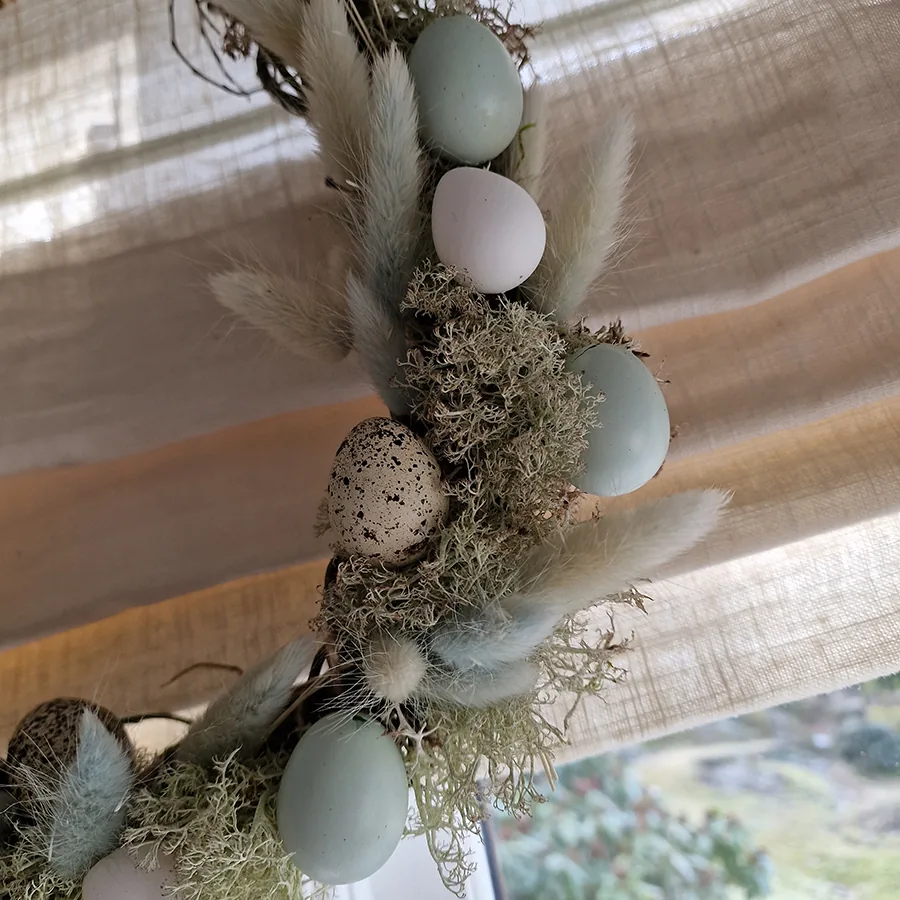
If a Celadon hen is paired with a cock that does not carry Celadon, all the chicks may end up as plain carriers. They hatch from blue eggs, but the daughters will later lay ordinary eggs. So "blue eggs in" does not give "blue eggs out".
Have a read of the article The quails are not laying eggs: when do they start and why do they stop?
The Celadon gene explained simply
Celadon is recessive. That means a hen needs two copies of the ce gene in order to lay Celadon eggs. If she only has one copy, she is a carrier, but the eggs will not be Celadon.
ce/ce
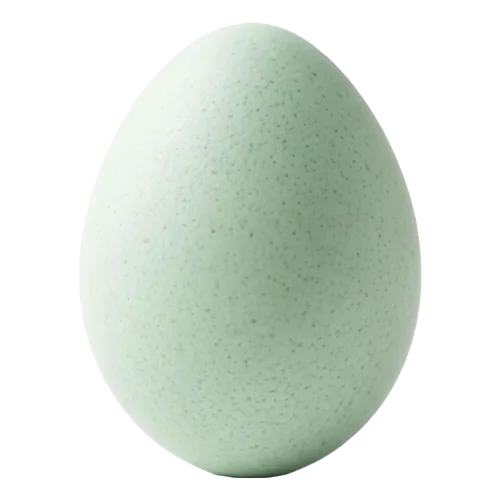
When the quail carries 2 ce genes you get Celadon eggs
ce/+
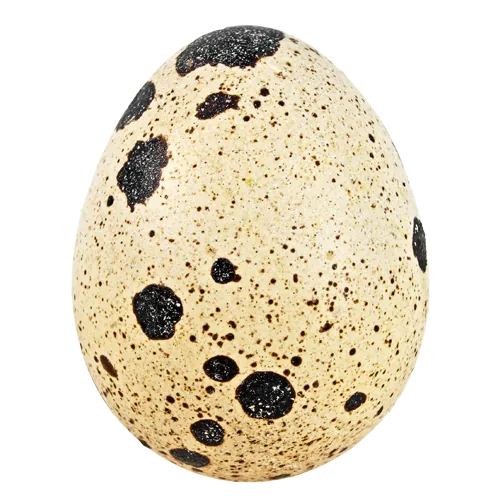
Only one ce gene gives an ordinary quail egg.
+/+
No ce genes gives an ordinary quail egg.
The same applies to the cocks. They can carry the gene without you seeing it. And since cocks do not lay eggs, you cannot know whether they carry the Celadon gene.
To find that out you have to watch the birds, keep a log and use a pedigree.
Have a read of the article Incubating quail: step by step
Targeted breeding of Celadon
For those of you who want to breed with a plan, my best advice is to document everything carefully. Write down who is the parent of whom. Keep confirmed carriers (ce/ce) separate from presumed carriers (ce/+).
Do not build the whole project on egg colour alone. The best Celadon breeding is the kind that combines lovely eggs, healthy birds, good hatchability and enough genetic breadth for the line to stay strong over time.
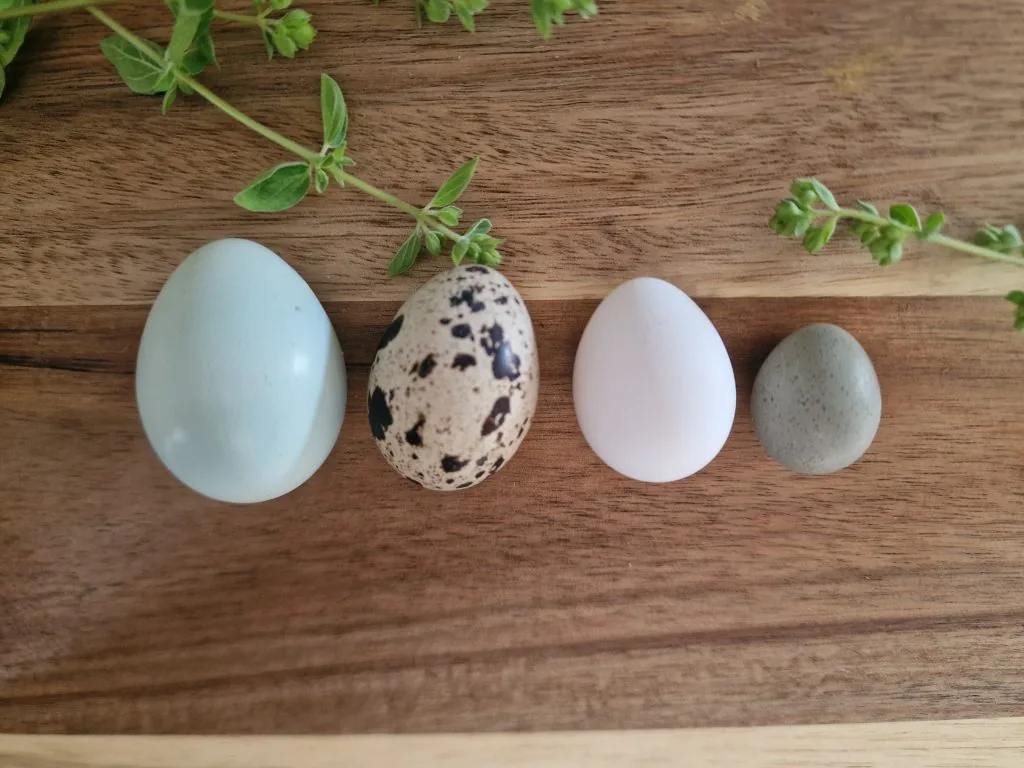
How can you tell that a quail is a Celadon quail?
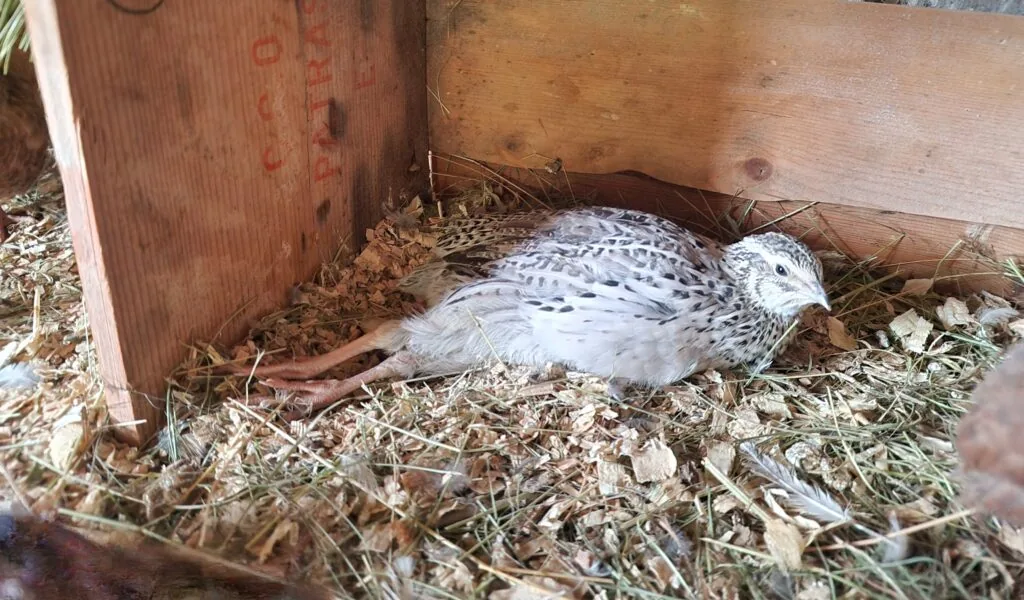
Many people wonder whether Celadon quails look different. The answer is no.
Celadon only shows up in the colour of the eggshell. Not as a feather colour.
That is why a Celadon quail normally looks like a completely ordinary Japanese quail in whatever feather colour it otherwise has. It is the eggs that reveal the line, not the plumage or the size of the quail.
Did you know that Japanese quail can lay white eggs?
I did my research while writing this article to be sure that what I write is correct. And in that process I learned about the we gene. That is something different from the ce gene.
The we gene is another mutation that makes it possible for Japanese quail to lay white eggs. Here too the quails have to carry two we genes in order to lay white eggs.
we/we
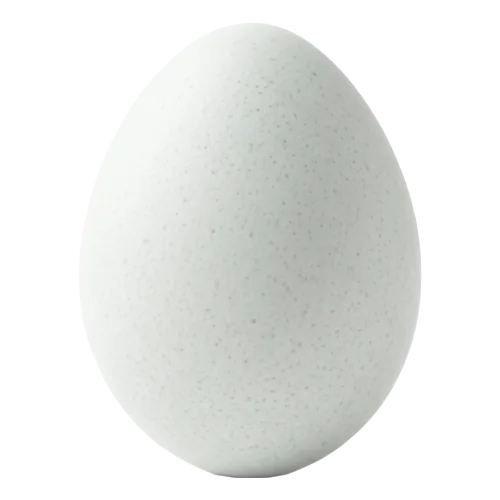
When the quail carries 2 we genes you get white eggs
we/+
Only one we gene gives an ordinary quail egg.
+/+
No we genes gives an ordinary quail egg.
I also learned that the quails can carry both the we gene and the ce gene at the same time. And that the we gene overrides the ce gene. Simply put, it looks like this:
we/we
When the quail carries 2 we genes you get white eggs
ce/ce
When the quail carries 2 ce genes you get Celadon eggs
we/we
+ ce/ce
Two of both genes gives white eggs
The we gene is less common than Celadon, so it is hardly surprising if you have not read about it before either.
You may have noticed that I have pictures of white quail eggs in a few places. Those come from the Northern bobwhite, which lays white eggs entirely naturally.
Source for the we study: Mizutani, Makoto. 2003. "The Japanese Quail." In The Relationship Between Indigenous Animals and Humans in APEC Region, 254–274. Asia-Pacific Economic Cooperation.
Common questions about Celadon eggs and the Celadon gene
Is Celadon a quail breed of its own?
No. Celadon is an eggshell mutation in Japanese quail, not a separate breed.
Do both parents have to carry the gene?
Yes. For a daughter to lay Celadon eggs she has to inherit ce from both parents, so she carries ce/ce. It is not enough for her to be ce/+ or +/ce.
Do Celadon hatching eggs always give Celadon layers?
No. The egg colour shows the mother's genotype. A ce/ce hen can lay blue eggs even though all the chicks only become carriers if the father is not ce/ce.
Can I see Celadon in the cock?
Not directly. Cocks do not lay eggs, and as of 2026 there is no published Celadon-specific DNA test.
Are Celadon eggs poorer to incubate?
Celadon does not necessarily mean poorer genes. The challenge lies more in how the gene is bred. Since Celadon is recessive, small lines can quickly become bred too closely. Then inbreeding, not the Celadon gene itself, can affect the quail's health and egg quality over time.
Summary
I hope you learned something useful from the article – I certainly did myself.
White eggs are not common in Japanese quail, but they can actually occur.
There is no DNA test for finding Celadon in Japanese quail. The mutation has not been publicly mapped. Until that happens, classic genetics still applies: good notes, a system for your quails, and knowing who is paired with whom.
Good luck!