

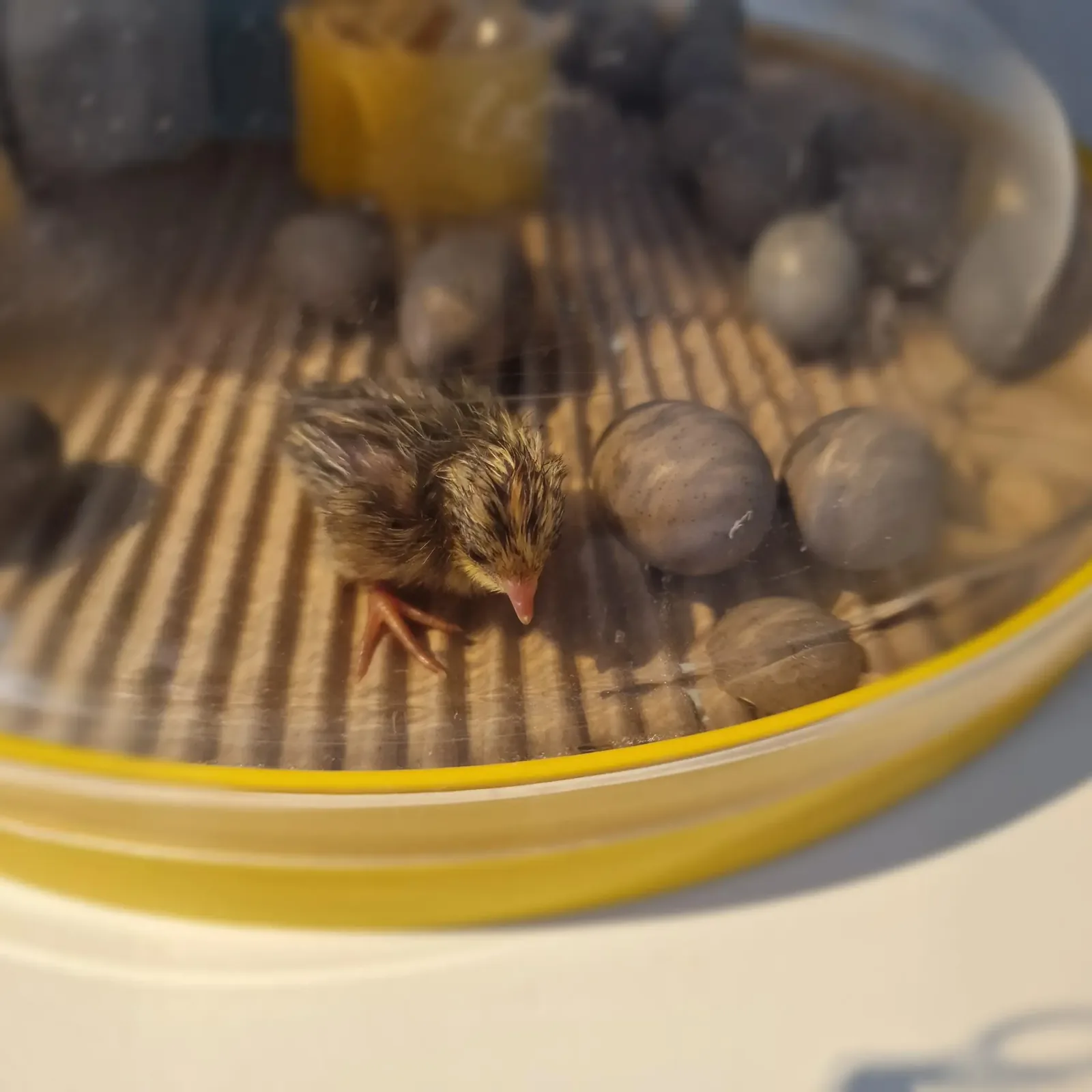
In this article, I have gathered everything you need to know, from proper egg storage to hatching and incubation times for different species.
Different quail species
The first thing to be aware of is that there are several different quail species, and they have different incubation times.
You cannot therefore incubate eggs from different species at the same time, unless they have the same incubation period. Personally, I prefer to keep them separate.
Incubation time by species
| Species | Incubation time | Lockdown starts |
|---|---|---|
| Asian blue quail | 16–18 days | Day 14 |
| Japanese quail | 16–18 days | Day 14 |
| Northern bobwhite | 22–23 days | Day 19 |

Tips
- Lockdown always starts 3 days before the expected hatch.
- Chicks may hatch both before and after the expected date.
- Avoid incubating different species at once unless they share the same incubation time.
Incubation time for quails
The incubation time is always counted from the day you put the eggs in the incubator until the chicks hatch. Lockdown always starts 3 days before the expected hatch.
The incubation time is given in approximate number of days.
The incubation time can vary somewhat. They can start hatching before you expect it, and they can take longer than expected.
I have experienced a chick hatching on day 14. I panicked slightly because I had not yet turned off the egg turner on the incubator. Fortunately, it went well, and this is rare.
Selection and storage of hatching eggs
Which eggs you choose and how you store them before they are placed in the incubator matters for the result.
Collect eggs daily, preferably several times a day to avoid damage or unnecessary dirt.
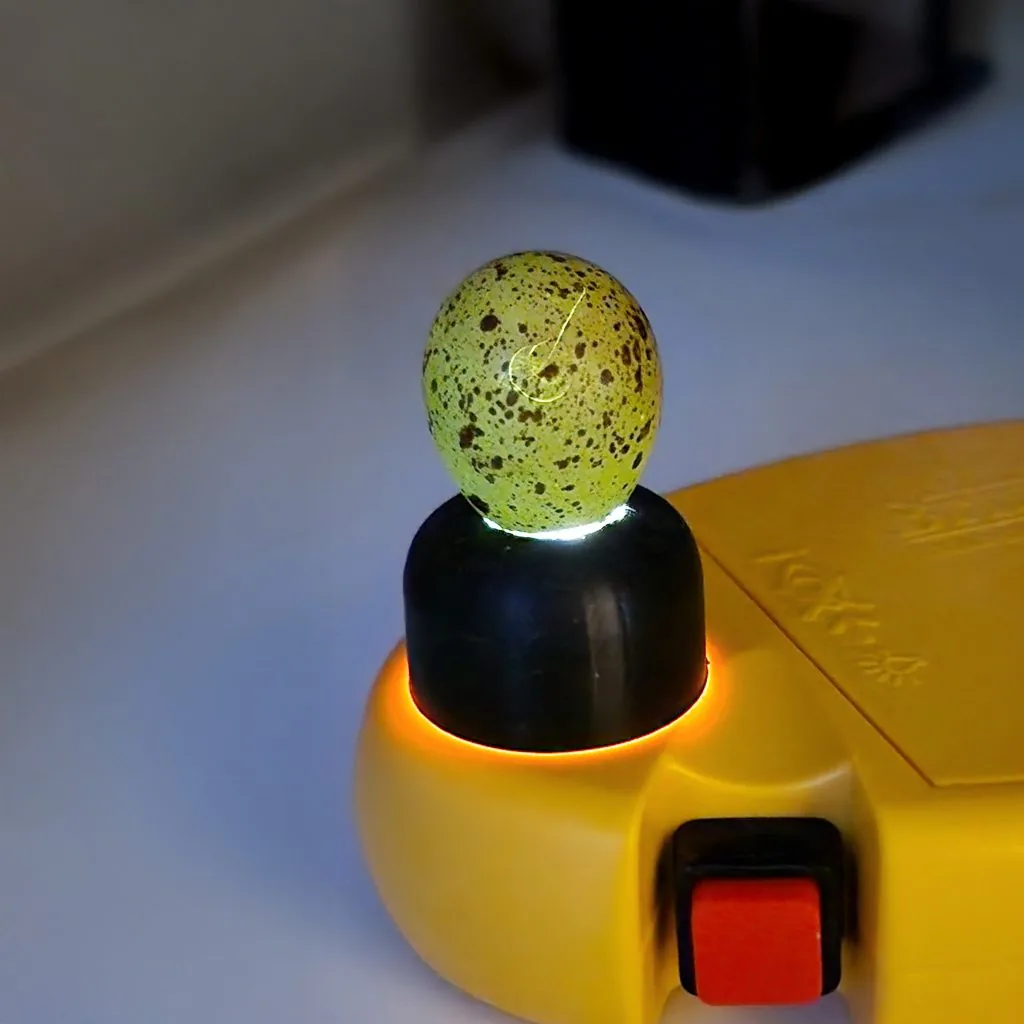
To detect if eggs are damaged, you can candle them with a bright light. You will see cracks and marks that you might not see with the naked eye.
You can read more about candling eggs here: Candling quail eggs: how to check if the eggs are developing
Choose normal eggs
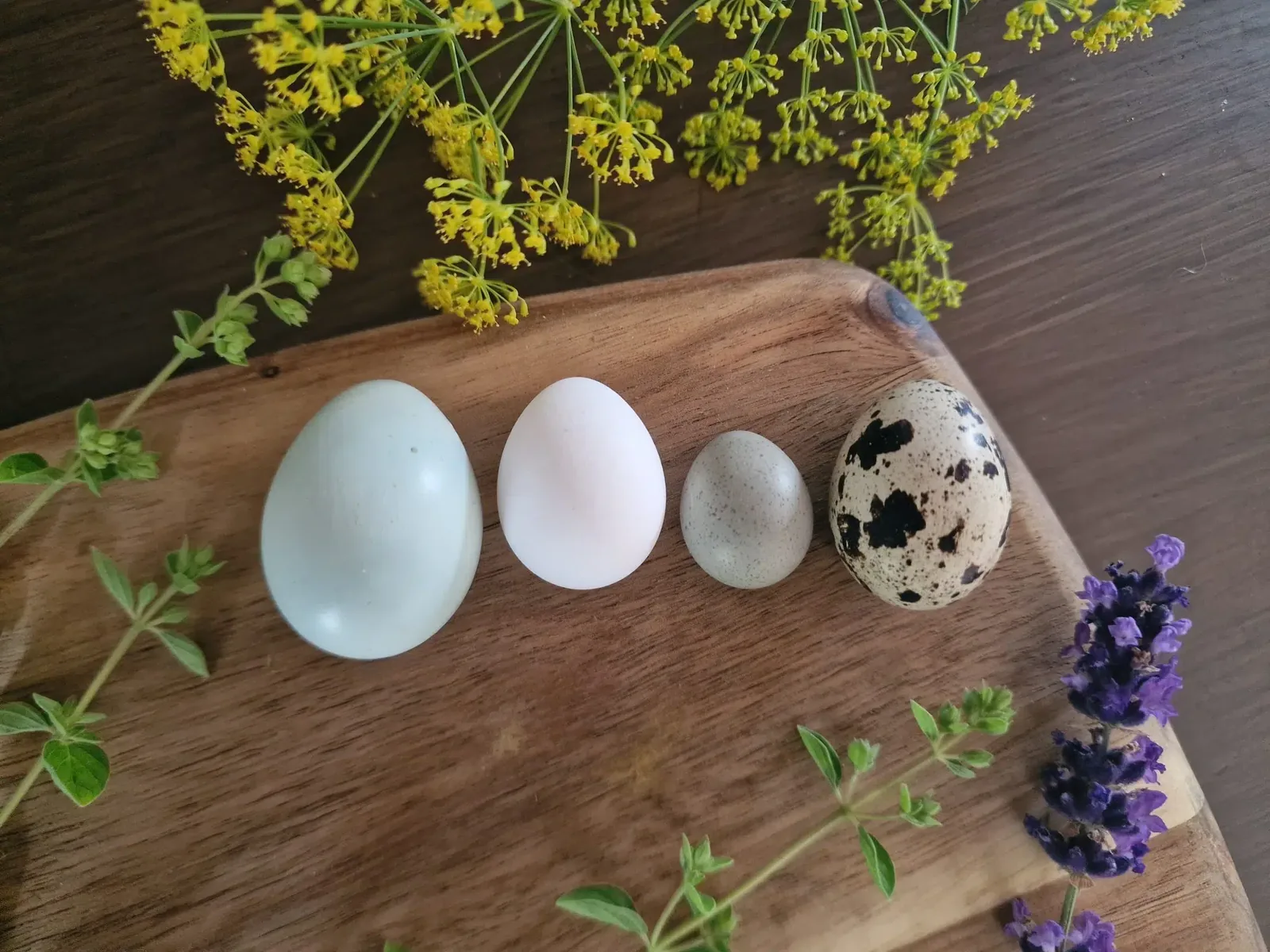
Choose eggs that are normal in size for the species you are hatching, and choose eggs that are roughly similar in size and weight. Do not choose the largest eggs thinking you will get a larger version of the quail.
Stay organized
Mark and sort the eggs by date. Write the date and species on the carton.
Store the eggs properly
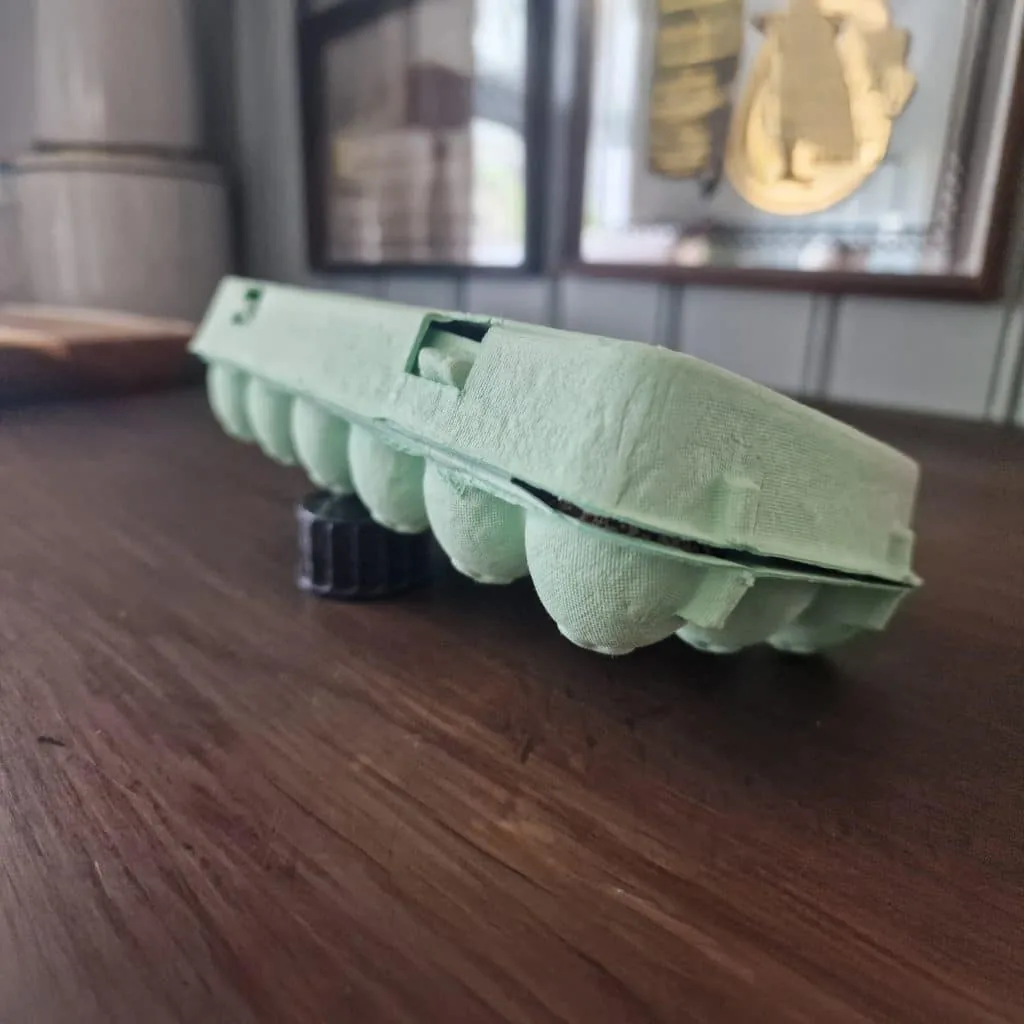
Place the eggs with the pointed end down in an egg carton. The eggs must be turned gently 2 to 3 times a day to prevent the yolk from sticking.
This is important because it affects the development of the chick and the hatching result.
Here you see an egg carton placed on a cork. When I tilt, I move the cork to the other side.
Hatching eggs should not be stored in the refrigerator. Eggs should ideally be stored at 12-15°C (54-59°F). If stored too warm, they can start developing prematurely.
Place them in a safe place where there is no risk of large temperature fluctuations, such as in a sunny or drafty window.
Eggs should not be stored for more than 10 days before starting incubation. The longer time passes, the fewer will hatch. Shorter storage gives better hatching results.
Incubation temperature and humidity
Different species have different incubation times, but temperature and humidity are more or less the same.
The goal is to simulate the environment under the hen.
Here is what I use, which has worked well for me:
| Condition | Value |
|---|---|
| Temperature | 37.7 °C (99.9 °F) |
| Humidity from start | approx. 45–55 % |
| Humidity last three days | approx. 65–70 % |
Most incubators show temperature, but not all show humidity.
You can buy a hygrometer to use in the incubator for better control. If you are unsure whether the incubator can maintain a steady temperature, you can also install an external thermometer.
Quail incubation, step by step
1. Prepare the incubator
Place it on a stable surface, away from direct sunlight or drafts.
Set the following:
• Temperature: 37.7°C (99.9°F)
• Humidity: approx. 45–55%
• Turning: approx. 3 times per day
Test the incubator for 24 hours before adding the eggs if you are unsure whether it is working and properly calibrated.
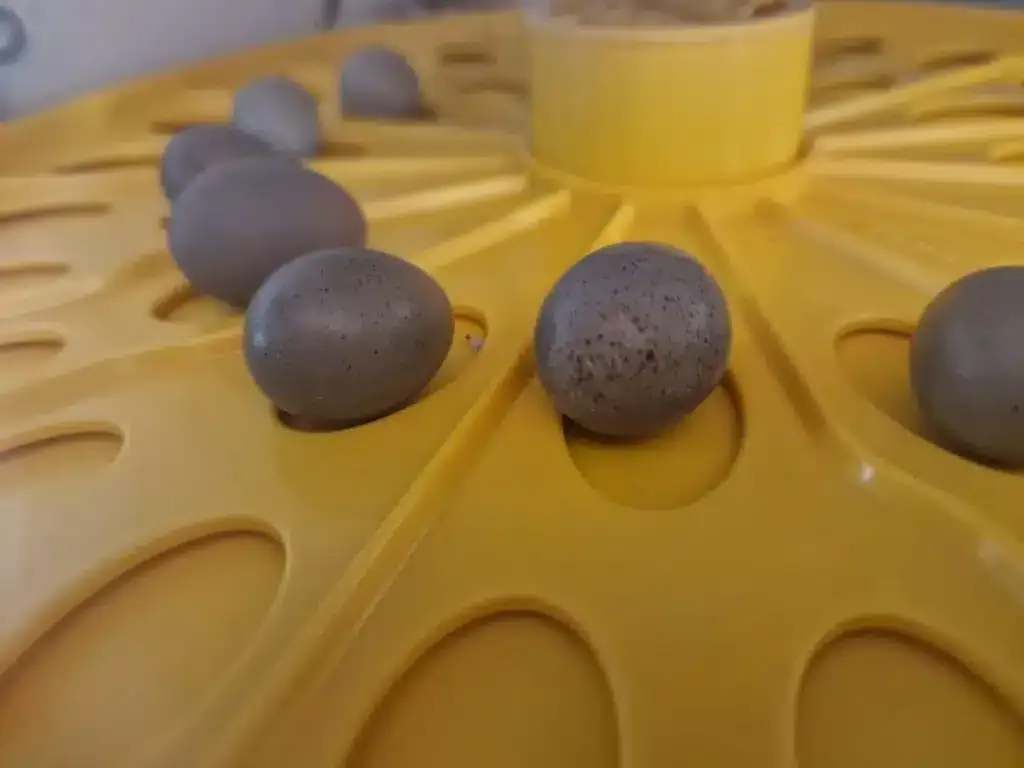
2. Add the eggs
Place them carefully with the pointed end down, or on their side depending on the incubator type.
3. During incubation
Keep an eye on whether temperature and humidity stay correct.
Turn the eggs at least 3 times daily if you do not have an automatic turner.
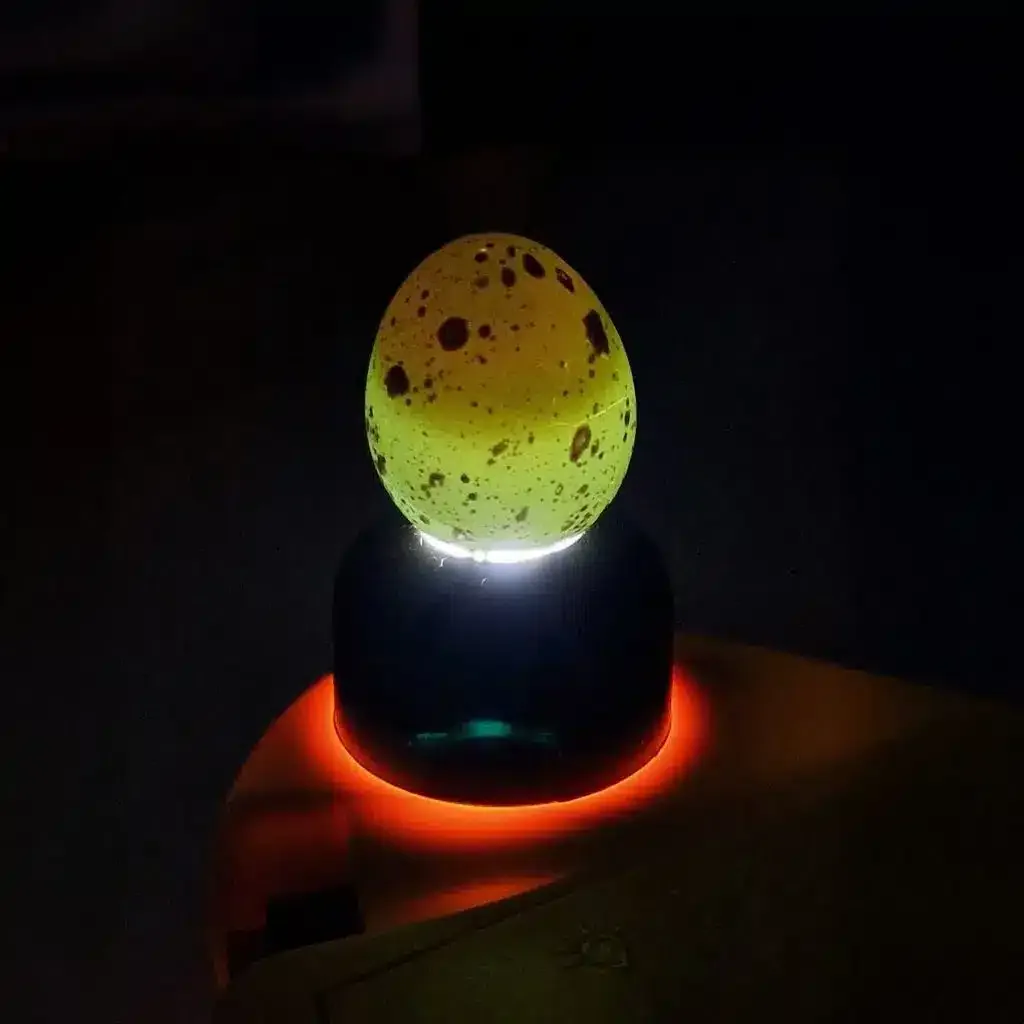
Candle the eggs after about a week to see if there is development inside. Read more about Candling quail eggs: how to check if the eggs are developing.
4. Lockdown (final phase)
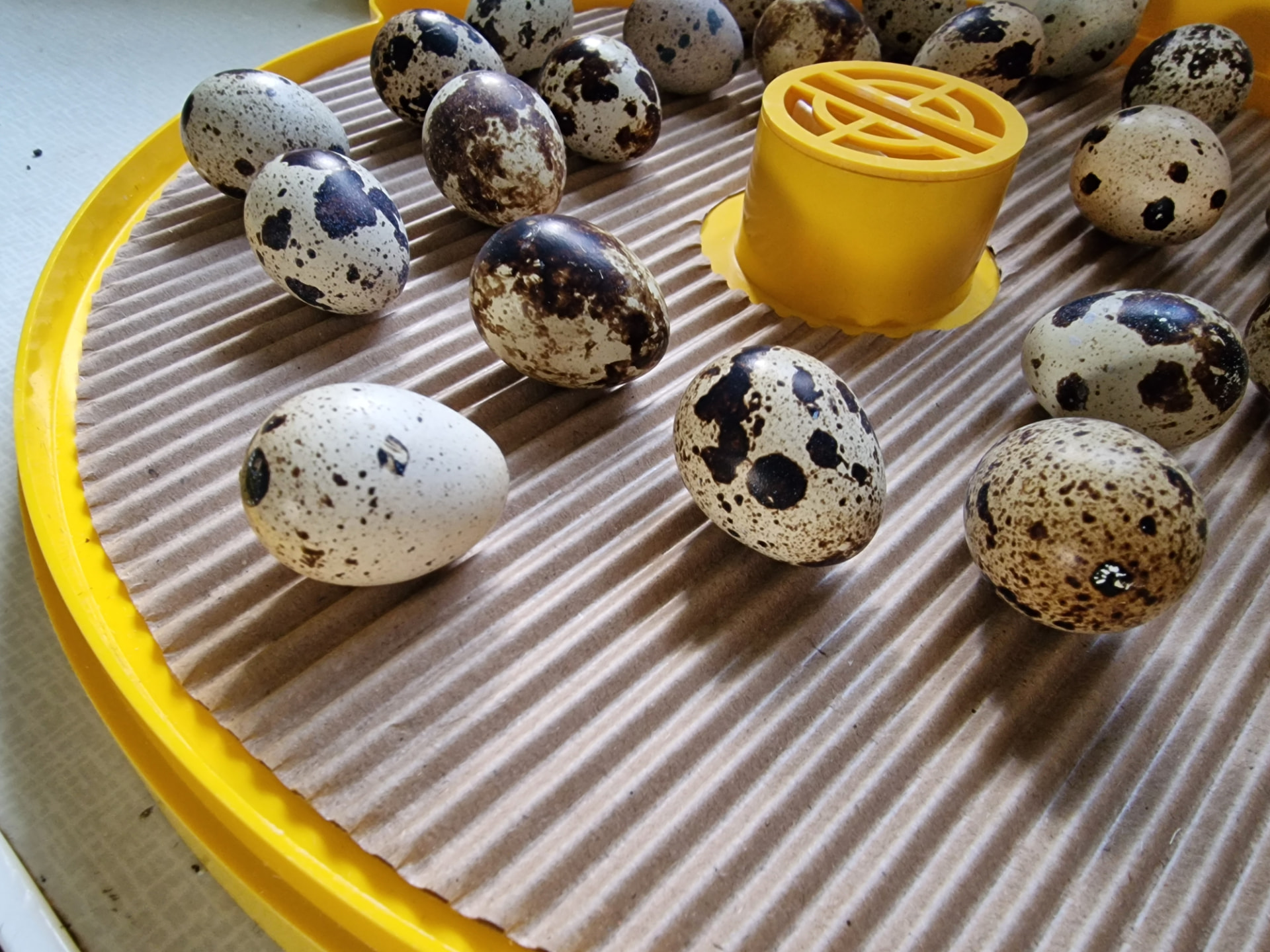
3 days before the expected hatch is lockdown.
You should:
• Stop turning the eggs
• Remove the egg turner and let the eggs lie freely
• Increase humidity to approx. 65–70%
You can also candle the eggs now to see if they have developed. Remove those showing no signs of life.
After this, you should not open the incubator for the next few days.
5. Hatching begins
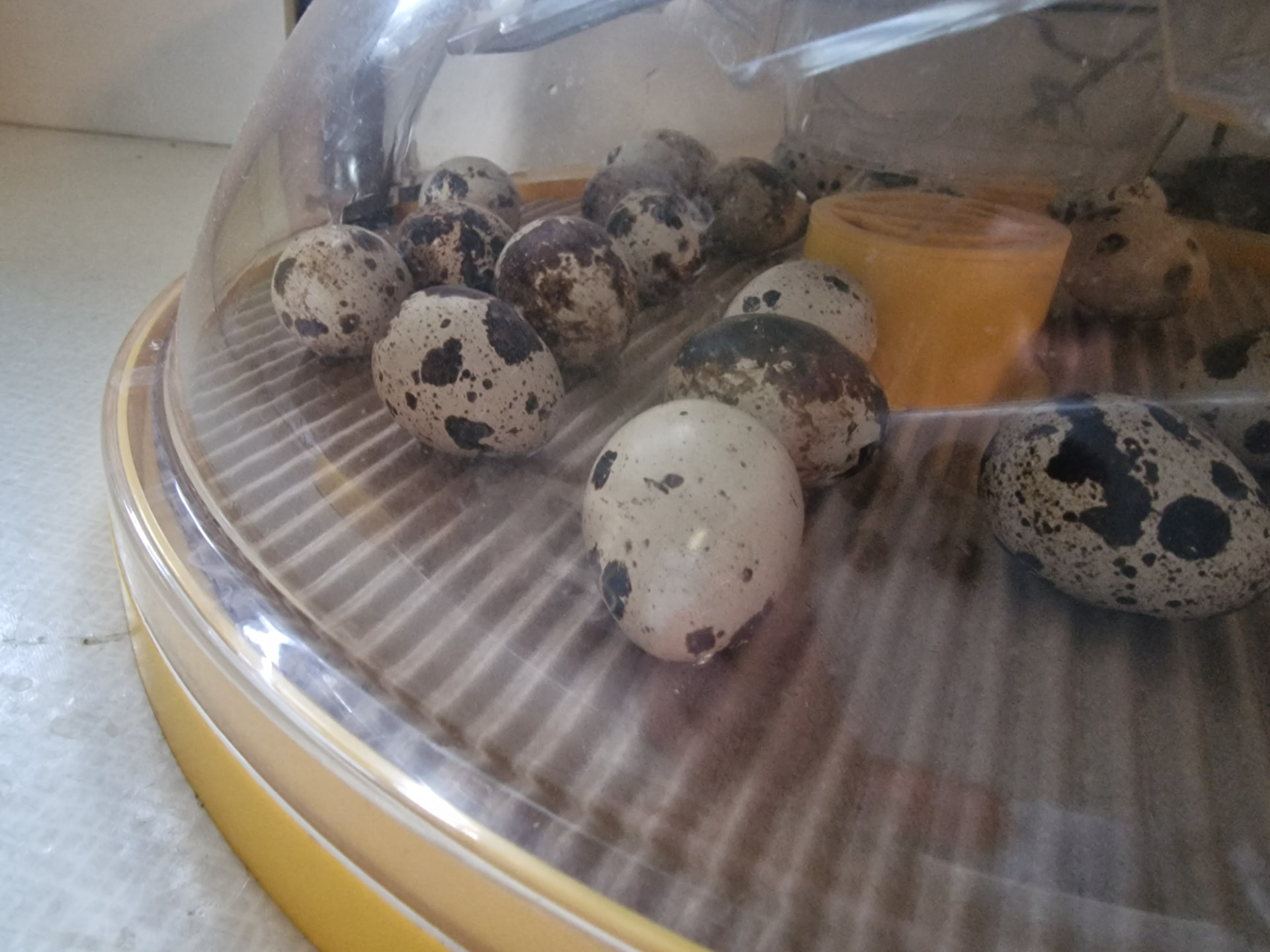
Do not open the incubator during hatching. The humidity will drop, and you risk the membrane drying out, preventing the chicks from getting out.
Do not help the chicks out, even if it takes time. Be patient.
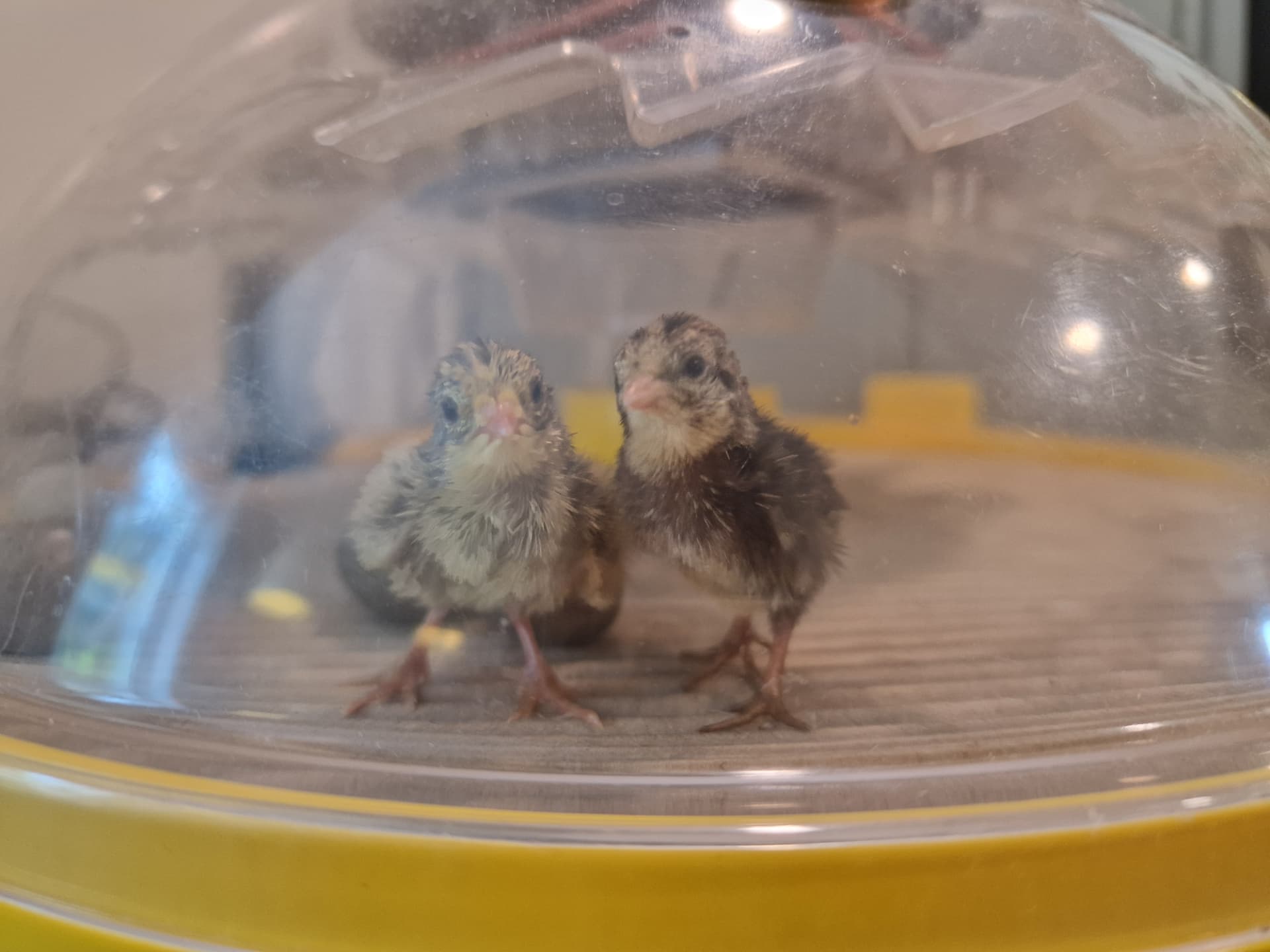
Let the chicks stay in the incubator until all are dry and active.
After hatching
If there is a long time between each chick, just be patient.
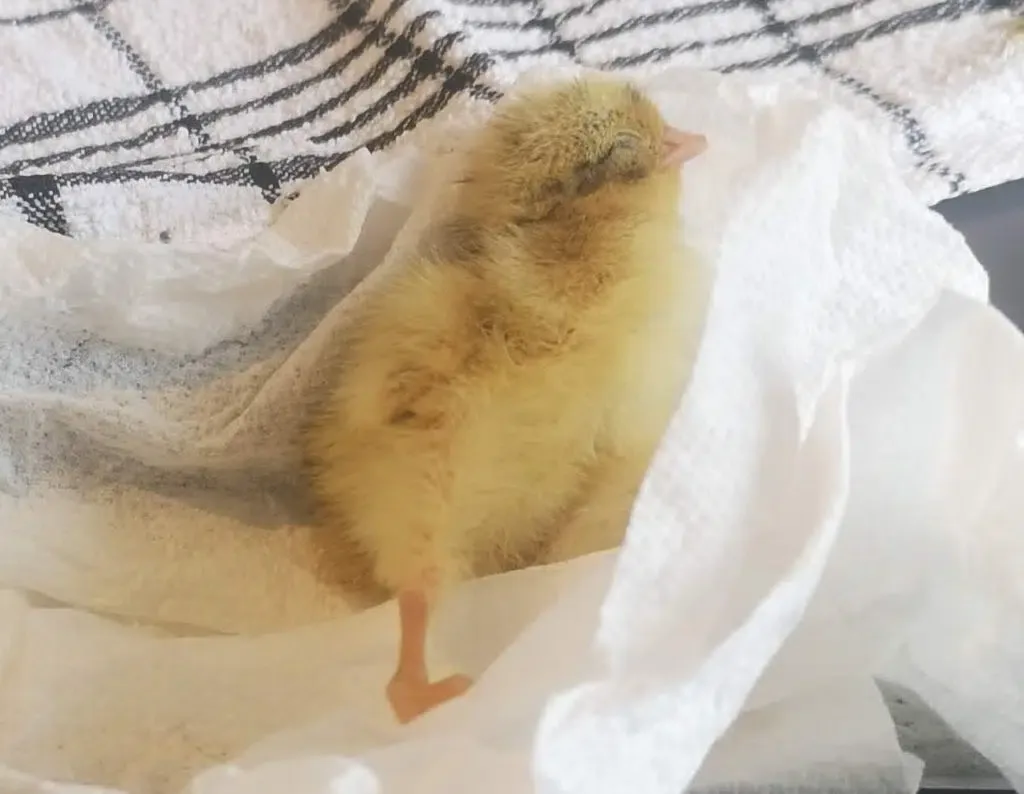
When the last hatched chicks are dry and active, about 24-48 hours after hatching, they can all be moved out of the incubator and into a suitable brooder.
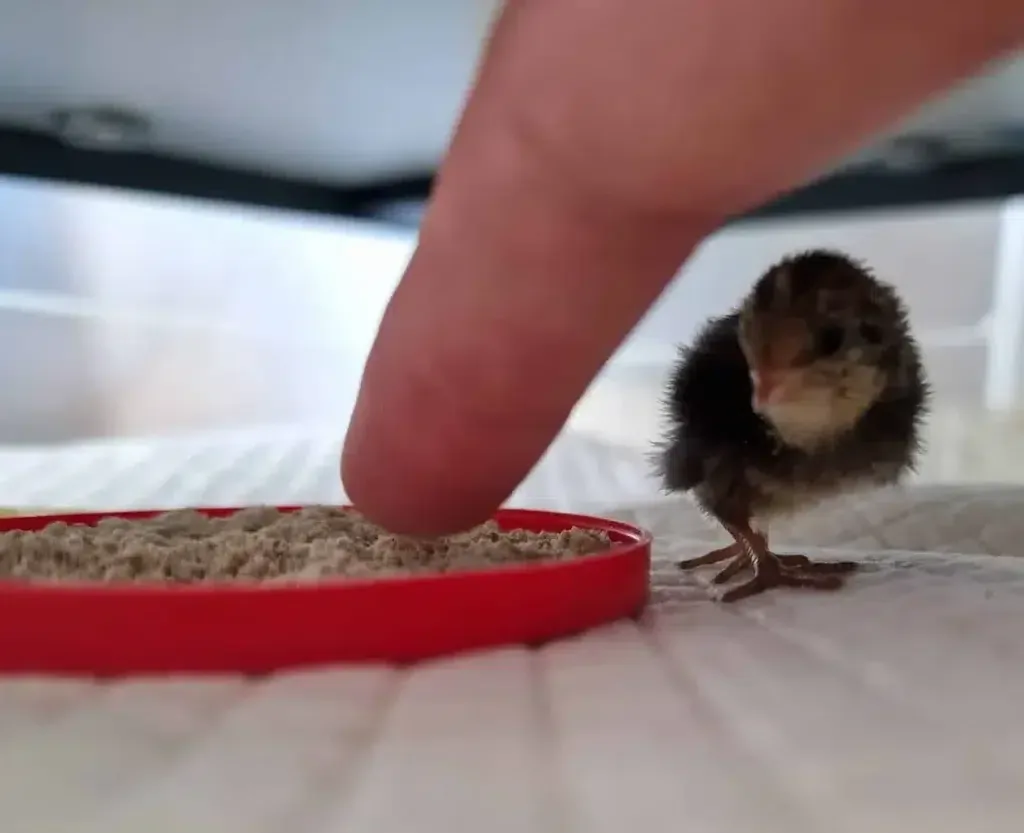
When you take out the chicks, they need warmth, safe water dispensers, and protein-rich finely ground feed. I have written separate articles about this, which you can find here:
My product recommendation
I started with a cheap incubator. I did hatch some chicks with it, but it was not without problems.
The challenge with the cheapest incubators is that they cannot maintain a steady temperature and humidity. Perhaps it is very humid in one corner and not humid enough in another corner. This is perhaps because the fan is not good enough, or the incubator is not designed to distribute air properly.
Another thing to consider is that the cheapest incubators cannot measure and display humidity, so you will need an external hygrometer anyway to keep track of humidity.
Cheaper incubators may not have automatic egg turning, which means you have to turn the eggs manually several times daily.
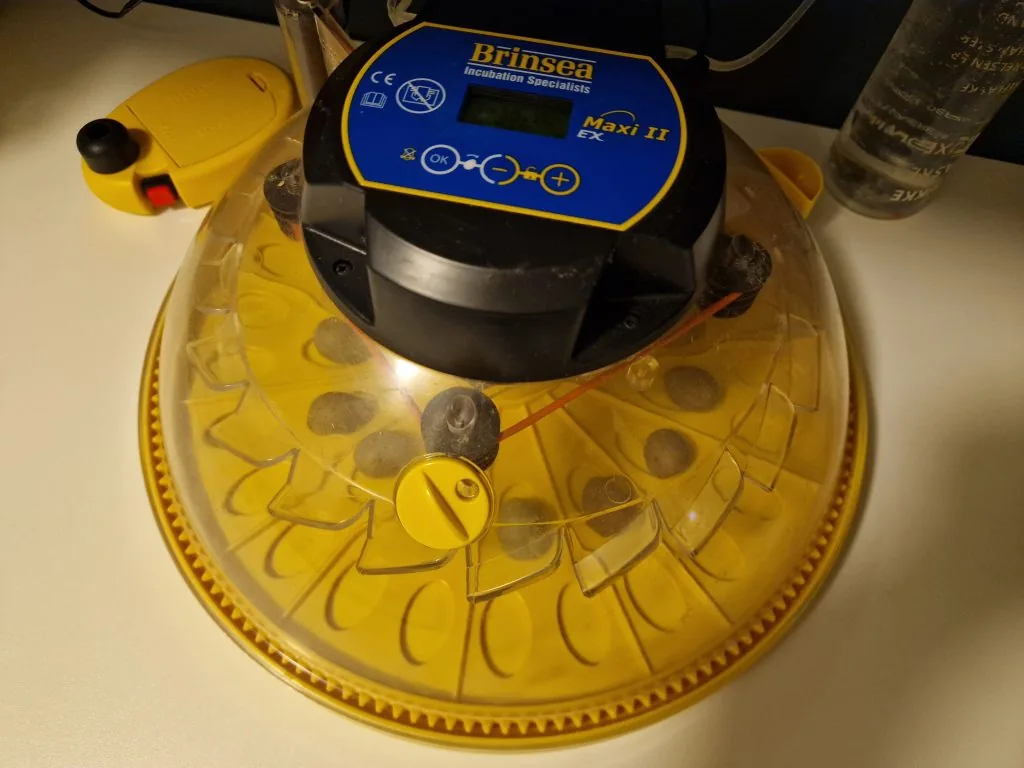
After a few rounds with the first cheap incubator, I invested in a Brinsea Maxi II Ex. It holds 48 quail eggs, which fits well for the scale I work with.
Brinsea is a well-known manufacturer of incubators and accessories, and they have machines that are both smaller and larger than the version I bought.
They are relatively easy to use, and since they are so well-known, there is a lot of documentation showing how to set up the incubator.

Tip! If you buy equipment like an incubator and egg candler, you might consider renting them out during periods you are not using them, to recoup some of the costs.
Common questions about quail incubation
How long should quail eggs be incubated?
Different quail species have different incubation times. The most common in hobby keeping is the Japanese quail. It incubates for 18 days.
How often do quails lay eggs?
It depends on the species. The most common in hobby keeping is the Japanese quail, which lays up to 300 eggs per year.
What temperature should an incubator be?
Around 37.7°C (99.9°F). This corresponds to the warmth they would otherwise get from being under the hen.
Do quails incubate their own eggs?
In nature, yes. In hobby keeping, yes and no. Some species do brood, but the most common quail in hobby keeping, the Japanese quail, rarely sits to incubate. If you set up conditions well, it is still possible.
Good luck with your incubation! 🐣