

Quails need to bathe in sand or dust. It helps them keep their feathers in good condition, regulate oils in the plumage and helps prevent problems such as feather mites.
Without access to a dust bath, the plumage can become dirty and grubby.
Do quails need a dust bath?
Yes. A dust bath for quails is necessary for good feather health.
In nature, quails often seek out dry soil or sand to preen and clean themselves. They do not bathe in water the way ducks and geese do.
This behaviour is instinctive. Even quails that have never seen a dust bath before will usually recognise it and start using it.
What kind of sand can you use?
You do not need to buy special sand. I bought bathing sand a few times in the beginning, but it is unnecessarily expensive compared with alternatives that work just as well.
The easiest solution for me has been to use ordinary, dry and clean soil from my own garden. The soil must come from an area where chickens or other animals that could carry disease have not been kept.
The soil also needs to be completely dry. If it is not sandy, you can mix in a few scoops of fine oyster shell or another clean sand, such as play sand.
The downside of play sand is that it is often a little damp and sticky straight from the bag. The sand you offer quails should be dry.
I find play sand a little too fine to use on its own, but it is great for mixing into soil to make the bath a bit looser and airier.
The advantage of play sand is that it is completely clean. The producers are, after all, making sand with children in mind. That means you are unlikely to give the quails anything they should not ingest.
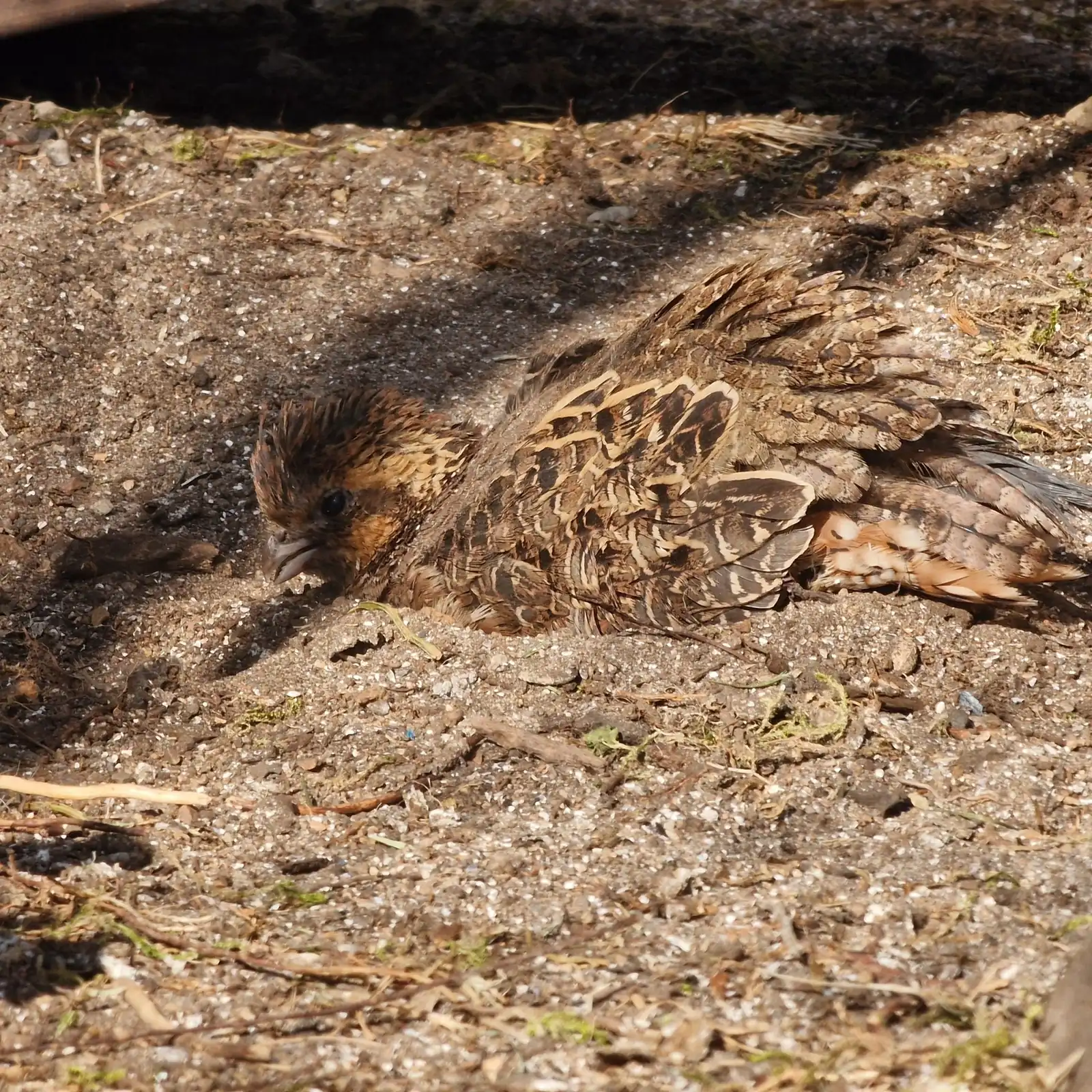
How to make a good dust bath for quails
Place the dust bath in a defined area, preferably some distance from feeders and drinkers. Quite a lot of sand gets kicked around, and it is best to avoid it ending up in the drinking water.
Outdoor dust baths should be kept under a roof so they stay dry.
Indoors, you can use plastic tubs or wooden boxes with sides that are high enough to keep most of the sand in place.
Replace the sand or top it up regularly.
The dust bath should always be available. It is not something you put out once in a while, but a fixed part of the enclosure.
Maintenance and hygiene
A dust bath does not last forever. Over time it fills with feathers and droppings, and then it loses much of its effect.
I usually sieve or replace the sand regularly, and always if it looks damp or dirty.
How often this is needed depends on how many quails use the bath and how large it is.
Clean the container with hot water when needed, and let it dry completely before refilling it. A good tip is to keep an extra tub ready, so you can easily swap it in while washing the old one.
In the picture below you can see three-week-old Japanese quails stretched out in the sand tub. Here it is time to replace the sand and wash the tub.
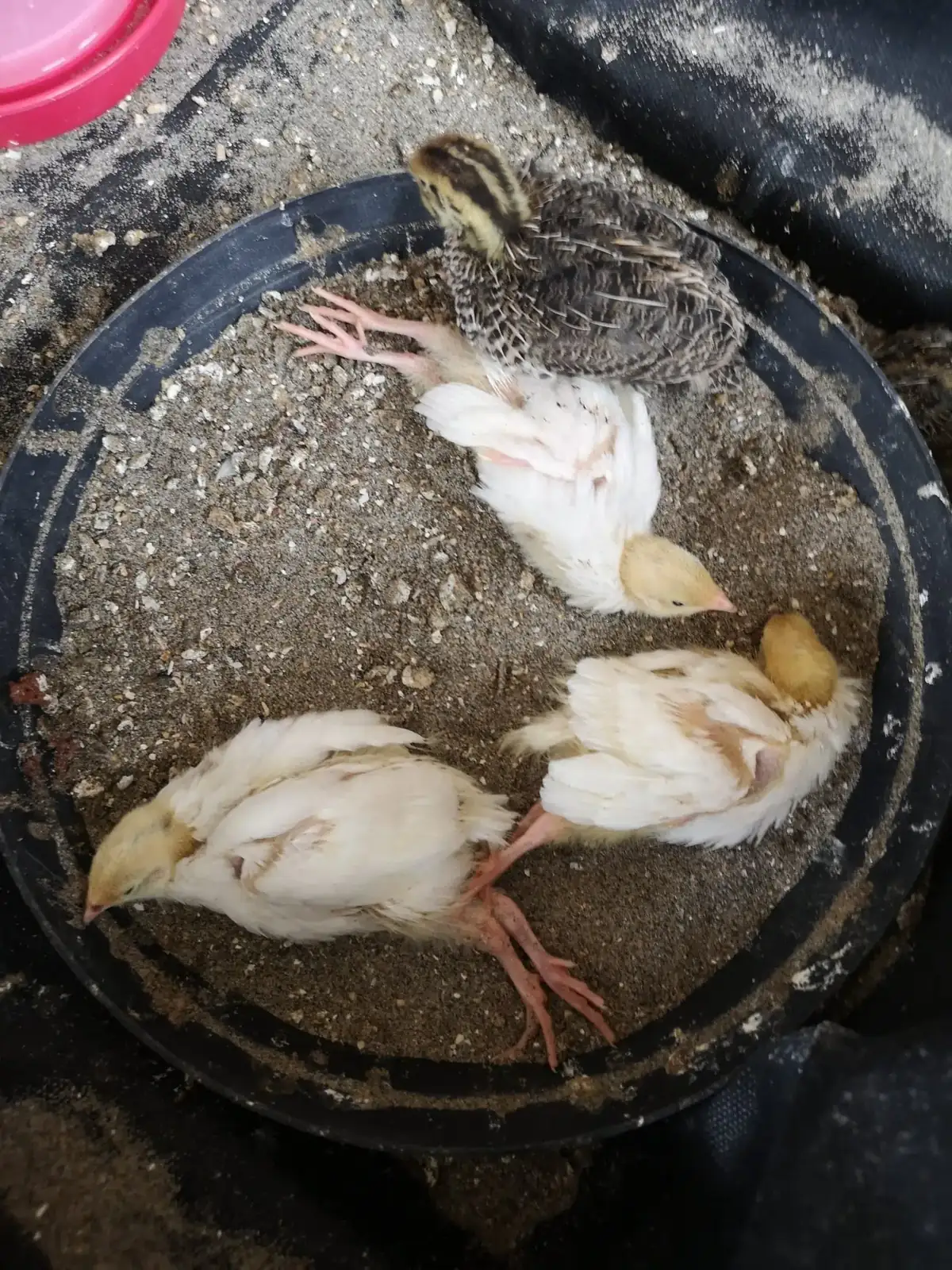
A clean dust bath helps keep the plumage healthy and gives the quails the chance to groom themselves in a natural way.
But I should be clear: a dust bath does not remove parasites and is not a treatment in itself.
If you notice abnormal moulting, itching or lethargy, you should always investigate further and, if needed, contact a vet.
Good hygiene around the dust bath and in the rest of the enclosure helps prevent illness, lice and parasites.
Winter keeping
In winter, damp and cold can become a challenge.
Here in Norway, keeping a dust bath outdoors is not very practical. Quails should have access to a dry room where feed, water and the dust bath can be kept dry and frost-free.
Should quail chicks have a dust bath?
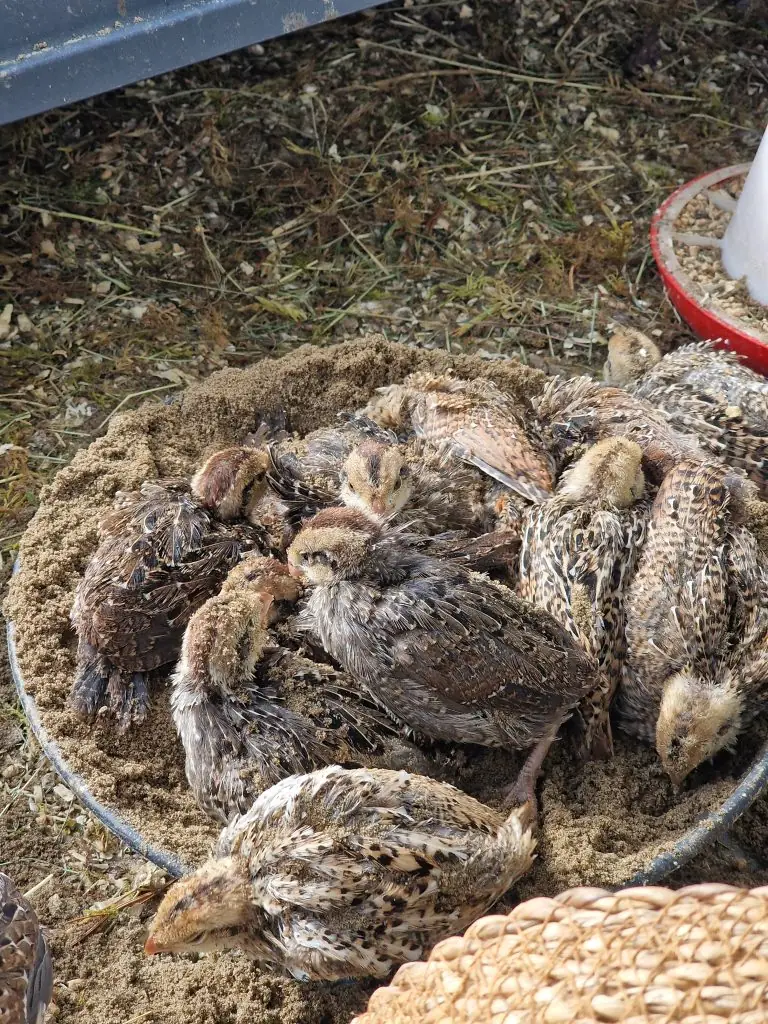
As soon as the chicks start to feather up, they can have a dust bath. I usually put out a small bath for them when they are around two to three weeks old.
For chicks I use bathing sand from pet shops, or this Selective bathing sand for small pets from Felleskjøpet. It is finer and cleaner than the soil mix I give adult quails.
They quickly understand what it is for, and no training is needed.
Make sure you offer enough bathing areas so there is no fighting over space.
Below you can see a pile of three-week-old Northern Bobwhites dust bathing.

Summary
A dust bath is not an extra luxury. It is essential for feather health.
Use dry, clean sand or soil, keep the bath under cover outdoors, and let it be available at all times.
Dust bathing supports better health and welfare for your quails. It is wonderful to watch them enjoy it.
Good luck! ❤️