

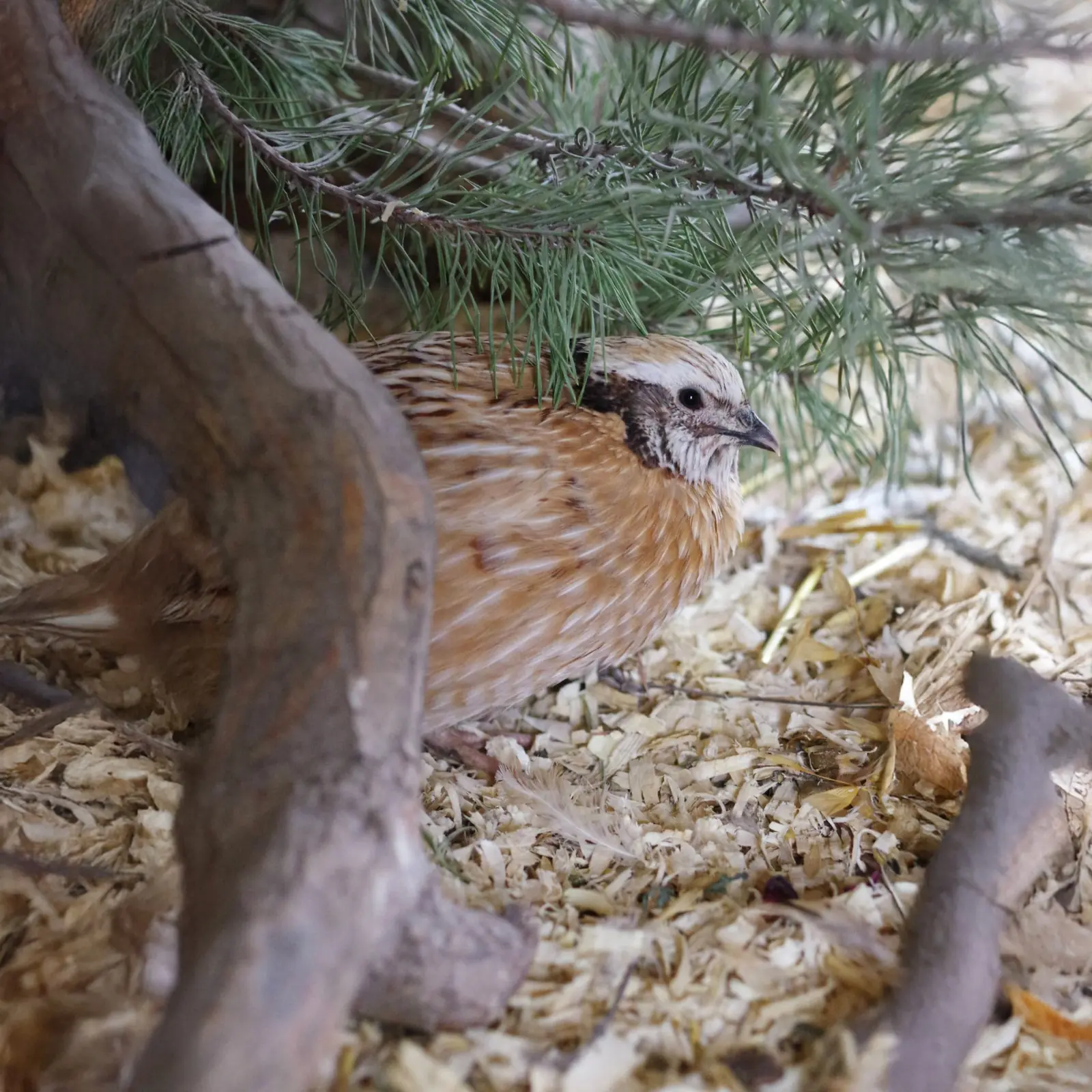
Creating good hiding places for quails does not just make the enclosure more interesting. It also gives them shelter from wind and weather if you keep them outdoors, and the chance to withdraw a little when they need to.
Why do quails need hiding places?
Quails do not like things too open and sterile. It makes them restless and stressed. In the wild they would seek cover in grass, bushes, twigs and low vegetation. They do not perch the way chickens do. They live on the ground, and that is why the furnishings should also be down at ground level.
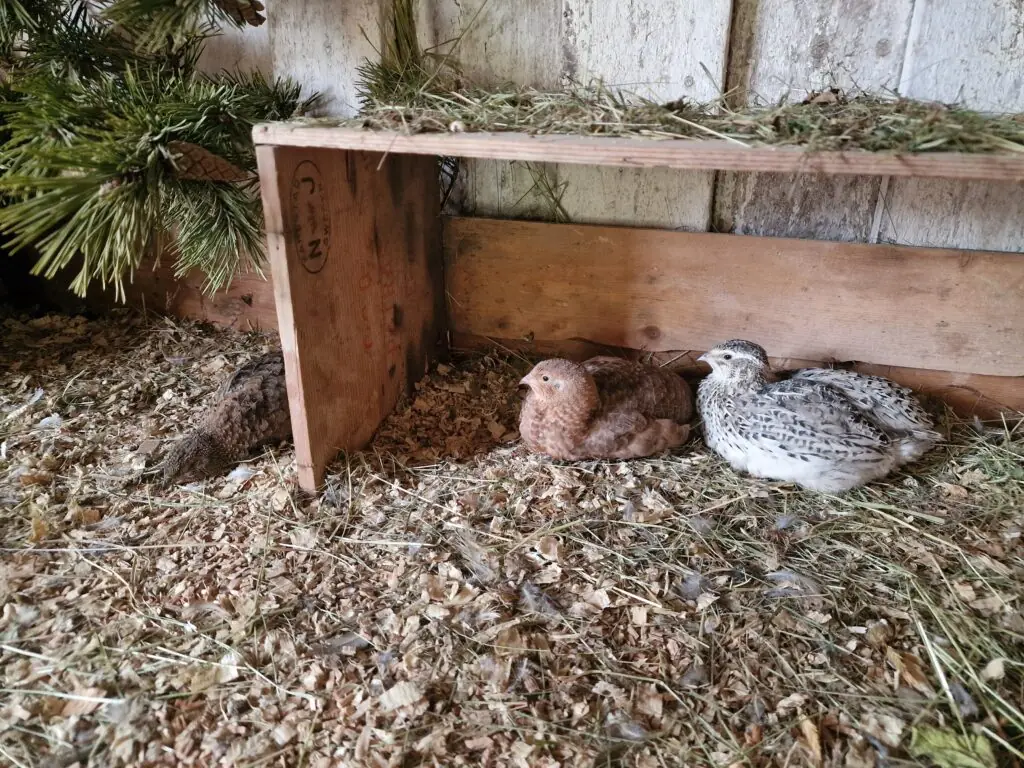
A hiding place does not have to be a little house with four walls. Something low they can walk under, or something that screens them a bit from the side, is often enough. A branch, a basket, a small crate or a few plants can do the job.
The quails can happily have several places where they feel a little sheltered, without the enclosure becoming so full that it is hard to look after. We do need to be able to find those tiny eggs.
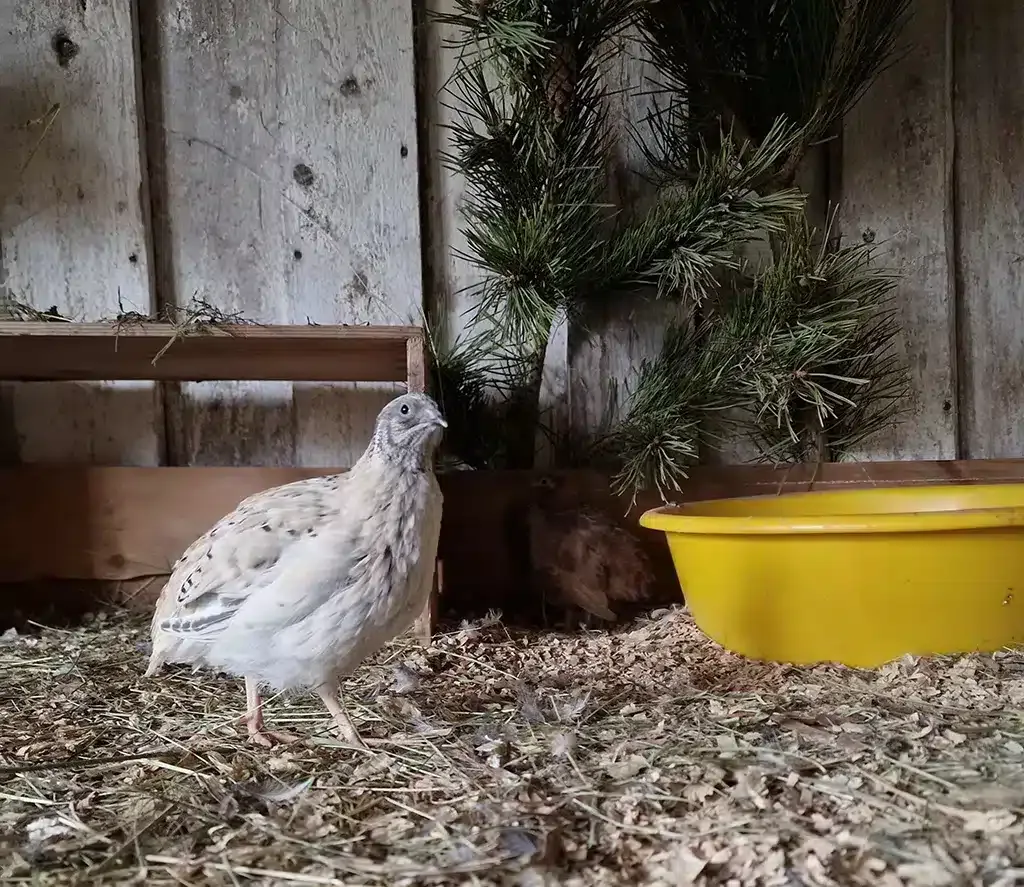
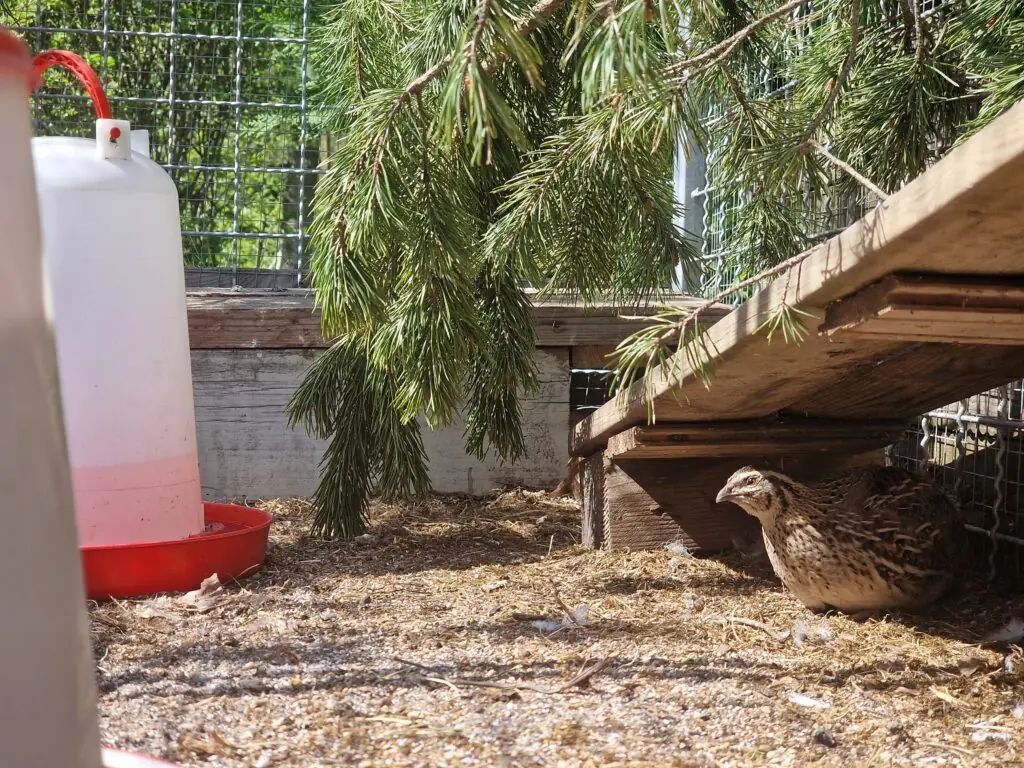
Hiding places are not only about feeling safe. Outdoors they also provide shelter from weather, wind and not least scorching sun. Have a read of the article What is the right temperature for quails? Read about comfortable temperatures and heat sources.
Below you can see a gentle ramp that works as a hiding place. Ramps and shelves along the edges are a simple way to create a sense of security, and they also make it easy for you to keep an overview.
How many hiding places should quails have?
How many hiding places you need depends on the size of the enclosure and how many quails you have. There is no fixed rule that suits everyone.
Think of it this way: they should all be able to withdraw at the same time, but not to the same place. If you keep several quails together, several hiding places are better than one big one.
Then one quail can lie under the branches, some can use a wooden house, and others can stand behind a basket or a plant.
You do not need one dedicated house per quail, because they are social animals and happily lie together. Putting in a few partitions, ramps and separated zones can be a good idea.
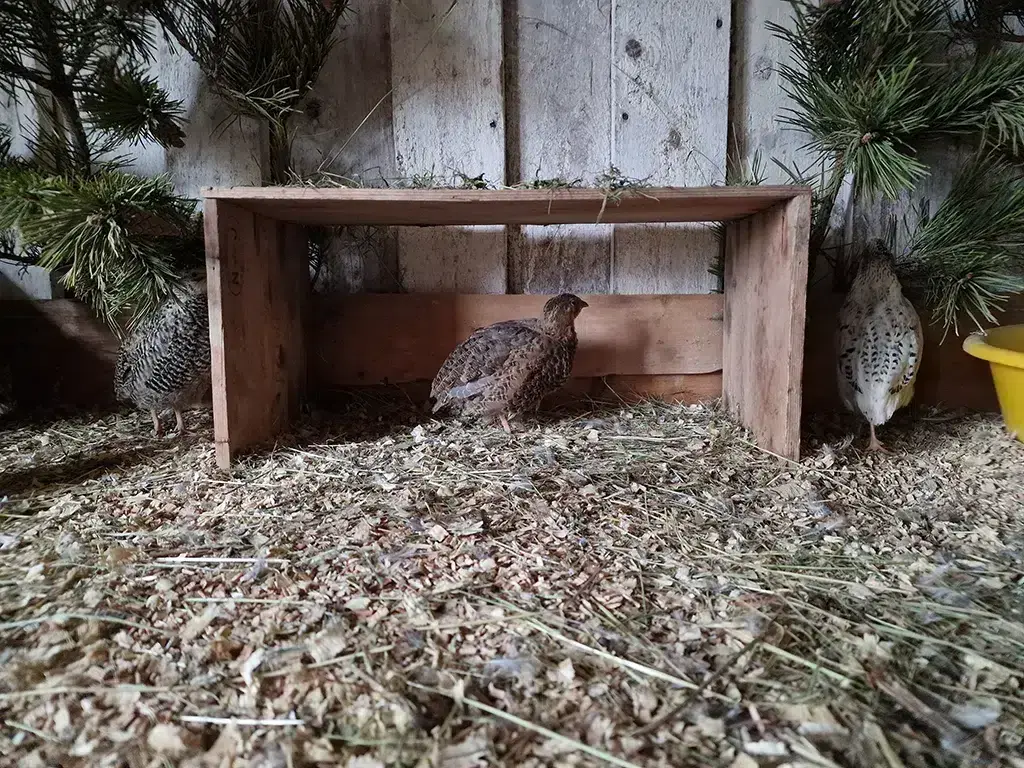
Do spread the hiding places out a bit. Put one in a corner, two along a wall and perhaps one that breaks up an open area. Then the enclosure feels less open, and the quails get more places to choose between.
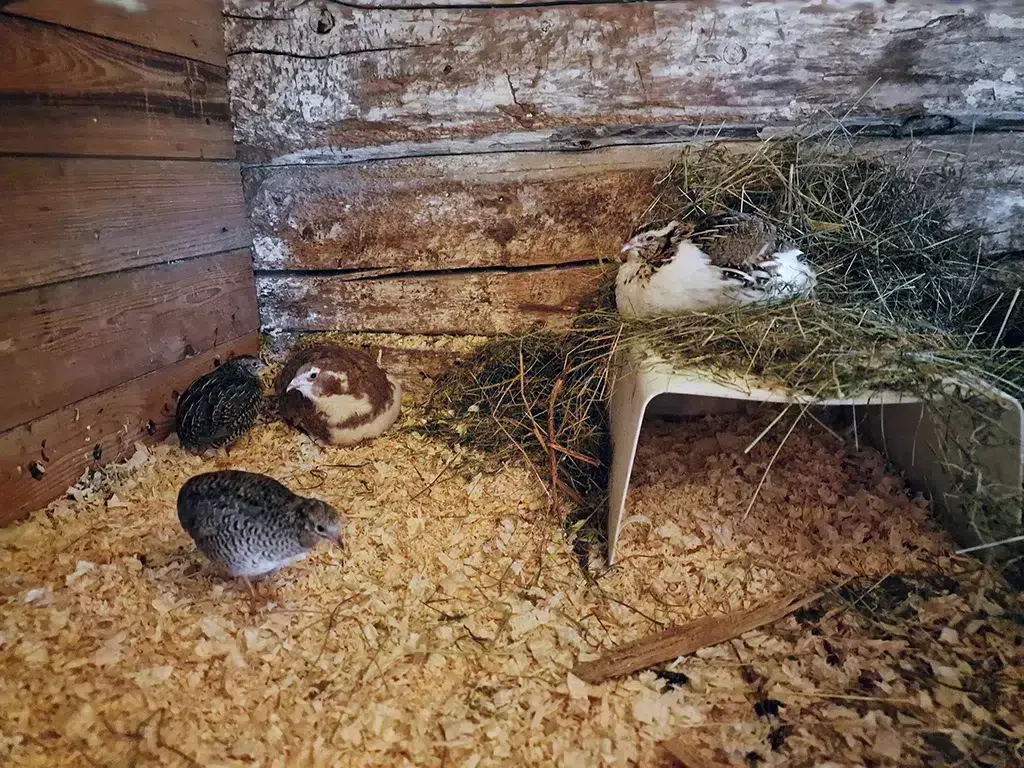
In the picture below I have put in an old bird table. I have placed it slightly away from the corner, so that the corner itself works as a screened-off nook.
I would avoid hiding places that are so deep or closed off that you cannot see inside or reach in to find eggs. Quails often lay their eggs in slightly sheltered spots. If the hiding places are hard to reach, the eggs become hard to find.
The best solutions are the ones the quails like and that you can easily lift, move or look into.
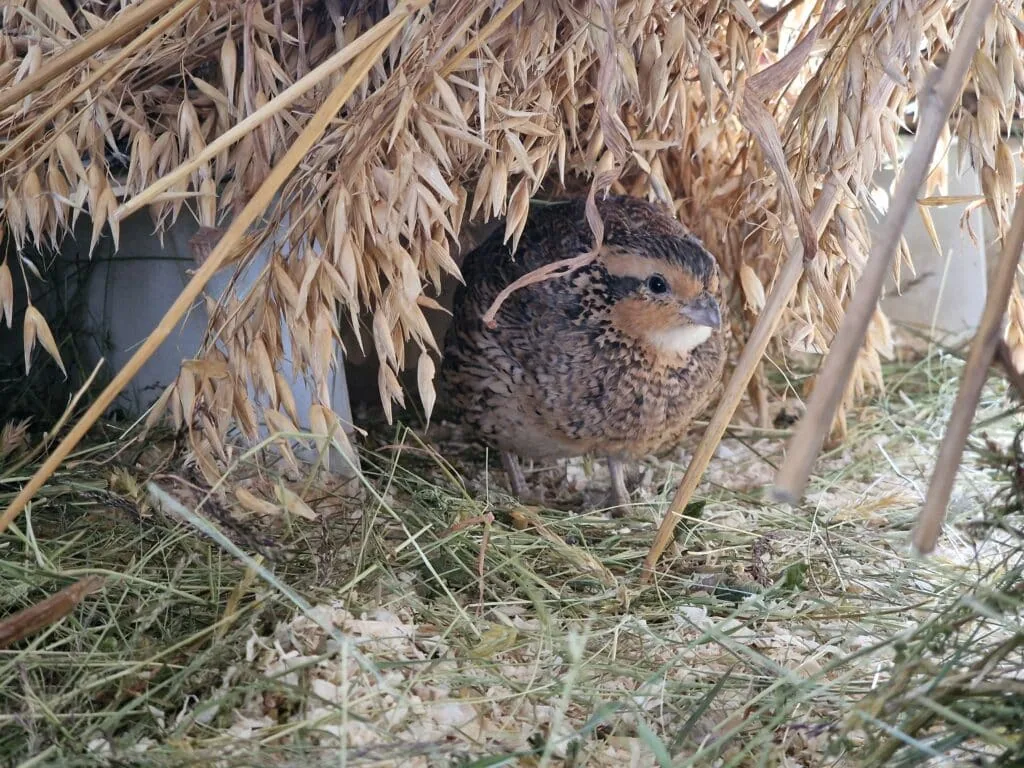
In the picture below you can see a well-hidden plastic box that I have covered with a sheaf of grain. The plastic box is reused, and it is also easy to clean. Hay, wood shavings and sheaves of grain create a snug, pleasant atmosphere.
What can you use as hiding places in the quail enclosure?
You can use all sorts of things. Small wooden crates, baskets, cardboard boxes, plastic boxes, branches, plants and small wooden houses all work.
It does not have to be expensive or advanced.
I like to use pine branches, both in the outdoor run and indoors.
They work well because they give natural cover while staying nice for a long time. Unlike spruce, pine holds on to its needles, which makes it more durable. Leafy branches also lose their leaves eventually and have to be replaced more often.
Below you can see Northern bobwhites building a nest and gathering the eggs in under the pine branches.

So a good tip is to use pine branches as a slightly more permanent part of the furnishings, and add some fresh leafy branches now and then that they can nibble and pick at.
The branches give the enclosure a more natural look. The quails can walk under them, rest there and stand slightly sheltered without being completely shut in.
I like using baskets, because they are made of natural material. They are a little harder to clean, though, and they do not cope well with damp, so they are best suited to indoor use.
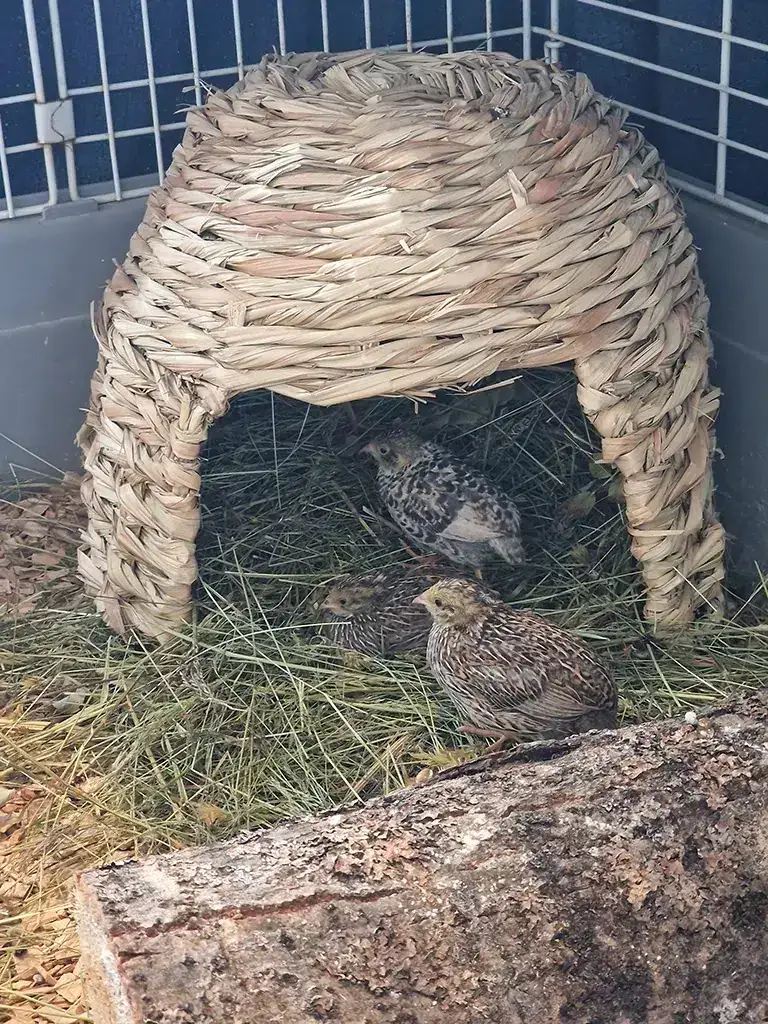
You can buy various kinds of basket houses in pet shops, like the one in the picture below.
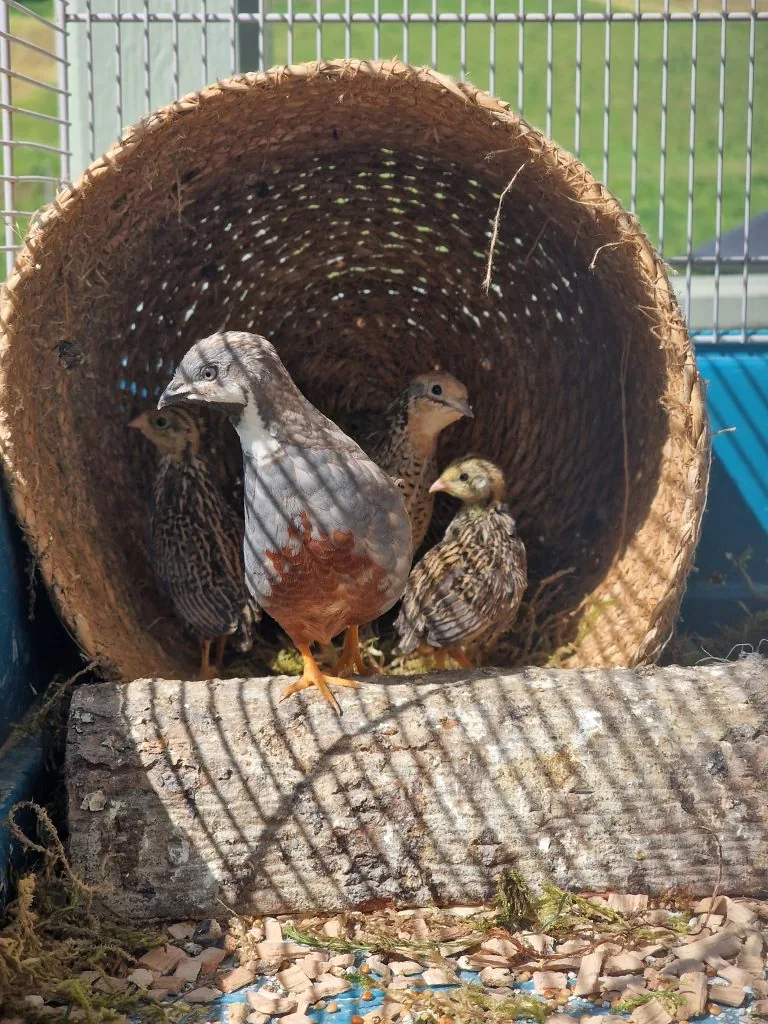
Otherwise I also use woven basket planters, the kind you usually find in garden centres and cheap homeware shops. I lay them on their side and put them up against something, for instance a log, so they do not roll.
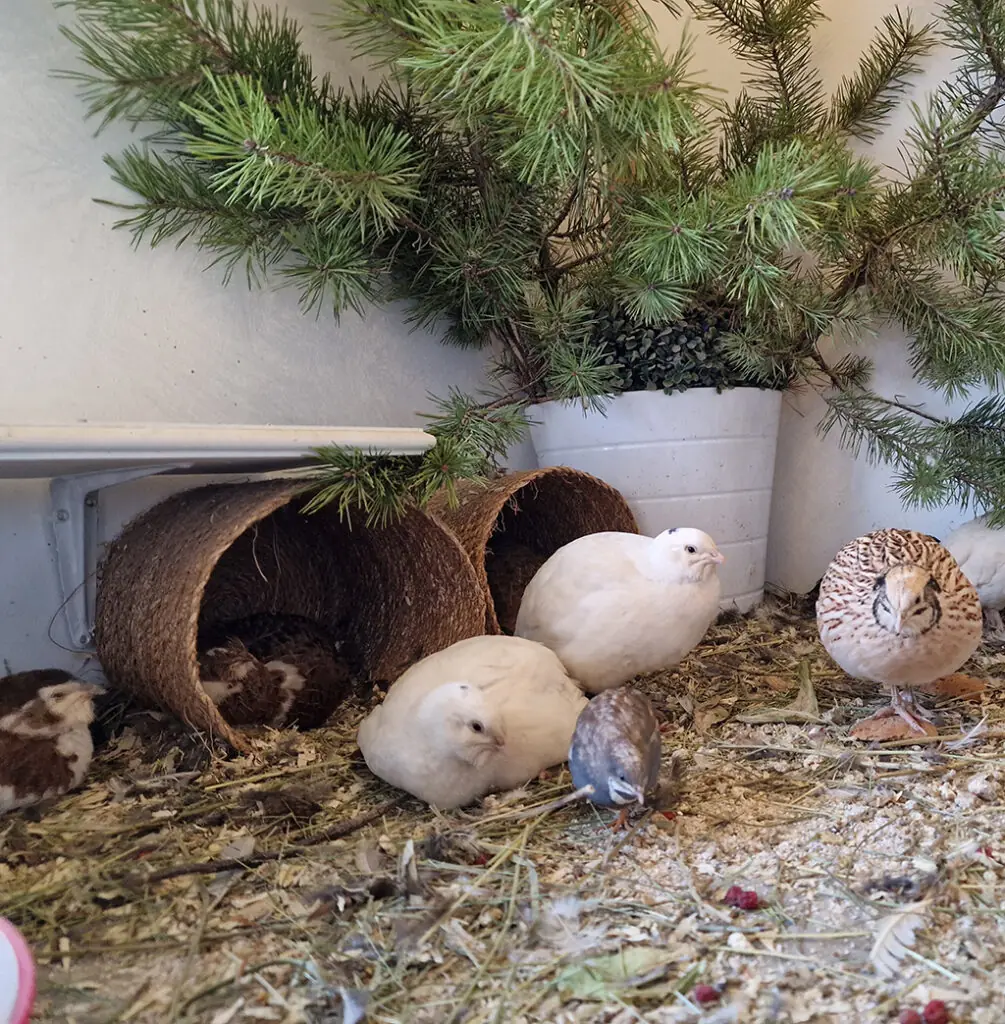
And just like that they become a lovely hiding place and a suitable spot for brooding. Baskets are best suited indoors, since they do not cope with damp over time.
Small wooden boxes work nicely both outdoors and indoors. If they are stained or treated they cope better with standing outside.
You do not have to buy anything either. Perhaps you have something at home you can use. Boxes or pots made of plastic, for example.
Cardboard boxes can be used indoors, though perhaps best as a temporary solution. They are a little less durable, but all the easier to replace when they get dirty. Since cardboard is such a light material, the boxes will move around and tip over unless you secure them somehow.
As we know, cardboard does not cope with damp, so it definitely should not be used outdoors.
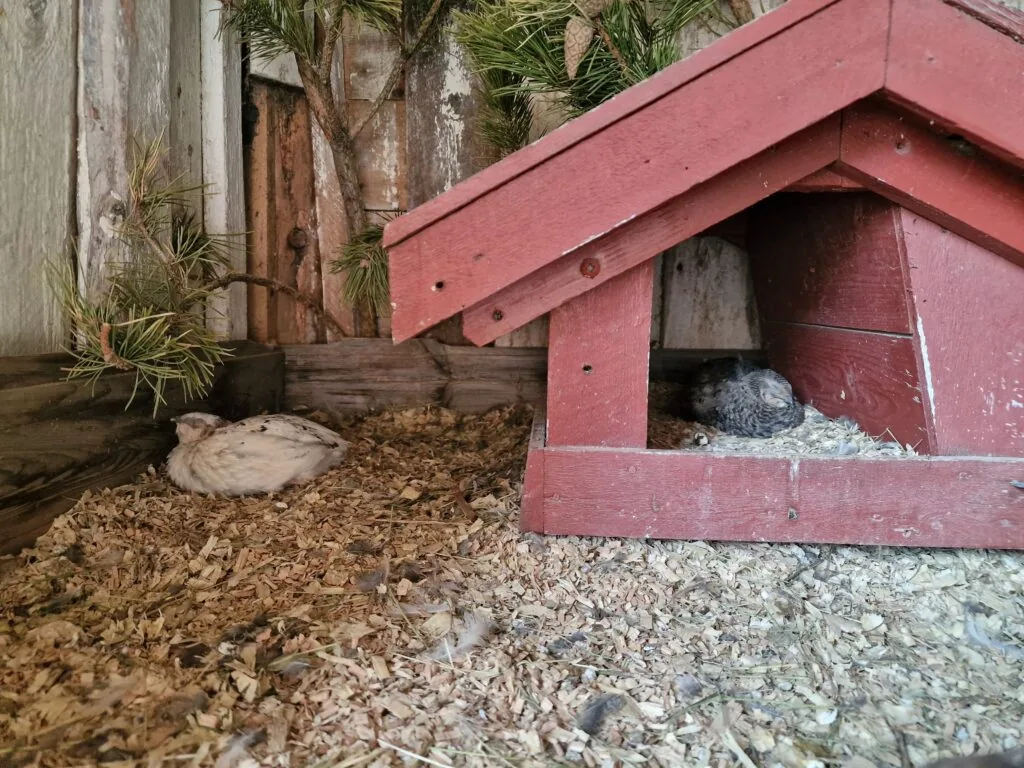
Below here is that old bird table again. I fill it with sawdust and hay, and it is in constant use.
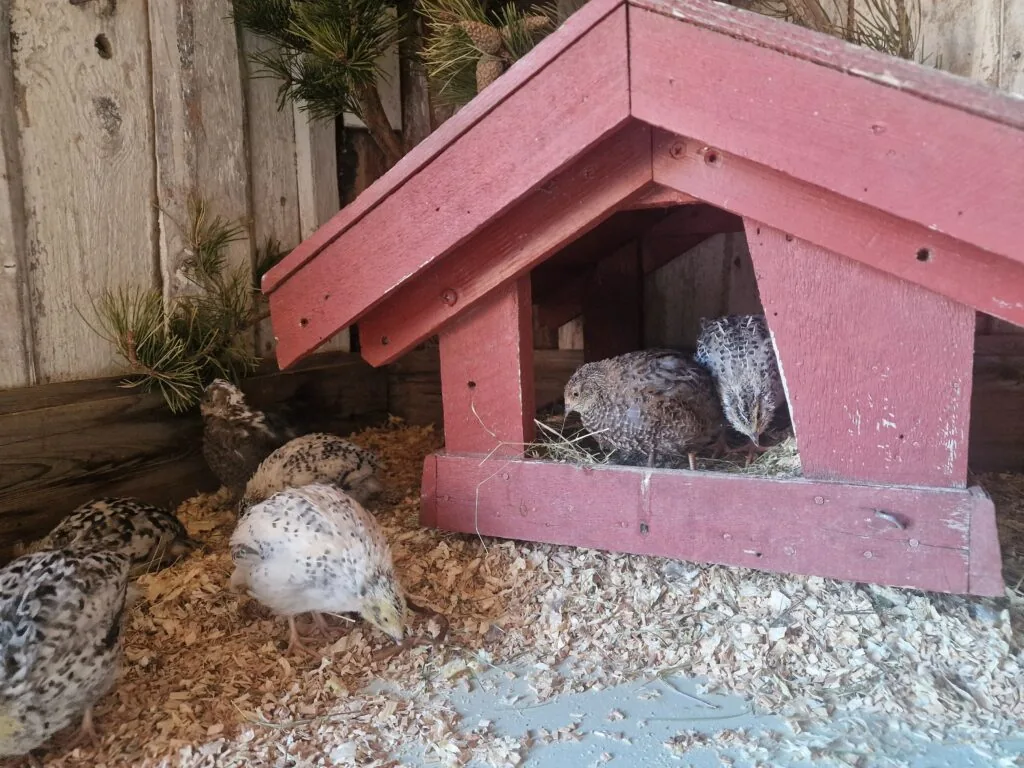
By the way, in the picture above you can see roughly three-week-old chicks of Japanese quail.
Can you use plants in the quail enclosure?
Yes, plants are lovely to use as part of the furnishings and as hiding places in the quail enclosure. They give shelter, and they make the enclosure feel more like a natural habitat.
You can use edible plants, for example grass in a pot or unsprayed herbs. Then you have to expect the quails to pick at them. Some plants are quickly eaten down or dug up, so it can be wise to vary what you put in.
Artificial plants can be used too, and they often last longer. In that case I would choose robust plants that can take a bit of rough treatment and can be washed.
Avoid artificial plants with small loose leaves, thin plastic parts or visible wire that the quails could swallow or injure themselves on.
Artificial plants are meant to give cover, not to become something they manage to eat to pieces. Tug at the leaves a little before you put them in. If they come off easily, I would choose something else.
Tips for the furnishings and the placement of hiding places for quails
I like to place hiding places so that they create variation in the enclosure. A completely open enclosure can quickly seem bare. With a few branches, a basket and a small house, the quails get more places to choose between.
Hiding places along walls and corners often work well. Many quails like to move towards the edge.
You can also furnish with low ramps and shelves, so the quails can explore different levels and hide under the shelf. Japanese quail are not the most athletic birds, so do not build too steep or too high.
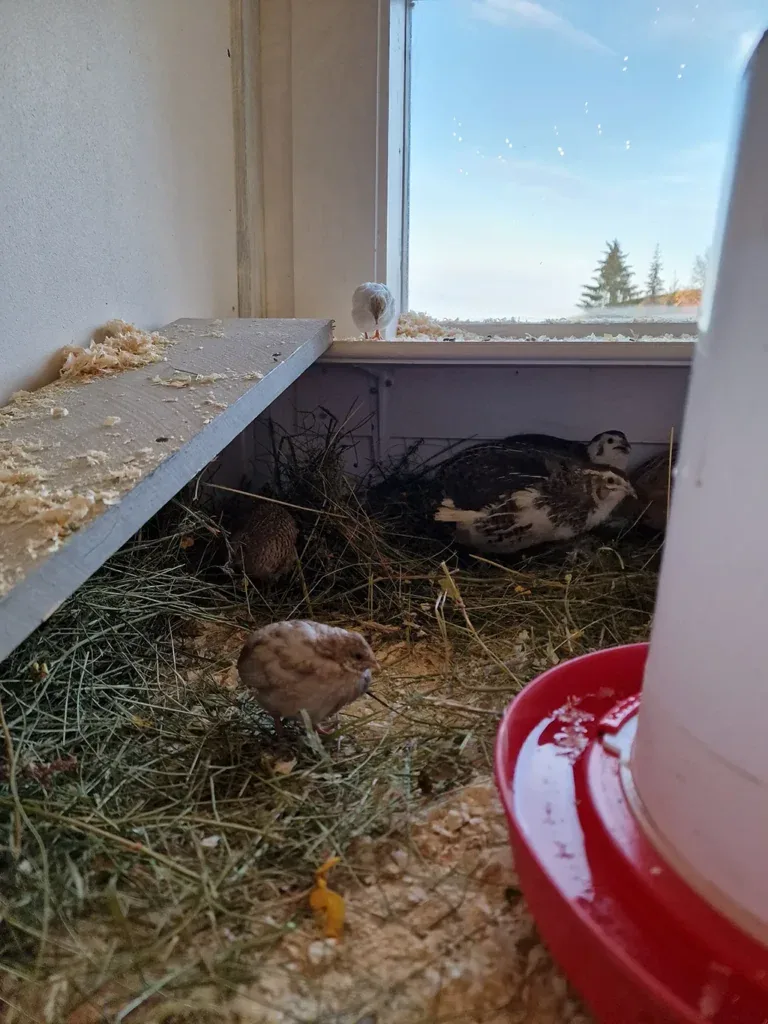
Think about yourself too. You have to fill food and water, change bedding, clean and collect eggs. That is why the hiding places should be easy to move. A lovely hiding place that is always in the way quickly becomes impractical.
This outdoor run is a dream for the quails, with lots of hiding places, branches and natural materials. Collecting the eggs became more of a challenge for me.
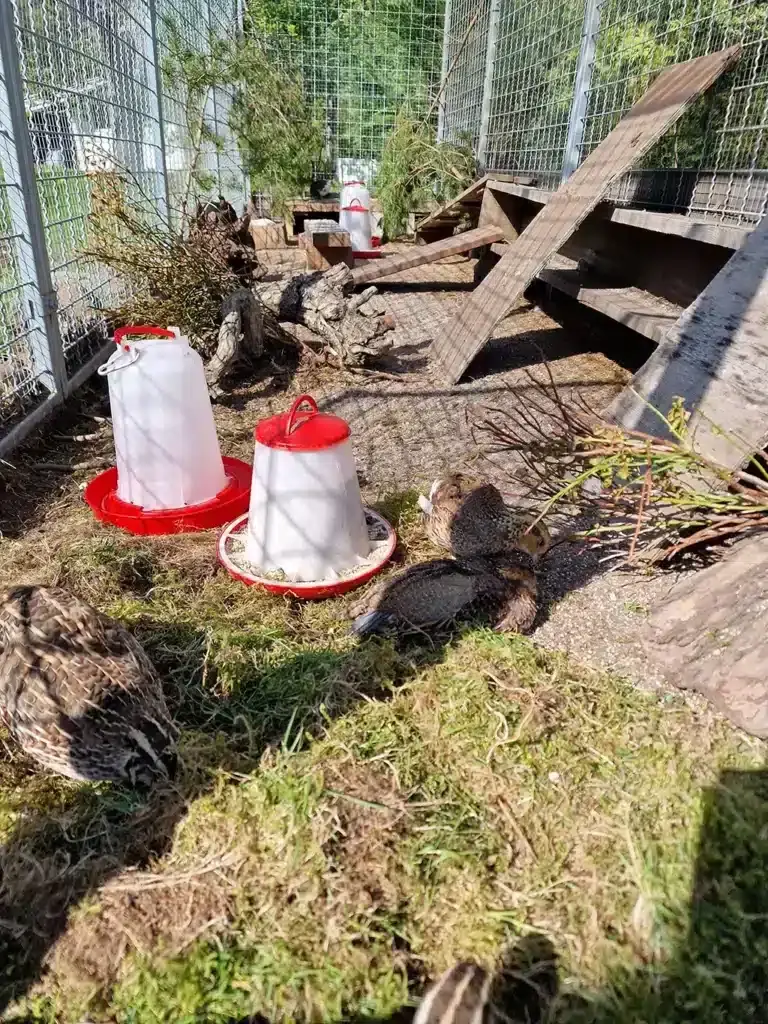
Quails often lay eggs fairly randomly, but some of them seek out sheltered spots. So good hiding places can mean that more eggs end up under branches, behind baskets or inside small houses.
That is not necessarily a bad thing. It just means they are using the furnishings as a natural habitat. It may even help awaken their natural instincts.
But remember to make it easy for yourself to check.
What should you avoid when making hiding places for quails?
Avoid hiding places that can tip over, squeeze, injure or trap the quails. Heavy items must stand steady. Baskets and light materials can usefully be secured if they tip over easily.
Avoid materials that smell strongly of paint, varnish, glue or wood preservative. Quails peck and investigate things with their beaks, so everything in the enclosure should cope with close contact.
Damp materials should go too. Cardboard boxes, hay, straw, leaves and branches can work nicely, but not once they get wet and mouldy.
Take care not to use poisonous plants. Yew is an example of a poisonous shrub with needles. Choose pine instead.
How big should hiding places for quails be?
The hiding places should be big enough for the quails to get in and out easily. They have to be able to turn around and lie down without getting stuck.
Do different quail species need other types of hiding places?
The basic principle is the same. They need cover at ground level and places to withdraw to.
Summary
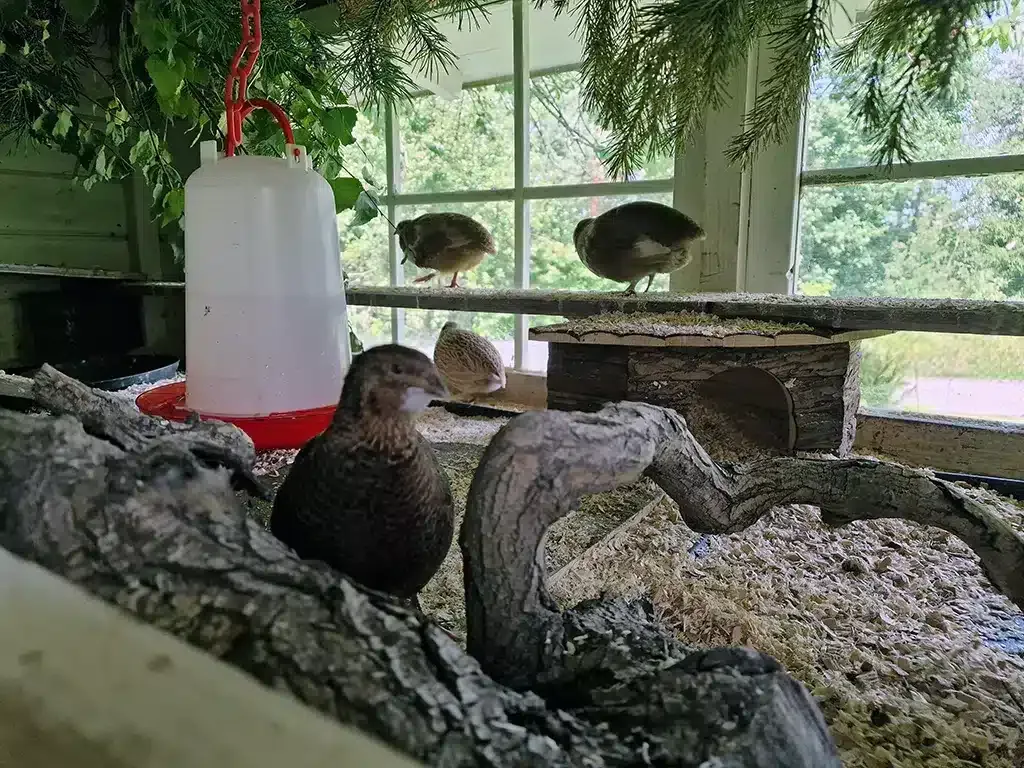
Good hiding places make the quail enclosure more natural and a better place to be. Quails like being able to go under, behind or into something when they want peace and quiet.
I would choose several small hiding places rather than one big one. Pine branches, baskets, small wooden houses and plants can all work well.
A good hiding place should not just look nice. It should be used by the quails, and it should still be practical for you to clean the enclosure and find the eggs.
Good luck!